Jharkhand exam row: ICU admission, Assembly uproar, and political blame game on 7 August
Synopsis
A Jharkhand exam-row protest that began at a Ranchi stadium turned into a full-blown political crisis on 7 August — a student leader landed in the ICU, black ink was hurled at a student association president, BJP legislators paralysed the Assembly, and Union Minister Chirag Paswan publicly called out Congress for staying quiet while governing the state. The JMM-Congress government has opened talks, but the pressure is mounting fast.
Key Takeaways
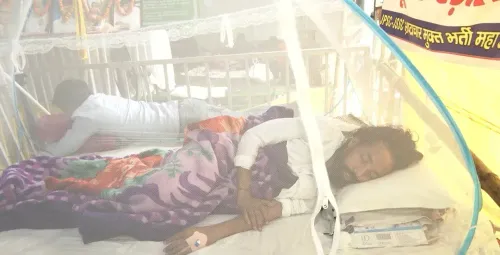
Student leader Rahul Kranti was shifted to the ICU at Ranchi Sadar Hospital after his indefinite hunger strike since Tuesday night turned critical.
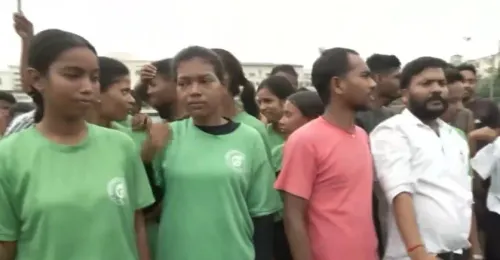
Two other protesters were hospitalised; continuous rainfall worsened conditions at Jaipal Singh Munda Stadium .
A 10-member student delegation held talks with a government-constituted four-member Ministerial committee on Friday evening .
Black ink was thrown at All India Students' Association President Neha Bora during a march in Ranchi; the accused was detained by police.
BJP legislators disrupted the Jharkhand Assembly , demanding a High Court -monitored CBI probe into JPSC and JSSC irregularities.
Union Minister Chirag Paswan and BJP leaders in New Delhi accused Congress of silence despite being part of the ruling coalition in Jharkhand.
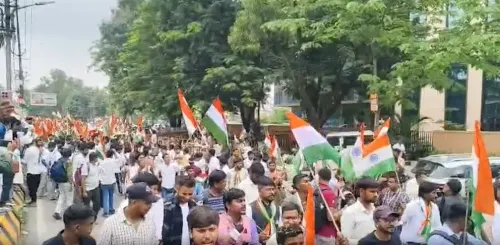
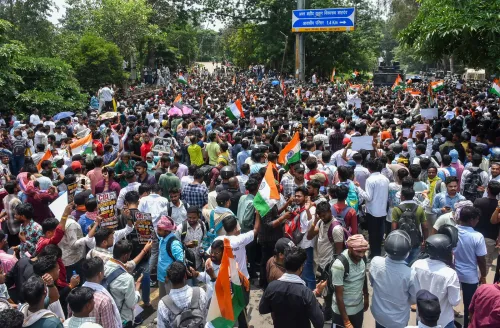
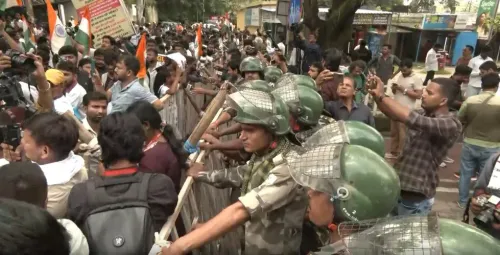
The statewide agitation over alleged irregularities in Jharkhand Public Service Commission (JPSC) and Jharkhand Staff Selection Commission (JSSC) recruitment examinations reached a critical juncture on Friday, 7 August, as a hunger-striking student was shifted to the Intensive Care Unit (ICU), protests erupted inside the Jharkhand Assembly, and the Jharkhand Mukti Morcha (JMM)-Congress coalition government came under intensifying political pressure from multiple fronts.
Student's Health Deteriorates, Talks Begin
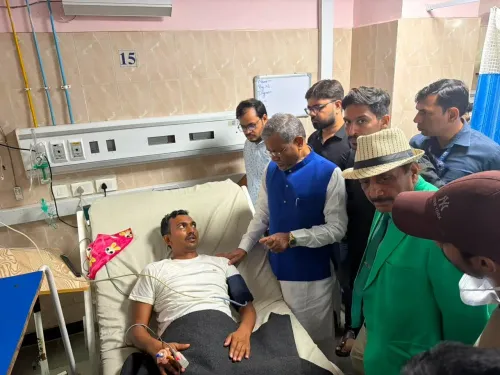
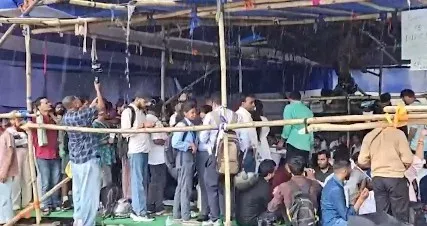
Student leader Rahul Kranti, who had been on an indefinite hunger strike since Tuesday night at Ranchi's Jaipal Singh Munda Stadium, was rushed to Ranchi Sadar Hospital after his condition turned critical. Two other protesters were also hospitalised as continuous rainfall compounded the hardship at the protest site.
State Health Minister Irfan Ansari visited the hospital and directed doctors to ensure proper treatment. Later on Friday evening, a 10-member student delegation reached the state guest house for talks with a four-member Ministerial committee constituted by the state government, with senior administrative and police officials also present — the first formal engagement after days of sustained demonstrations.
Ink Attack on Student Leader Sparks Outrage
The agitation witnessed a fresh flashpoint when black ink was thrown at All India Students' Association President Neha Bora during a student march in Ranchi. Police detained the accused, who reportedly cited ideological differences as the reason behind the act.
The incident triggered a political blame game even as several aspirants insisted the movement should remain independent and not be co-opted by political organisations. Notably, this is the kind of internal fracture that state authorities have historically exploited to dilute student-led agitations.
Assembly Disrupted, Opposition Demands CBI Probe
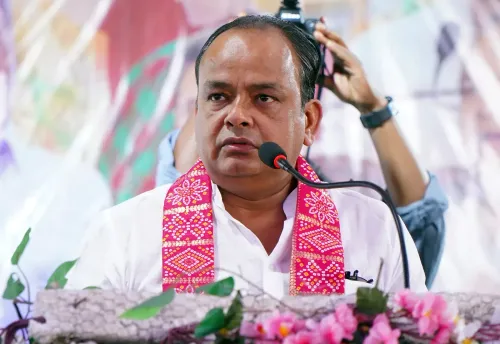
Bharatiya Janata Party (BJP) legislators staged noisy protests inside the Jharkhand Assembly, demanding cancellation of the allegedly tainted examinations and a High Court-monitored Central Bureau of Investigation (CBI) probe. Leader of Opposition Babulal Marandi appealed to fasting students not to risk their lives and accused the government of allowing public confidence in the state's recruitment system to erode.
The state government rejected the Opposition's demands, maintaining that investigations were already underway and accusing BJP legislators of disrupting legislative business for political gain.
National Dimension: NDA Targets Congress in Delhi
The controversy acquired a national dimension as NDA leaders in New Delhi accused the Congress of adopting a selective approach towards student protests. Union Minister Chirag Paswan and several BJP leaders questioned why Congress leaders had remained largely silent while being part of the ruling JMM-Congress coalition in Jharkhand, only voicing concern after the agitation attracted national attention.
This comes amid a broader pattern of Opposition parties using state-level governance failures to put pressure on alliance partners at the national level ahead of future electoral cycles.
What Happens Next
The outcome of Friday evening's ministerial talks with student representatives will be closely watched. If no concrete assurances emerge, protest leaders have indicated the agitation will escalate. The government's willingness to constitute a dialogue committee signals it is wary of the political cost, but whether it translates into structural reform of the JPSC and JSSC recruitment process remains to be seen.
Point of View
The JPSC and JSSC controversy reflects a recurring failure in state public service commission oversight that no government in Jharkhand has durably fixed. Opening ministerial talks only after a student landed in the ICU suggests the government is managing optics rather than the underlying problem. If the talks produce only assurances rather than a binding institutional fix, the agitation is unlikely to end here.
NationPress
22 Sept 2026
Frequently Asked Questions
What is the Jharkhand exam row about?
The agitation centres on alleged irregularities in recruitment examinations conducted by the Jharkhand Public Service Commission (JPSC) and Jharkhand Staff Selection Commission (JSSC). Student groups allege the exams were tainted and are demanding cancellation and a CBI probe monitored by the High Court.
Who is Rahul Kranti and why was he hospitalised?
Rahul Kranti is a student leader who launched an indefinite hunger strike on Tuesday night at Ranchi's Jaipal Singh Munda Stadium to protest the alleged exam irregularities. His health deteriorated on 7 August and he was rushed to Ranchi Sadar Hospital, where he was admitted to the ICU.
What did the BJP demand inside the Jharkhand Assembly?
BJP legislators staged protests inside the Jharkhand Assembly on 7 August, demanding cancellation of the allegedly tainted JPSC and JSSC examinations and a CBI investigation monitored by the High Court. The state government rejected the demand, saying probes were already underway.
Why is Congress being criticised over the Jharkhand exam row?
Union Minister Chirag Paswan and several BJP leaders have accused Congress of staying largely silent about the student protests despite being a partner in the ruling JMM-Congress coalition government in Jharkhand. Critics argue Congress raised concerns only after the agitation gained national attention.
What is the current status of talks between the government and students?
On Friday evening, a 10-member student delegation met a four-member Ministerial committee constituted by the Jharkhand government, with senior administrative and police officials also present. This was the first formal dialogue after days of protests, and its outcome is expected to determine whether the agitation escalates further.