Pralhad Joshi backs Modi's Drug-Free Youth drive under Viksit Bharat
Synopsis
Union Minister Pralhad Joshi backed PM Modi's Drug-Free Youth drive under the Viksit Bharat Sankalp Abhiyan on 2 August 2026, framing addiction-free youth as essential to India's 2047 development vision and linking the initiative to the Nasha Mukt Bharat Abhiyan launched in 2020.
Key Takeaways
Union Minister Pralhad Joshi promoted the 'Drug-Free Youth' initiative under the Viksit Bharat Sankalp Abhiyan on 2 August 2026 .
The campaign quotes PM Narendra Modi 's goal of youth that are 'healthy in body and mind' and 'free from the menace of drug addiction.' The initiative is rooted in the Nasha Mukt Bharat Abhiyan , launched in August 2020 by the Ministry of Social Justice and Empowerment .
The Viksit Bharat Sankalp Abhiyan was rolled out in November 2023 to saturate coverage of flagship schemes in aspirational and remote districts.
The anti-drug drive is framed as a human-capital priority tied to India's Viksit Bharat 2047 development milestone.
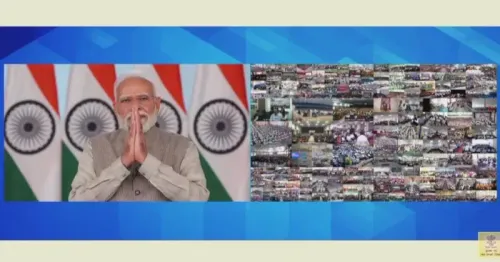
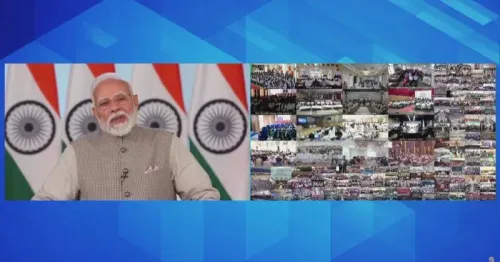
A generation free from addiction is the cornerstone of India's 2047 ambition — and the Viksit Bharat Sankalp Abhiyan's 'Drug-Free Youth' initiative is now the vehicle for that goal. Union Consumer Affairs Minister Pralhad Joshi amplified the campaign on Sunday, 2 August 2026, quoting Prime Minister Narendra Modi's vision that Indian youth must remain 'healthy in body and mind, filled with confidence and free from the menace of drug addiction.'
What the Nasha Mukt Yuva campaign actually does
The Nasha Mukt Yuva (Drug-Free Youth) component sits within the broader Viksit Bharat Sankalp Abhiyan, the Centre's nationwide outreach machine designed to saturate awareness of flagship welfare schemes across every district. It draws its ideological lineage from the Nasha Mukt Bharat Abhiyan, launched in August 2020 by the Ministry of Social Justice and Empowerment, which targeted substance abuse through community awareness and rehabilitation drives. The current iteration embeds that anti-drug messaging directly into the larger Viksit Bharat framework — ensuring the campaign travels with every scheme-saturation drive that reaches aspirational and remote districts.
The 2047 logic: why youth health is a development metric
India's Viksit Bharat vision — a developed nation by 2047, the centenary of Independence — rests heavily on its demographic dividend. A drug-affected youth cohort is, in that calculus, a direct drag on human capital. By weaving the anti-drug message into the Abhiyan's district-level saturation drives, the government is treating de-addiction not as a social-welfare footnote but as a productivity and development imperative. Minister Joshi framed PM Modi's words precisely in those terms: 'Empowering a generation that is strong, self-assured, and drug-free is the very objective of this national campaign.'
The pattern is consistent across successive administrations — linking public health interventions on substance abuse with broader youth development goals — but the present government has gone further by coordinating multiple ministries under a single Viksit Bharat umbrella. The next signal to watch: district-level saturation data and any supplementary guidelines from the Ministry of Social Justice and Empowerment on scaling the Drug-Free Youth component.
India's youngest citizens are the country's biggest bet. Whether this campaign reaches them where they live — not just in policy documents — will be the real measure of its resolve.
Point of View
The government signals a deliberate shift — treating de-addiction as a human-capital and economic-productivity issue, not merely a social-welfare concern. Embedding the campaign within the 2047 development framework gives it political longevity that standalone anti-drug drives have historically lacked. For Minister Joshi, sharing the PM's words also reinforces his own ministry's alignment with the Viksit Bharat umbrella at a time when multiple ministries are competing for visibility within that narrative. The real test will be whether district-level saturation translates into measurable outcomes or remains aspirational branding.
NationPress
17 Sept 2026
Frequently Asked Questions
What is the Drug-Free Youth initiative under Viksit Bharat Sankalp Abhiyan?
The Drug-Free Youth initiative, also called Nasha Mukt Yuva, is an anti-drug awareness and de-addiction campaign embedded within the Viksit Bharat Sankalp Abhiyan, the Centre's nationwide outreach programme for flagship welfare schemes. It aims to keep Indian youth free from substance abuse as part of India's 2047 development goals.
What is the Nasha Mukt Bharat Abhiyan and when was it launched?
The Nasha Mukt Bharat Abhiyan is an anti-drug campaign launched in August 2020 by the Ministry of Social Justice and Empowerment. It targets substance abuse through community awareness drives and rehabilitation programmes across India.
What is the Viksit Bharat Sankalp Abhiyan?
The Viksit Bharat Sankalp Abhiyan is a nationwide government outreach campaign launched in November 2023 to saturate awareness of central government flagship schemes in aspirational and remote districts, aligned with PM Modi's vision of a developed India by 2047.
Why is Pralhad Joshi promoting a drug-free youth campaign?
As a senior Union Minister and BJP leader, Pralhad Joshi is amplifying PM Modi's call for a drug-free generation as part of the Viksit Bharat Sankalp Abhiyan, framing youth health as a prerequisite for India's 2047 development ambitions.
What does Viksit Bharat mean and what is its target year?
Viksit Bharat means 'Developed India.' It is PM Narendra Modi's vision to transform India into a fully developed nation by 2047, the centenary of Indian Independence, by coordinating welfare, infrastructure, and human capital goals across multiple ministries.