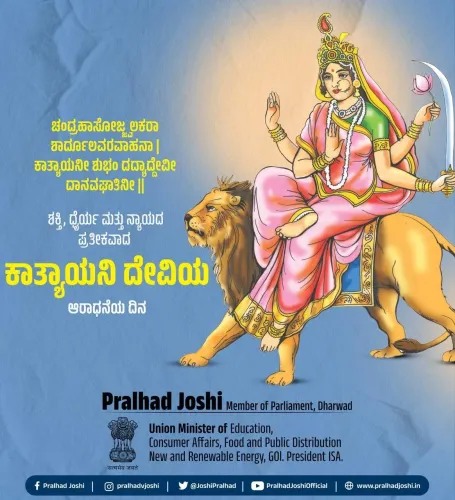
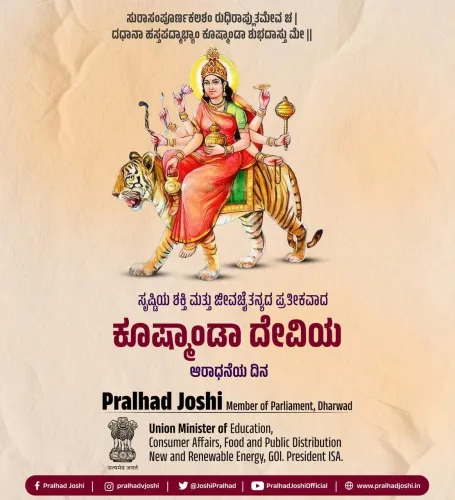
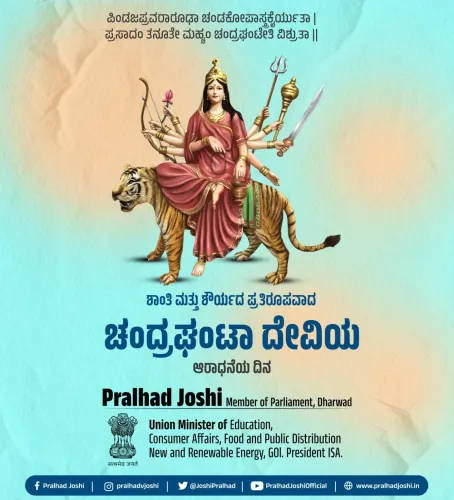
Pralhad Joshi greets Karnataka on Navaratri Day 9
Synopsis
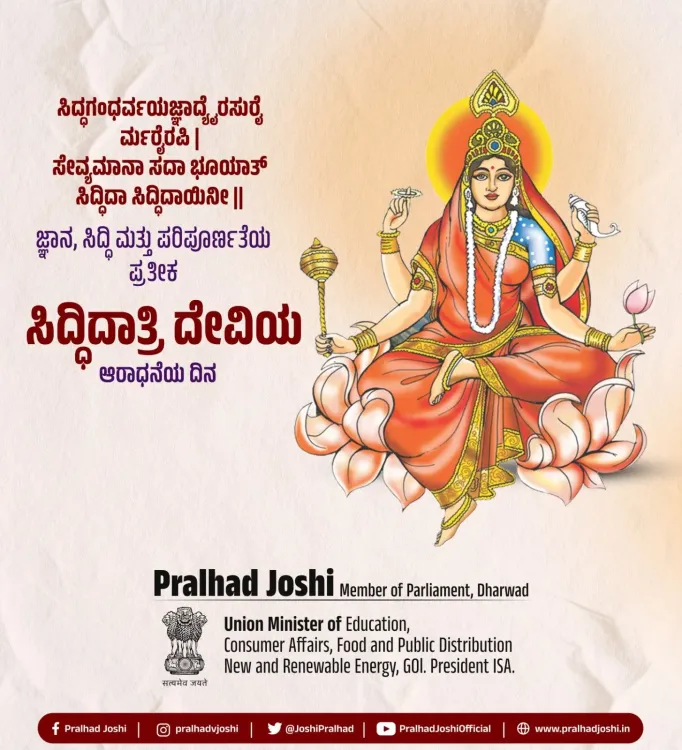
Union Consumer Affairs Minister Pralhad Joshi offered a Kannada-language prayer on Navaratri's ninth day, invoking Siddhidatri Devi's blessings for knowledge, fulfilment, and the nation's development, peace, and prosperity on 19 October 2026.
Key Takeaways
Union Minister Pralhad Joshi posted a Navaratri Day 9 greeting in Kannada on 19 October 2026 .
The post invoked Siddhidatri Devi , the ninth form of Goddess Durga, associated with granting knowledge, attainment, and perfection.
Joshi opened with a Sanskrit shloka honouring the goddess and prayed for success in good deeds and noble resolutions.
The message extended a civic prayer for India's development, peace, and prosperity .
The Kannada-language post reflects BJP leaders' consistent practice of festival outreach in regional languages to connect with home-state communities.
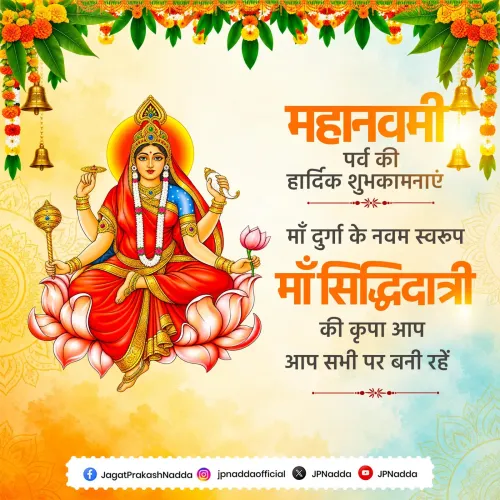
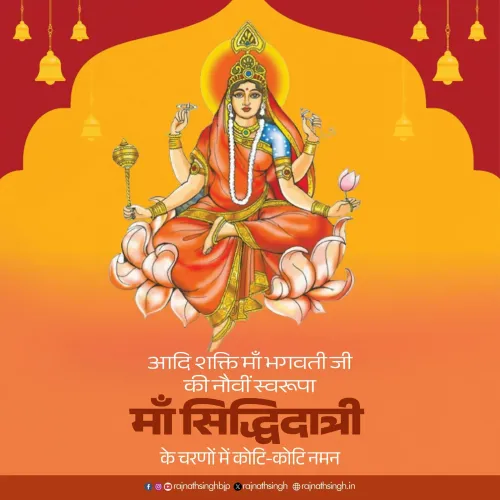
On the ninth and final day of Navaratri, Union Consumer Affairs Minister Pralhad Joshi invoked the blessings of Siddhidatri Devi — the goddess of knowledge, attainment, and perfection — with a prayer for the nation's progress, peace, and prosperity.
Posting in Kannada on Monday, 19 October 2026, the senior BJP leader from Karnataka opened with a Sanskrit shloka: 'Siddhagandharva yajñādyair asurair amarair api | Sevyamānā sadā bhūyāt siddhidā siddhidāyinī' — 'May she who is ever worshipped by the siddhas, gandharvas, yajnas, asuras and the immortals alike, always bestow blessings and grant fulfilment.' He then offered a blessing: 'May the grace of the Devi bring success to every good deed, may noble resolutions bear fruit, and may our land continuously advance on the path of development, peace, and prosperity.'
Siddhidatri: the ninth form who completes the cycle
In Hindu tradition, Siddhidatri Devi is the ninth of the Navadurga forms, worshipped on the concluding day of Navaratri. Her name is a compound of siddhi (divine attainment or supernatural power) and datri (one who bestows), making her the bestower of all perfections. Devotees believe her worship crowns the nine-day cycle, granting fulfilment to the spiritual efforts undertaken through the festival.
Navaratri is one of India's most widely observed Hindu festivals, dedicated to Goddess Durga across her nine forms. Its concluding day carries particular weight in Karnataka, where the linked festival of Dasara is celebrated as a state festival with deep historical and royal roots — making Joshi's regional-language message especially resonant for his home constituency.
Kannada message, national sentiment
By composing the post entirely in Kannada — anchored by a classical Sanskrit verse — Joshi pitched his greeting squarely at Karnataka's Hindu devotee community. BJP leaders have consistently used festival messaging in regional languages to reinforce cultural identity and voter connection, a practice that runs parallel to the party's broader emphasis on celebrating Hindu traditions in public life. The prayer's civic dimension — invoking development, peace, and prosperity for 'our land' — extends the message beyond personal piety into a public, national register.
Point of View
The Kannada medium signals home-state solidarity, and a civic prayer for national progress broadens the appeal beyond temple devotees. For the BJP, festival greetings in regional languages serve a dual function — reinforcing the party's Hindu cultural identity while keeping senior leaders visible to their core voter base during high-sentiment occasions. In Karnataka, where the party has faced competitive electoral cycles, sustained cultural messaging through figures like Joshi forms part of a longer-term grassroots visibility strategy. The absence of any policy reference keeps the message devotional and unifying rather than partisan.
NationPress
19 Oct 2026
Frequently Asked Questions
Who is Siddhidatri Devi and why is she worshipped on Navaratri Day 9?
Siddhidatri Devi is the ninth form of Goddess Durga in Hindu tradition, worshipped on the final day of Navaratri. She is believed to bestow all siddhis — divine attainments and perfections — including knowledge, wisdom, and fulfilment, crowning the nine-day devotional cycle.
What did Pralhad Joshi post for Navaratri 2026?
On 19 October 2026, Union Minister Pralhad Joshi posted a Kannada-language greeting quoting a Sanskrit shloka in praise of Siddhidatri Devi and praying for success in good deeds, noble resolutions, and India's development, peace, and prosperity.
What is the significance of Navaratri Day 9?
The ninth day of Navaratri marks the worship of Siddhidatri, the final form of Navadurga. It is considered the culmination of the nine-night festival, after which Vijayadashami or Dasara is celebrated as the victory of good over evil.
Why did Pralhad Joshi write his Navaratri post in Kannada?
Joshi is a senior BJP leader from Karnataka and writes in Kannada to connect with his home-state constituency. Festival greetings in regional languages are a common political outreach practice, reinforcing cultural ties with local communities.
What is Dasara and how does it relate to Navaratri in Karnataka?
Dasara is Karnataka's state festival celebrated immediately after Navaratri, on Vijayadashami. It has deep historical roots in the Mysore royal tradition and is one of the grandest festival celebrations in the state, making the conclusion of Navaratri particularly significant for Karnataka.