Karnataka CM Office: Bengaluru hits 227.9 mn sq ft office space
Synopsis
The Chief Minister's Office of Karnataka announced on 24 October 2026 that Bengaluru now holds 227.9 million sq. ft. of occupied office space with 9% year-on-year growth, pledging continued state commitment to innovation, infrastructure and sustainable urban development.
Key Takeaways
227.9 million sq. ft. of office space is currently occupied in Bengaluru , according to the Chief Minister's Office of Karnataka.
The city recorded 9% year-on-year growth in occupied office space, a strong performance in the current global commercial real estate environment.
The Government of Karnataka has reaffirmed its commitment to innovation, world-class infrastructure and sustainable urban development in Bengaluru.
Bengaluru's growth is anchored in IT, BPM and R&D expansion, sustained by a deep talent pool that continues to attract global enterprises.
Karnataka's IT and startup policies dating to the mid-2000s have provided a consistent policy foundation underpinning the city's commercial rise.
Infrastructure sustainability — traffic, water and urban resilience — remains the key challenge the government must address to sustain this growth trajectory.
Bengaluru is no longer just India's Silicon Valley — it is, by the numbers, one of the world's most consequential business addresses. On Saturday, 24 October 2026, the Chief Minister's Office of Karnataka announced that the city now holds 227.9 million sq. ft. of occupied office space, growing at 9% year-on-year, cementing its standing as a global commercial powerhouse.
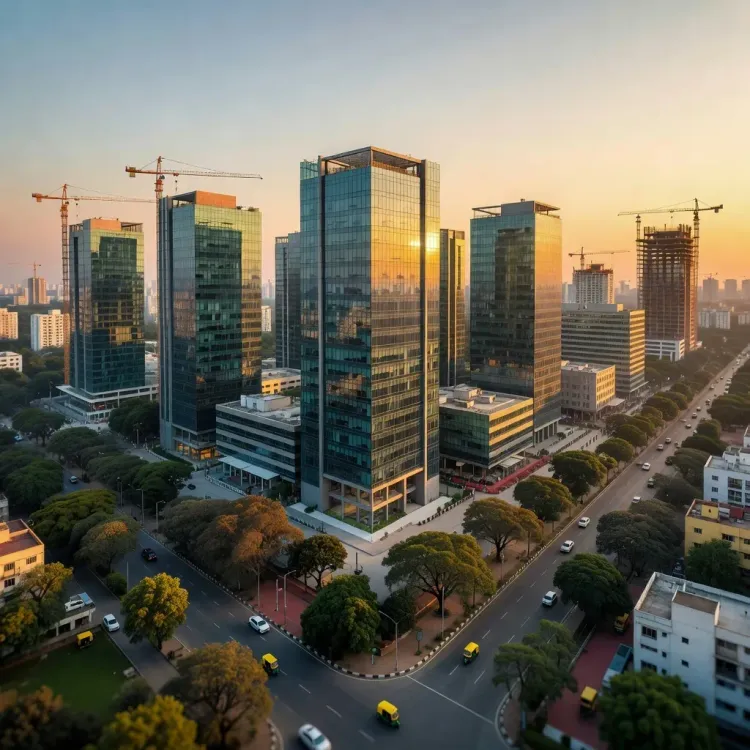
A skyline built on talent, technology and relentless demand
The numbers are striking in their scale. 227.9 million sq. ft. of occupied office space is not a forecast or an aspiration — it is absorbed, occupied floor area, reflecting real desks, real companies and real jobs. A 9% year-on-year growth rate in that category, sustained in a post-pandemic commercial real estate environment where many global cities have seen demand stall, tells its own story about Bengaluru's structural pull.
The city's rise as India's pre-eminent IT and services hub traces back to the economic liberalisation of the 1990s, when a confluence of engineering talent from its universities, moderate land costs and early state investment in technology parks made it the default address for multinationals entering India. Decades later, that early-mover advantage has compounded into an ecosystem that is extraordinarily difficult to replicate.
Karnataka's policy hand behind the boom
The Government of Karnataka has not been a passive spectator to this growth. Since the mid-2000s, successive IT and startup policies have offered incentives for technology firms and infrastructure development, pairing commercial demand with targeted state investment. The CMO's post frames the government's commitment squarely around three pillars: 'innovation, world-class infrastructure and sustainable urban development.'
That framing matters. As Bengaluru expands, infrastructure stress — traffic congestion, water supply, urban flooding — has become an increasingly urgent counterpoint to its economic narrative. The government's explicit mention of 'sustainable urban development' signals an awareness that the city's competitiveness is inseparable from its liveability.
What the 9% growth figure signals for India's commercial real estate map
Bengaluru's sustained absorption of office space is driven primarily by the expansion of IT, business process management and R&D operations — sectors that have continued to scale even as remote-work debates reshuffled office strategies globally. Global enterprises, the CMO's post notes, continue to choose the city at scale, attracted by a talent base that remains one of India's deepest technical pools.
The broader pattern is one of a city that has withstood competitive pressure from Hyderabad, Pune and Chennai — all credible alternatives — and kept widening its lead. Whether the next state budget translates the government's stated infrastructure commitment into concrete project announcements will be the real test of whether Bengaluru's growth story enters a new chapter or begins to plateau.
For now, the signal from Bengaluru is unmistakable: the city is not coasting on a legacy — it is still building one.
Point of View
Timed to reinforce Bengaluru's brand ahead of potential policy or budget announcements. By pairing a hard commercial metric — 227.9 million sq. ft., 9% growth — with a sustainability commitment, the Karnataka government is trying to pre-empt the most common critique of Bengaluru's boom: that infrastructure has not kept pace with economic ambition. The move also stakes out competitive ground against rival state governments actively courting the same pool of global enterprises. Whether the rhetoric translates into capital allocation in the next budget cycle will determine if this is positioning or programme.
NationPress
24 Oct 2026
Frequently Asked Questions
How much office space does Bengaluru have in 2026?
According to the Chief Minister's Office of Karnataka, Bengaluru holds 227.9 million sq. ft. of occupied office space as of October 2026, with a 9% year-on-year growth rate.
Why is Bengaluru considered a global business destination?
Bengaluru has been India's leading IT and services hub since the 1990s, combining a deep engineering talent pool, major technology parks and consistent state policy support to attract multinational companies and R&D operations.
What is the Karnataka government doing to support Bengaluru's growth?
The Government of Karnataka has committed to ensuring Bengaluru remains a pioneer in innovation, world-class infrastructure and sustainable urban development, building on IT and startup policies in place since the mid-2000s.
What drives Bengaluru's commercial real estate demand?
Growth is primarily driven by the expansion of IT, business process management (BPM) and R&D operations by both domestic and global enterprises, supported by the city's large and technically skilled workforce.
How does Bengaluru compare to other Indian cities for office space?
Bengaluru has sustained its lead over rivals like Hyderabad, Pune and Chennai in commercial real estate absorption, maintaining competitive advantages in talent density and established technology infrastructure.