Karnataka drought: 80% lakes dry, reservoir levels critical, says Dy CM Parameshwara
Synopsis
Karnataka's drought is not a seasonal blip — 80% of its lakes are dry, only 15% of normal sowing is done, and the rainfall deficit has crossed 42%. Deputy CM Parameshwara's Chitradurga visit lays bare a crisis compounded by a Super El Nino that has already claimed thousands of lives globally, and the State cannot even fall back on neighbouring states for fodder this time.
Key Takeaways
Nearly 80 per cent of Karnataka's lakes have dried up, with reservoir levels at critically low levels as of 25 July .
The State has recorded a rainfall deficit of more than 42 per cent ; only about 15 per cent of normal sowing has been completed.
The government has sanctioned ₹5 crore per district and ₹1 crore per Assembly constituency for drinking-water arrangements.
Reservoir water has been strictly reserved for drinking use; agricultural use is prohibited.
Migration has been reported from Bagalkot , Vijayapura , Koppal , Ballari , and Yadgir districts.
A formal drought memorandum to the Centre cannot be submitted before 15 August ; the State has urged relaxation of the Union Government's 10-criteria drought-declaration norms.
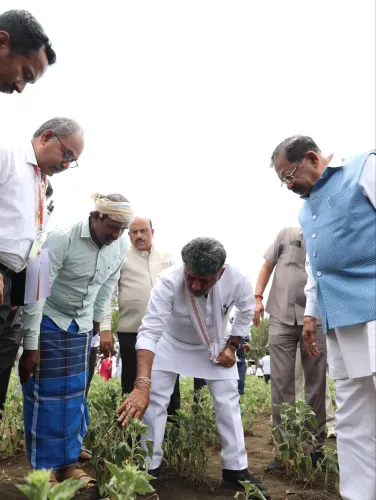
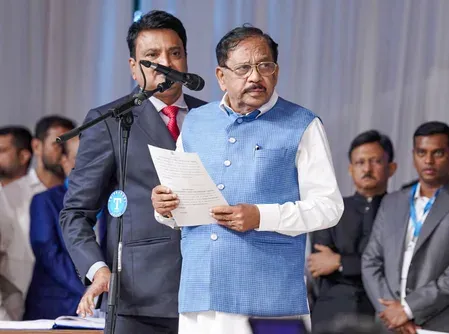
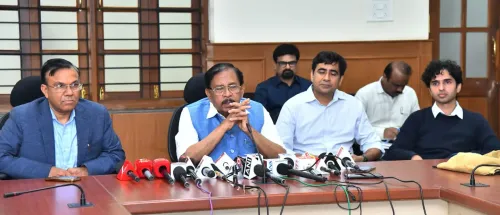
Karnataka is in the grip of an exceptionally severe drought, with nearly 80 per cent of its lakes having dried up and reservoir levels falling to critically low levels, Deputy Chief Minister and Revenue Minister G. Parameshwara said on Saturday, 25 July. Speaking after inspecting drought-hit areas in Hiriyur taluk of Chitradurga district, he assured that the government would not allow people to bear the brunt of the crisis.
Ground-Level Situation
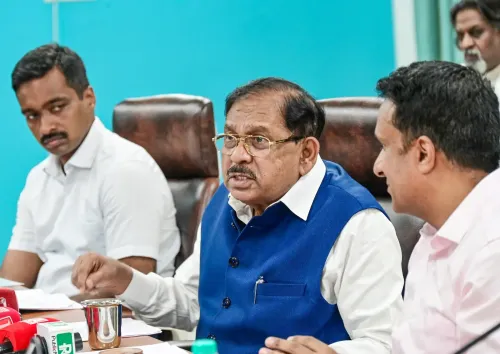
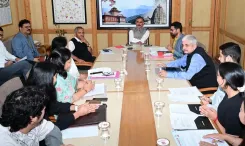
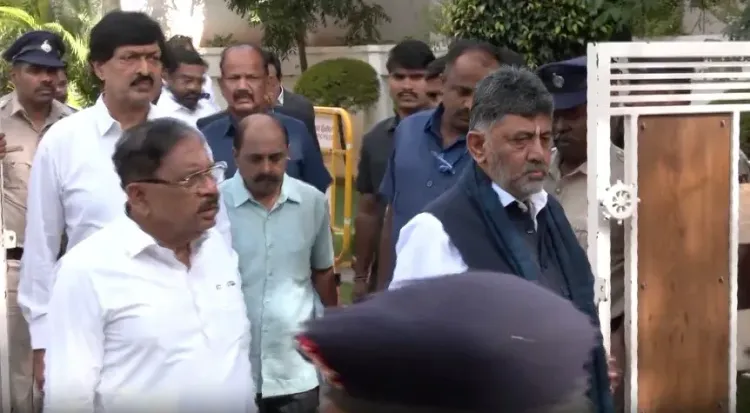
Parameshwara, accompanied by Chief Minister D.K. Shivakumar, personally visited drought-affected areas in Chitradurga before addressing a Bengaluru Revenue Division-level progress review meeting at the Anubhava Mantapa Hall of the Murugharajendra Brihanmatha in Chitradurga. He noted that the State has recorded a rainfall deficit of more than 42 per cent so far this season, with sowing completed on only about 15 per cent of the normal area across Karnataka.
District-level sowing figures paint a stark picture: only about 2 per cent of the target area in Chikkaballapur, between 1.5 and 2 per cent in Kolar, and between 3 and 4 per cent in Chitradurga have been sown. In the Bengaluru Revenue Division overall, only 1.74 lakh hectares of a targeted 13.73 lakh hectares — roughly 13 per cent — have been covered.
Rainfall Deficits Across the Division
Parameshwara detailed district-wise shortfalls within the Bengaluru Revenue Division: Bengaluru Urban and Chitradurga each face a 28 per cent deficit; Ramanagara is at 24 per cent; Kolar at 36 per cent; Chikkaballapur at 28 per cent; Tumakuru and Bengaluru Rural at 18 per cent each; and both Davangere and Shivamogga at 48 per cent each. The overall deficit for the division stands at 37 per cent.
Super El Nino and the Broader Context
Parameshwara attributed the crisis in part to a Super El Nino event, citing data from the past 75 years showing that El Nino conditions have occurred 25 times. While sea-surface temperatures in the Pacific typically rise by 1 to 2 degrees Celsius during such events, this year they have risen by 2 to 3 degrees. He said nearly 50 per cent of the world is currently experiencing drought-like conditions as a result, with temperatures in European countries reaching between 35 and 40 degrees Celsius, reportedly causing around 5,000 deaths in Europe and approximately 20,000 deaths across affected regions globally. Notably, neighbouring Maharashtra has received some rainfall, allowing water to flow into the Almatti reservoir, though Karnataka's Malnad and coastal regions have received only partial relief.
Government Response and Relief Measures
To address the immediate drinking-water crisis, the government has sanctioned ₹5 crore to each district for drinking-water arrangements, with Deputy Commissioners already utilising these funds. An additional ₹1 crore has been announced for every Assembly constituency. Private borewells are being hired and water is being supplied through tankers where needed.
On the fodder front, officials have reported adequate supplies for the next 30 to 40 weeks, though Parameshwara cautioned that procurement from neighbouring states — a fallback used in previous droughts — is not possible this time as those states are also facing drought. The Animal Husbandry Department has been directed to distribute fodder-seed kits in areas where water is available. Reports of migration have emerged from Bagalkot, Vijayapura, Koppal, Ballari, and Yadgir districts; officials have been directed to immediately launch employment works under the VBG RAM G Scheme in affected villages.
Task forces have been constituted in every taluk, with District Commissioners and Zilla Panchayat CEOs instructed to hold weekly review meetings. The Chief Minister and Parameshwara have jointly written to Prime Minister and separately to the Union Home Minister and the Union Agriculture Minister, urging relaxation of the Centre's 10-criteria framework for declaring drought. A formal drought memorandum to the Union Government cannot be submitted before 15 August, and Parameshwara indicated the submission could be delayed further if post-August rainfall alters conditions.
What Comes Next
With reservoir water strictly reserved for drinking purposes and agricultural activity largely stalled, the coming weeks will test the State's relief machinery. Parameshwara has committed to personally visiting all remaining districts to assess conditions on the ground. The weekly taluk-level task force meetings are intended to generate real-time data as drinking-water conditions, he noted, can change from day to day.
Point of View
42% rainfall deficit, sowing at 15% of normal — is not just a weather event; it is an institutional stress test. The State's inability to source fodder from neighbours, who are equally parched, exposes how a Super El Nino strips away the usual buffers. The Centre's rigid 10-criteria drought-declaration framework, designed for average years, risks delaying federal relief to a state already seeing migration. The real accountability question is whether weekly task-force meetings and per-constituency allocations will translate into on-ground water security before the drinking-water crisis, which Parameshwara himself flagged as the first and gravest threat, becomes irreversible.
NationPress
25 Jul 2026
Frequently Asked Questions
How severe is the drought in Karnataka in 2023?
Karnataka is experiencing an exceptionally severe drought, with nearly 80 per cent of its lakes dried up and a statewide rainfall deficit exceeding 42 per cent. Only about 15 per cent of the normal sowing area has been covered, and reservoir levels have fallen critically, prompting the government to reserve all available water exclusively for drinking purposes.
What relief measures has the Karnataka government announced?
The government has sanctioned ₹5 crore to each district and ₹1 crore to every Assembly constituency for drinking-water arrangements. Private borewells are being hired and tanker supply has been activated. Employment works under the VBG RAM G Scheme have been ordered in villages reporting migration.
What is causing the drought — is it linked to El Nino?
Deputy CM Parameshwara attributed the drought partly to a Super El Nino, with Pacific sea-surface temperatures rising 2 to 3 degrees Celsius against a normal increase of 1 to 2 degrees. According to him, nearly 50 per cent of the world is facing drought-like conditions as a result, and Karnataka's situation is part of a broader global pattern.
Which districts in Karnataka are worst affected by the drought?
Davangere and Shivamogga face the steepest rainfall deficit at 48 per cent each within the Bengaluru Revenue Division. Kolar is at 36 per cent deficit, while Bengaluru Urban, Chitradurga, and Chikkaballapur are each at 28 per cent. Migration has been reported from Bagalkot, Vijayapura, Koppal, Ballari, and Yadgir districts.
When will Karnataka submit a drought memorandum to the Centre?
Deputy CM Parameshwara stated that a drought memorandum cannot be submitted to the Union Government before 15 August. He noted that if rainfall occurs after August, the situation may change, potentially delaying the submission further. The State has also written to the Prime Minister, Union Home Minister, and Union Agriculture Minister urging relaxation of the Centre's 10-criteria drought-declaration norms.