Kaziranga translocates wild water buffaloes to Kanha in 2,000-km rewilding push

Synopsis
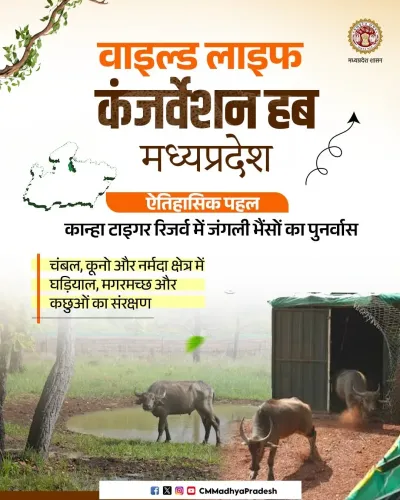
For the first time in over a century, wild water buffaloes are returning to central India. Four animals from Kaziranga completed a 2,000-km road journey to Kanha Tiger Reserve on 28 April — the opening move in a plan to translocate 50 buffaloes and restore a species that has been locally extinct in Madhya Pradesh since 1979.
Key Takeaways
Four Asiatic wild water buffaloes (one male, three females) were translocated from Kaziranga National Park to Kanha Tiger Reserve on 28 April 2025 , covering over 2,000 km by road.
A total of 15 buffaloes will be moved in phases; up to 50 are permitted for translocation under the Wildlife Protection Act, 1972 .
The species has been locally extinct in Kanha since 1979 ; globally, fewer than 4,000 individuals remain, with roughly 99% residing in Assam.
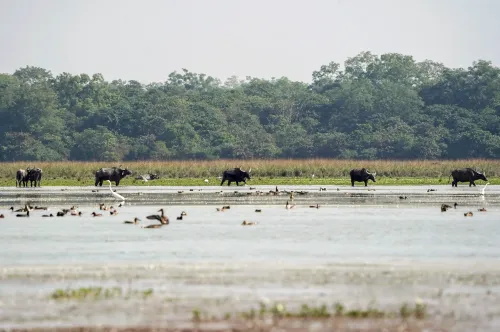
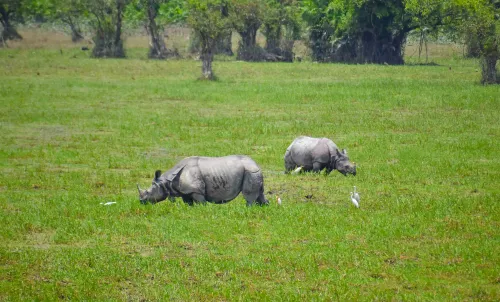
The Wildlife Institute of India identified Kanha's grasslands as ideal habitat, closely resembling those of Kaziranga.
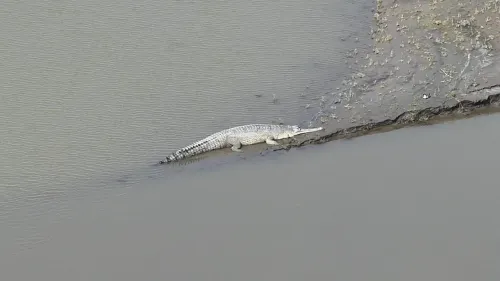
Madhya Pradesh has expressed willingness to provide gharials for potential reintroduction in Assam, signalling a broader inter-state conservation exchange.
The project was initiated following directives from Assam CM Himanta Biswa Sarma and MP CM Mohan Yadav in January 2026 .
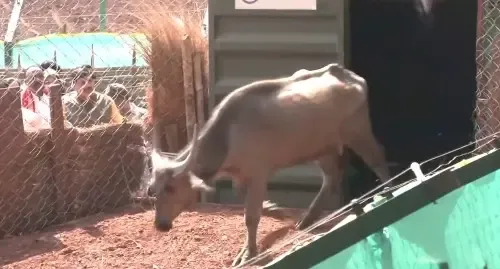
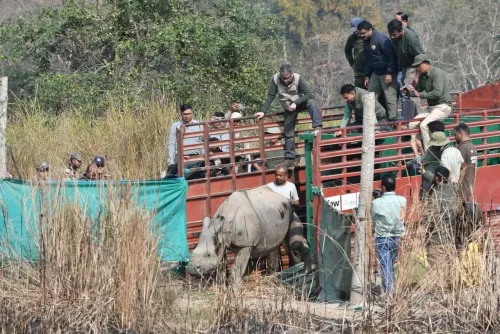
Four Asiatic wild water buffaloes — one male and three females — were translocated from Assam's Kaziranga National Park and Tiger Reserve (KNPTR) to Madhya Pradesh's Kanha Tiger Reserve on 28 April 2025, in a landmark conservation effort to restore an endangered species to its historic range in central India. The animals, flagged off from Kaziranga on 25 April, completed a gruelling 2,000-km road journey before being formally released at Kanha by Madhya Pradesh Chief Minister Mohan Yadav in the presence of senior forest officials.
Scale and Phases of the Translocation
This first batch of four buffaloes is part of a larger, multi-phased project that aims to translocate a total of 15 wild water buffaloes — including females — from KNPTR to Kanha Tiger Reserve. A second batch of four buffaloes is scheduled for transport within April itself, while seven more will follow in subsequent phases. Under the Wildlife Protection Act, 1972, up to 50 wild buffaloes are permitted for translocation from Kaziranga to Kanha over the next year, according to officials.
The joint initiative is being executed by the Assam and Madhya Pradesh Forest Departments, under the overall supervision of KNPTR Field Director Dr Sonali Ghosh. Field operations were led by Arun Vignesh, Divisional Forest Officer and Deputy Director, Kaziranga, supported by experienced veterinarians who used chemical capture techniques to safely secure the animals. Between 19 March and 10 April, seven sub-adult buffaloes were captured across the Central and Eastern ranges of Kaziranga. One female wild buffalo housed at the Centre for Wildlife Rehabilitation and Conservation (CWRC) was also cleared for translocation.
The Journey and Arrival
The transportation convoy included dedicated support vehicles carrying grass feed, drinking water, and logistical supplies, staffed by a team of veterinary and forest professionals. Despite incessant rain during the journey, field teams — including frontline forest staff handling animals weighing over 600 kg — performed commendably, according to the official statement. The convoy covered the distance in approximately three to four days.
Madhya Pradesh's Principal Chief Conservator of Forests and Chief Wildlife Warden Sameeta Rajoria was present at the flagging-off ceremony, along with Kaushik Barua, Member of the Assam State Board of Wildlife, local media representatives, and members of jeep safari associations.
Acclimatisation and Soft Release Plan
Upon arrival at Kanha Tiger Reserve, the buffaloes have been placed in a large one-hectare holding enclosure, where they will undergo health monitoring and acclimatisation to their new environment before a planned
Point of View
Multi-state rewilding at scale. The wild water buffalo's disappearance from central India was a slow erasure; its return, if the soft release succeeds, could reshape grassland ecology at Kanha. But the harder question is whether the holding-enclosure-to-wild pipeline will be managed with the rigour the species demands. Past translocations, including the Manas-to-Barnawapara move in 2020, offer limited precedent for a project of this ambition. The inter-state gharial exchange gesture also hints at a welcome shift: conservation diplomacy between state governments, not just between India and international bodies.
NationPress
22 Sept 2026
Frequently Asked Questions
Why are wild water buffaloes being translocated from Kaziranga to Kanha?
The translocation aims to restore the Asiatic wild water buffalo to its historic range in central India, where the species has been locally extinct for over a century. The last confirmed sighting in Kanha was in 1979, and a feasibility study by the Wildlife Institute of India identified Kanha's grasslands as an ideal habitat for reintroduction.
How many wild water buffaloes will be translocated in total?
A total of 15 buffaloes will be moved in phases as part of this immediate project, with up to 50 permitted for translocation from Kaziranga to Kanha over the next year under the Wildlife Protection Act, 1972. The first batch of four animals arrived at Kanha on 28 April 2025.
What is the conservation status of the Asiatic wild water buffalo?
The Asiatic wild water buffalo (Bubalus arnee) is listed as Endangered on the IUCN Red List and as a Schedule I species under India's Wildlife Protection Act, 1972. Fewer than 4,000 individuals remain globally, with approximately 99% of the population residing in Assam.
What happens to the buffaloes after they arrive at Kanha?
The buffaloes are placed in a one-hectare holding enclosure at Kanha Tiger Reserve for health monitoring and acclimatisation before a planned soft release into the wild. The three-to-four-day road journey was supported by veterinary and forest professionals throughout.
Is this the longest wildlife translocation journey in India?
According to officials, the over 2,000-km road journey from Kaziranga to Kanha is one of the longest conservation translocations of wild buffaloes in India. A previous translocation moved four animals from Manas National Park to Barnawapara Wildlife Sanctuary in Chhattisgarh in April 2020, which was a shorter distance.