Kejriwal Greets President Murmu on Her Birthday
Synopsis
AAP convenor Arvind Kejriwal extended formal birthday greetings to President Droupadi Murmu on 20 June 2026, wishing her good health and happiness — a gesture consistent with Indian political convention of cross-party respect for the constitutional head of state.
Key Takeaways
AAP convenor Arvind Kejriwal posted birthday greetings for President Droupadi Murmu on 20 June 2026 .
Kejriwal wished the President good health, a long life, and happiness.
Droupadi Murmu has served as India's 15th President since July 2022 , the first from a tribal community and the second woman to hold the office.
The message follows a long-standing Indian political convention of cross-party birthday greetings to the President.
AAP has frequently clashed with the BJP -led central government but continues to observe formal institutional courtesies.
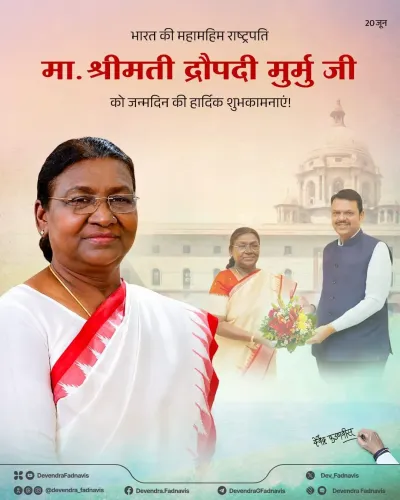
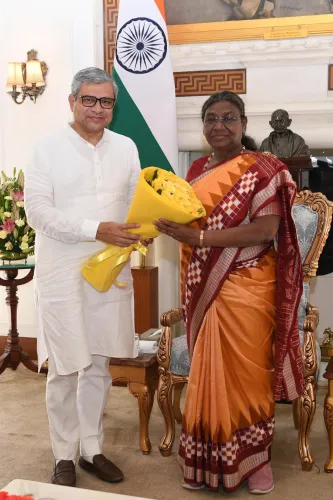
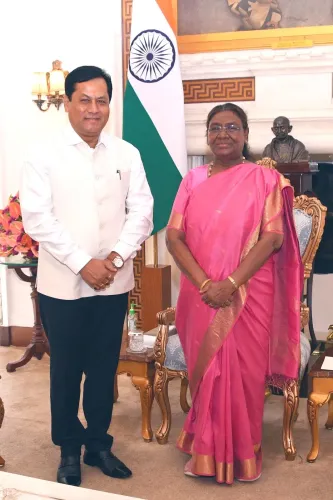
AAP convenor Arvind Kejriwal on Saturday, 20 June 2026, extended birthday greetings to President of India Droupadi Murmu, wishing her good health, a long life, and happiness in a post on X.
Context
Kejriwal addressed Murmu as 'Hon'ble President of India' and 'Smt. Droupadi Murmu Ji', using respectful honorifics consistent with formal Indian political communication. The brief but courteous message reflects a well-established convention in Indian public life where leaders across party lines mark the birthday of the constitutional head of state.
Policy Backdrop
Droupadi Murmu has served as the 15th President of India since July 2022, becoming the first person from a tribal community and only the second woman to hold the office, after Pratibha Patil. She was elected by the electoral college in a vote that drew participation from members across the political spectrum. The presidency is a constitutional office that stands above partisan contestation, and formal gestures of this kind reinforce that principle.
Arvind Kejriwal leads the Aam Aadmi Party (AAP), which emerged from the 2011 anti-corruption movement and currently governs Punjab. AAP has frequently been at odds with the BJP-led central government on issues ranging from federal powers and investigative agencies to administrative control over Delhi. Despite that adversarial relationship, participation in national ceremonial protocols — including birthday messages to the President — has remained consistent practice for the party.
Stakeholders and Impact
Messages of this nature carry symbolic weight in Indian political culture. They signal that opposition leaders recognise and respect the constitutional role of the President, independent of their differences with the ruling dispensation. For AAP, publicly affirming institutional courtesy helps project a posture of responsible opposition even amid ongoing political and legal disputes with central authorities.
Leaders from other national and regional parties typically issue similar greetings on the President's birthday, making such posts part of a broader, cross-party acknowledgement of the office's dignity.
What's Next
Greetings of this kind rarely have immediate policy consequences, but they form part of the ongoing record of how opposition parties engage with constitutional institutions. Any future interaction between the Delhi government or AAP leadership and Rashtrapati Bhavan — whether through scheduled state functions or formal correspondence — will be watched as a marker of the relationship between the party and the presidency. The broader pattern of institutional courtesy from opposition leaders toward the President is likely to continue on similar occasions.
Point of View
Publicly honouring the President reinforces AAP's stated commitment to respecting constitutional offices even while contesting the politics around them. It also fits a broader pattern where opposition leaders use ceremonial occasions to project statesmanship. The gesture carries no immediate policy weight but contributes to the optics of responsible opposition.
NationPress
20 Jun 2026
Frequently Asked Questions
When is President Droupadi Murmu's birthday?
President Droupadi Murmu's birthday falls on 20 June . She was born on 20 June 1958 in Odisha's Mayurbhanj district.
Who is Droupadi Murmu?
Droupadi Murmu is the 15th President of India , in office since July 2022 . She is the first person from a tribal community and the second woman to serve as President of India.
Why did Kejriwal wish President Murmu on her birthday?
It is a well-established convention in Indian politics for leaders across party lines to extend formal greetings to the President on her birthday, affirming respect for the constitutional head of state regardless of partisan differences.
What is AAP's relationship with the President of India?
AAP and its leaders participate in national ceremonial protocols, including birthday greetings to the President, even as the party maintains an adversarial stance toward the BJP -led central government on policy and administrative matters.
Has Arvind Kejriwal greeted the President before?
Indian political convention means opposition leaders, including Kejriwal , routinely send formal greetings to the President on significant occasions. Such messages are a standard part of cross-party institutional courtesy in India.