Keonjhar man digs up sister's body for bank claim: BJD MP urges Sitharaman for rural banking reforms
Synopsis
A tribal man in Odisha's Keonjhar district dug up his sister's skeletal remains and carried them to a bank branch just to claim ₹19,300 — because he couldn't produce a death certificate. The incident has forced a reckoning with how India's banking system fails its most vulnerable citizens, prompting a formal call for reform from BJD leader Manas Ranjan Mangaraj to Finance Minister Nirmala Sitharaman.
Key Takeaways
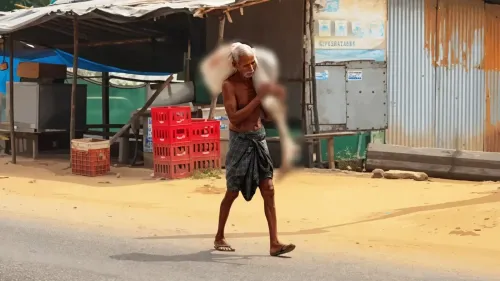
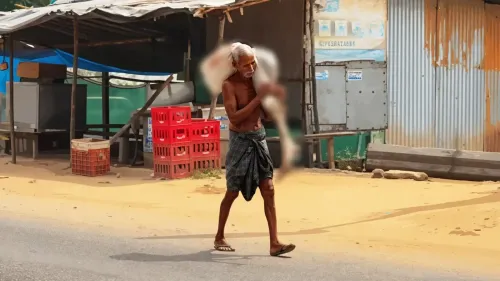
Jitu Munda , a tribal man from Keonjhar district , Odisha, reportedly dug up his deceased sister's skeletal remains on Monday to present them at a bank branch in the Patna block .
He was attempting to withdraw ₹19,300 from her account but lacked the required death certificate.
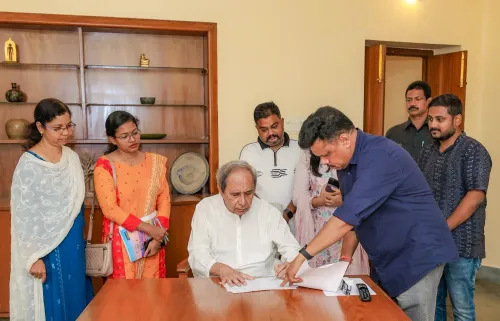
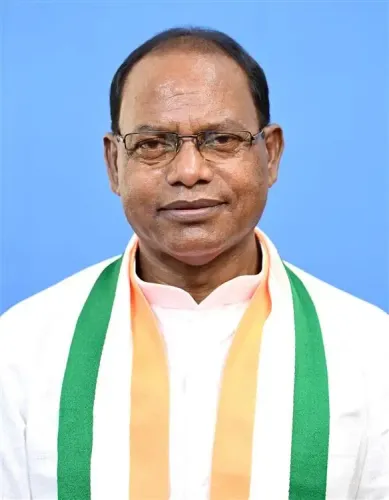
BJD parliamentary party leader Manas Ranjan Mangaraj wrote to Union Finance Minister Nirmala Sitharaman on Tuesday urging immediate rural banking reforms.
Mangaraj called for simplified claim procedures for small deposits, compassionate field verification, and greater accountability of bank officials.
The incident highlights a persistent gap between financial inclusion policies such as Pradhan Mantri Jan Dhan Yojana and ground-level implementation for vulnerable communities.
A deeply distressing incident from Keonjhar district in Odisha has triggered a political and humanitarian response, with Biju Janata Dal (BJD) parliamentary party leader Manas Ranjan Mangaraj on Tuesday, 29 April 2025, writing to Union Finance Minister Nirmala Sitharaman demanding immediate reforms in rural banking practices. The letter came a day after a poor tribal man, Jitu Munda, reportedly dug up his deceased sister's skeletal remains and carried them to a bank branch in the Patna block of Keonjhar district on Monday in a desperate bid to withdraw ₹19,300 lying in her account.
According to reports, Munda was asked by bank officials to furnish a death certificate to process the claim — a document he did not possess. Unable to navigate the bureaucratic requirement, he allegedly resorted to the harrowing act of exhuming his sister's body to physically prove her death to the bank.
What Happened in Keonjhar
The incident took place in the Patna block of Keonjhar district, one of Odisha's predominantly tribal regions. Jitu Munda, described as an illiterate tribal villager with no legal awareness or access to formal documentation systems, sought to withdraw the modest sum of ₹19,300 from his late sister's bank account. When bank officials demanded a death certificate — a standard but reportedly unyielding requirement — Munda had no recourse. He subsequently dug up his sister's skeletal remains and brought them to the bank branch, an act that has since drawn widespread shock and condemnation.
This is not an isolated instance of procedural barriers pushing marginalised citizens to extremes. Critics argue that the rigid documentation culture within India's rural banking network disproportionately burdens tribal communities, senior citizens, widows, and those living in remote areas.
BJD MP's Letter to Finance Minister
In his letter, Mangaraj expressed grave concern over the incident, calling it a reflection of the
Point of View
But the last-mile reality — rigid documentation demands, no field verification, zero compassion protocols — can reduce those accounts to traps for the very people they were meant to serve. A ₹19,300 claim should not require a death certificate bureaucracy that an illiterate tribal villager cannot navigate; it certainly should not end in the exhumation of a body. The Finance Ministry's response to Mangaraj's letter will signal whether this is treated as a policy failure demanding systemic correction or simply another news cycle to be outlasted.
NationPress
26 Sept 2026
Frequently Asked Questions
What happened in Keonjhar that triggered calls for banking reform?
A tribal man named Jitu Munda reportedly dug up his deceased sister's skeletal remains and carried them to a bank branch in the Patna block of Keonjhar district, Odisha, to prove her death and withdraw ₹19,300 from her account. He resorted to this act after being asked to produce a death certificate, which he did not have.
Who is Manas Ranjan Mangaraj and what has he demanded?
Manas Ranjan Mangaraj is the parliamentary party leader of the Biju Janata Dal (BJD). He wrote to Union Finance Minister Nirmala Sitharaman urging reforms including simplified claim procedures for small deposits, compassionate field verification systems, and greater accountability of bank officials handling sensitive cases.
Why couldn't Jitu Munda simply submit a death certificate?
According to reports, Jitu Munda is an illiterate tribal villager with no legal awareness or access to documentation systems. For many in remote tribal areas, obtaining formal death certificates involves navigating bureaucratic processes that are practically inaccessible without legal guidance or resources.
What banking schemes were cited in the context of this incident?
BJD leader Mangaraj acknowledged reforms such as the Pradhan Mantri Jan Dhan Yojana, direct benefit transfers, and digital banking access, but argued that the Keonjhar incident exposes a painful gap between these policies and ground-level reality for marginalised communities.
What specific reforms has the BJD MP sought from the Finance Ministry?
Mangaraj has urged the Finance Ministry to direct simplified claim procedures for small deposits, introduce compassionate field verification systems, and ensure greater accountability of bank officials when handling cases involving illiterate, tribal, or otherwise vulnerable account holders.