Kerala CM race: IUML backs public mood on Satheesan as UDF eyes power
Synopsis
With Kerala votes to be counted on 4 May, the IUML's supreme leader has signalled deference to public sentiment favouring V.D. Satheesan as Chief Minister — a carefully calibrated move that avoids picking sides while nudging the Congress high command toward a swift decision. The CM race within the UDF may prove as consequential as the election result itself.
Key Takeaways
IUML supreme leader Sadiq Ali Shihab Thangal said exit poll support for V.D.
Satheesan as CM reflects public sentiment, deferring the final call to the Congress high command .
Kerala votes will be counted on 4 May 2025 , with exit polls hinting at the possible end of the Pinarayi Vijayan -led LDF government.
Three names dominate the UDF CM race: V.D.
Satheesan , Ramesh Chennithala , and K.C.
A temple ritual in Thrissur on 18 May , organised by a Venugopal supporter, highlights the intensity of behind-the-scenes lobbying.
The IUML 's balancing act is aimed at preserving coalition unity while retaining strategic flexibility ahead of results day.
With exit polls hinting at the possible end of the Pinarayi Vijayan-led Left Democratic Front (LDF) government in Kerala, the question of who will lead a prospective United Democratic Front (UDF) administration has swiftly moved to the centre of the state's political discourse. On Thursday, 30 April, a carefully worded but significant intervention from Indian Union Muslim League (IUML) supreme leader Sadiq Ali Shihab Thangal added both clarity and intrigue to the unfolding leadership debate.
Thangal's Calculated Signal
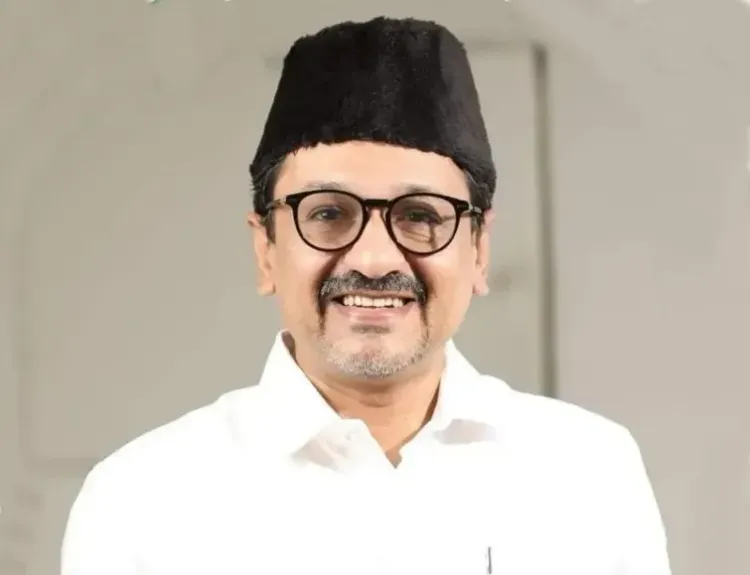
Thangal, whose party is the second-largest ally in the UDF, said the support reflected in exit polls for Leader of Opposition V.D. Satheesan as Chief Minister should be seen as an expression of public sentiment. He underscored that any decision on leadership would take into account the people's mood, while reiterating that the final call rests with the Congress high command. The statement stops short of an outright endorsement, but its timing — with votes to be counted on 4 May — gives it outsized political weight.
Three Names, One Race
Since polling concluded on 9 April, speculation has intensified over the chief ministerial face if the UDF returns to power. The conversation has largely revolved around three names: Satheesan, his predecessor Ramesh Chennithala, and late entrant K.C. Venugopal, whose candidature has stirred a fresh wave of political chatter. Supporters of all three leaders have turned the contest into a high-decibel campaign of its own, both on the ground and across social media platforms.
Lobbying Turns Symbolic
Beyond posters and endorsements, the lobbying has taken on more symbolic dimensions. A temple ritual planned in Thrissur on 18 May by a close supporter of Venugopal underlines the intensity of manoeuvring underway — a sign that the CM race has acquired a life beyond formal party channels. This comes amid a broader pattern in Kerala politics, where coalition arithmetic and community equations often shape leadership outcomes as decisively as electoral mandates.
What the IUML's Stance Means for UDF Unity
By aligning the IUML's position with public sentiment rather than overtly backing a single candidate, Thangal has struck a balancing note — one that preserves coalition unity while leaving room for strategic flexibility as results approach. Notably, the IUML's deference to the Congress high command on the final call signals that the party is unwilling to be seen as a kingmaker, even as its voice clearly carries weight in any eventual calculation.
What Happens Next
As the countdown to 4 May narrows, the leadership question may yet prove as consequential as the verdict itself. Should the UDF secure a majority, the Congress high command will face pressure to move quickly on a chief ministerial announcement to prevent intra-coalition tensions from surfacing. All eyes now turn to Thiruvananthapuram and New Delhi, where the final decision is ultimately expected to be made.
Point of View
Not Thiruvananthapuram. What mainstream coverage misses is that this CM debate, playing out before a single vote is counted, risks projecting overconfidence and could alienate undecided voters if the UDF's majority is narrower than exit polls suggest. The real test of coalition management begins the morning after 4 May.
NationPress
19 Sept 2026
Frequently Asked Questions
Who are the main candidates in the Kerala UDF CM race?
The three names dominating the UDF chief ministerial debate are Leader of Opposition V.D. Satheesan, former CM Ramesh Chennithala, and Congress general secretary K.C. Venugopal. Exit polls have shown public preference for Satheesan, though the final decision rests with the Congress high command.
What did IUML's Sadiq Ali Shihab Thangal say about the Kerala CM?
Thangal said the exit poll support for V.D. Satheesan as Chief Minister should be seen as an expression of public sentiment. He added that any leadership decision would account for the people's mood, while reiterating that the final call belongs to the Congress high command.
When will Kerala election results be declared?
Kerala election results will be counted and declared on 4 May 2025. Polling in the state concluded on 9 April 2025.
Why does the IUML's stance matter in the Kerala CM debate?
The IUML is the second-largest ally in the UDF coalition, making its position on leadership politically significant. By aligning with public sentiment rather than endorsing a specific candidate, the party has struck a balancing note that preserves coalition unity while leaving room for flexibility.
What is the significance of the Thrissur temple ritual on 18 May?
A temple ritual planned in Thrissur on 18 May by a close supporter of K.C. Venugopal is seen as a symbolic gesture underlining the intensity of lobbying for the chief ministerial post within the UDF, going beyond formal party channels.