Kishan Reddy hails four Indian silver medals at Asian Para Games 2026
Synopsis
Union Minister G. Kishan Reddy praised four Indian para athletes — Ravi Kartik Budigina, Swati Chaudhary, Sharath Makanahalli, and debutant Akira Nandan Banothu — for winning silver medals at the Asian Para Games 2026, spotlighting India's growing depth across para disciplines.
Key Takeaways
Four silver medals for India at the Asian Para Games 2026 on 22 October 2026 .
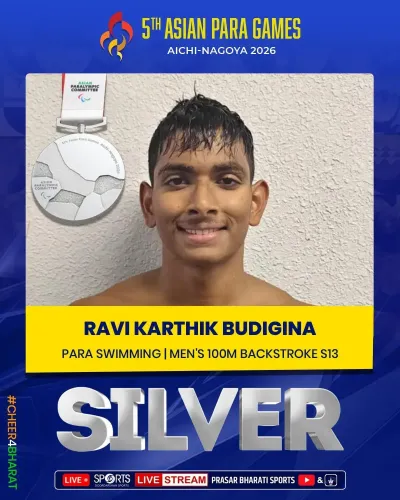
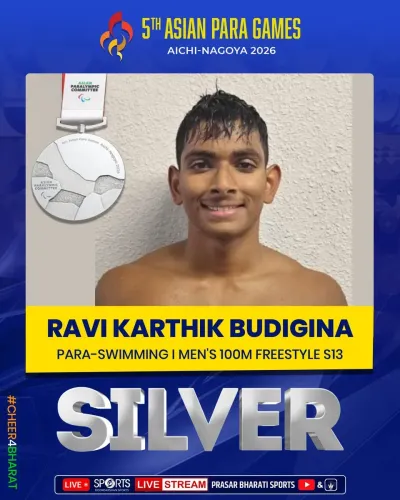
Ravi Kartik Budigina won silver in the Men's 100m Backstroke S13 (visual impairment category).
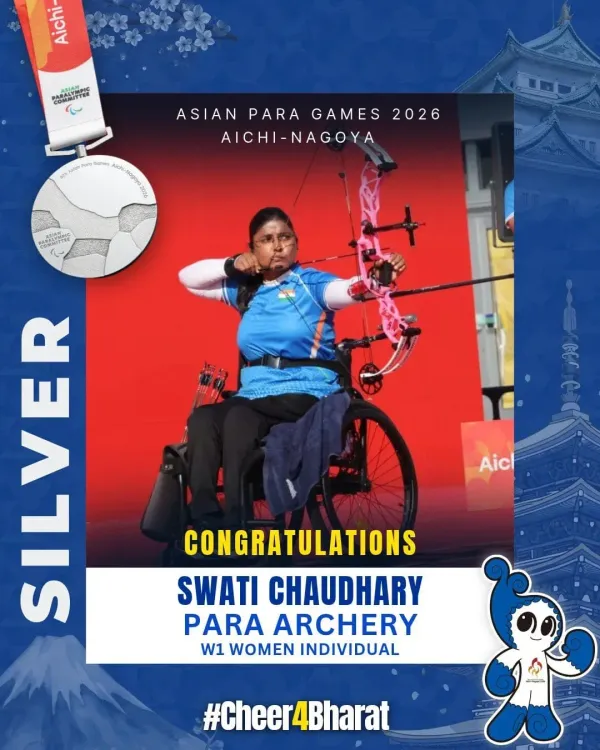
Swati Chaudhary claimed silver in W1 Women's Archery , the most impairment-significant wheelchair archery class.
Sharath Makanahalli took silver in the Men's 1500m T12/T13 track event for visually impaired runners.
Debutant Akira Nandan Banothu won silver in Men's 400m T35/T38 on his first Asian Para Games appearance.
India's medals span swimming, archery, and athletics, reflecting growing depth in the national para-sports programme.
Four Indian para athletes stepped onto the podium at the Asian Para Games 2026, and Union Coal and Mines Minister G. Kishan Reddy was quick to salute each of them — calling out their names, their events, and their grit in a post on Thursday, 22 October 2026.
The four athletes who brought silver home
Ravi Kartik Budigina claimed silver in the Men's 100m Backstroke S13, a category for swimmers with visual impairment. Swati Chaudhary delivered in the W1 Women's Archery event, reserved for athletes with the most significant physical impairments who compete from a wheelchair. Sharath Makanahalli crossed the line for silver in the Men's 1500m T12/T13, a middle-distance track race for visually impaired runners.
The fourth name is the one that catches the eye: debutant Akira Nandan Banothu, competing in the Men's 400m T35/T38 — a category for athletes with co-ordination impairments — picked up silver on his very first appearance at the Games. First outing. Podium finish.
India's long walk to para-sports prominence
India has been sending contingents to the Asian Para Games since the early editions, building steadily through appearances in Jakarta in 2018 and Hangzhou in 2022. Each cycle has seen the country field a larger, more competitive squad as central government investment in para-sports infrastructure has grown. The Ministry of Youth Affairs and Sports has channelled increased funding toward training, equipment, and international exposure for athletes with disabilities over successive years.
Public recognition from senior ministers — even those outside the sports portfolio, like Kishan Reddy — has become a consistent feature of India's para-sports moment. The gesture is more than ceremonial: naming athletes individually, event by event, pushes their stories into a news cycle that can easily overlook para competition in favour of its able-bodied equivalent.
What the silver haul signals
Four silvers on a single day is a statement of depth, not just individual brilliance. Medals spread across swimming, archery, and track athletics point to a programme that is no longer relying on one or two standout stars. Budigina in the pool, Chaudhary at the archery range, Sharath on the track, and a debutant in the sprint — the breadth is the story.
With the Games still ongoing, more results from the Indian contingent are expected. Every medal that follows will add to the pressure — and the opportunity — for the government to translate podium moments into lasting policy commitment for para athletes across the country.
India's para athletes showed up, competed, and delivered. Now the spotlight is on whether the institutions behind them will match their ambition.
Point of View
Giving ministers a genuinely positive story to amplify. The real test, however, is whether public congratulations translate into sustained budgetary support and post-Games career infrastructure for para athletes. A debutant like Banothu winning silver underscores the talent pipeline — the policy question is whether that pipeline receives the investment to keep delivering.
NationPress
22 Oct 2026
Frequently Asked Questions
Who are the four Indian athletes who won silver at the Asian Para Games 2026?
The four athletes are Ravi Kartik Budigina (Men's 100m Backstroke S13), Swati Chaudhary (W1 Women's Archery), Sharath Makanahalli (Men's 1500m T12/T13), and debutant Akira Nandan Banothu (Men's 400m T35/T38).
What is the Asian Para Games?
The Asian Para Games is a multi-sport event for para athletes organised every four years by the Asian Paralympic Committee, featuring competitors from across the Asian continent.
What is the T35/T38 classification in para athletics?
T35/T38 is a track classification for athletes with co-ordination impairments, such as those caused by cerebral palsy or similar conditions affecting muscle control and movement.
Why did G. Kishan Reddy post about para athletes?
As a senior Union Minister and BJP Telangana state president, Kishan Reddy regularly uses social media to congratulate Indian athletes on international achievements, in line with the broader government push to raise the profile of para sports.
Has India previously participated in the Asian Para Games?
Yes, India has fielded contingents at prior editions including the 2018 Games in Jakarta and the 2022 Games in Hangzhou, with successive governments increasing support for the para-sports programme.