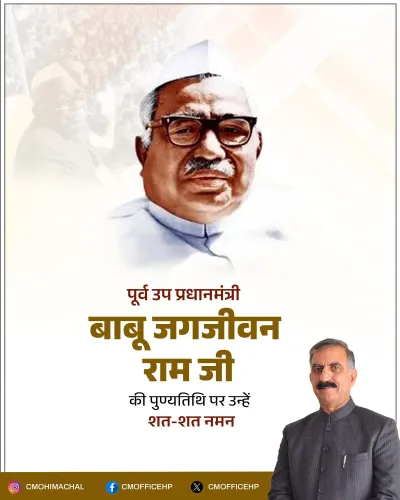
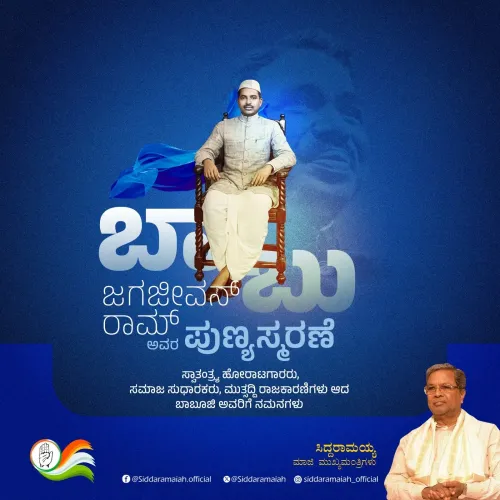
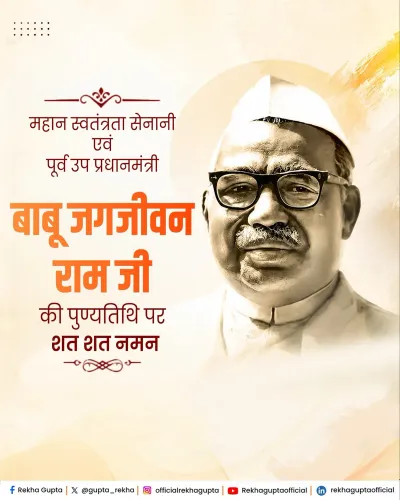
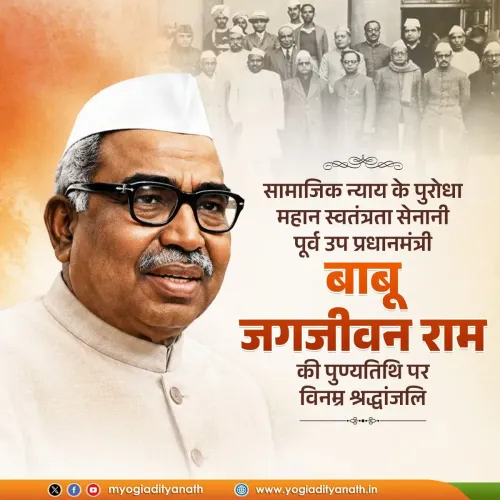
Kishan Reddy Pays Tribute to Babu Jagjivan Ram on Punyatithi
Synopsis
Union Coal and Mines Minister G. Kishan Reddy marked the 40th death anniversary of Babu Jagjivan Ram on 6 July 2026, honouring the freedom fighter and former Deputy Prime Minister as a champion of social justice whose legacy continues to inspire India's nation-building efforts.
Key Takeaways
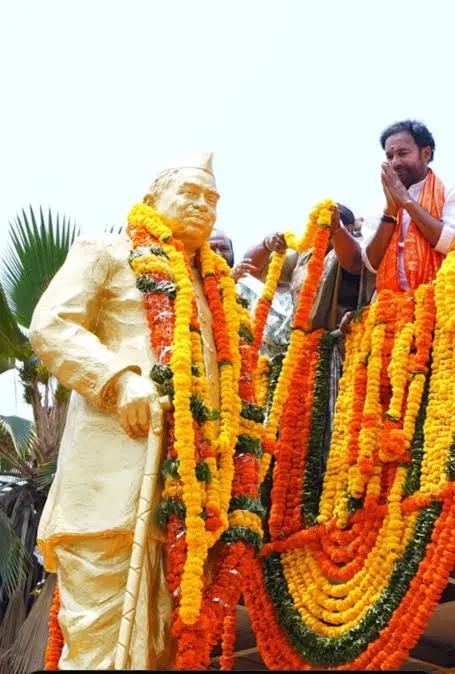
Kishan Reddy , Union Minister of Coal and Mines and Telangana BJP president, paid tribute to Babu Jagjivan Ram on his Punyatithi , 6 July 2026 .
Babu Jagjivan Ram (1908–1986) was a freedom fighter, Constituent Assembly member, and one of India's most prominent Dalit political leaders.
Ram served as Deputy Prime Minister from 1977 to 1979 and held key portfolios including Labour, Agriculture, and Defence across several decades.
His tenure as Labour Minister (1946–52) contributed to foundational labour welfare laws and efforts to end untouchability in public employment.
The tribute is part of a wider BJP pattern of commemorating social-reform icons to connect current governance with the freedom-struggle legacy.
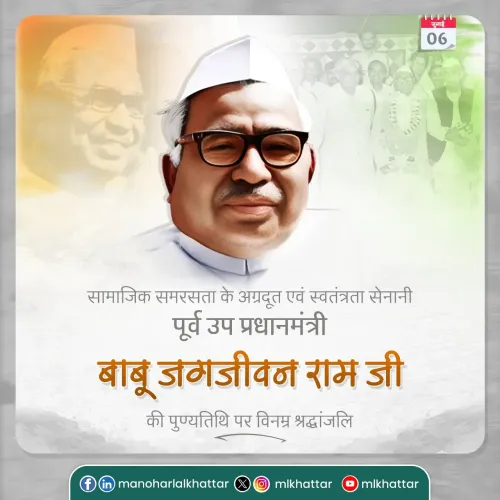
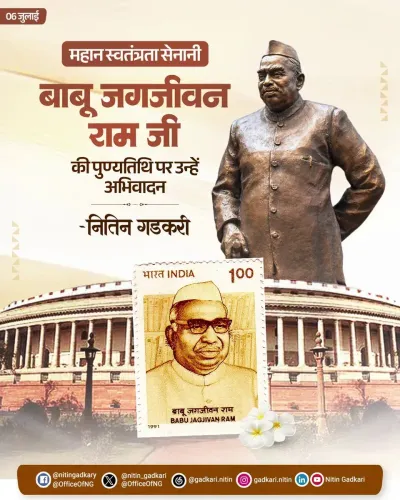
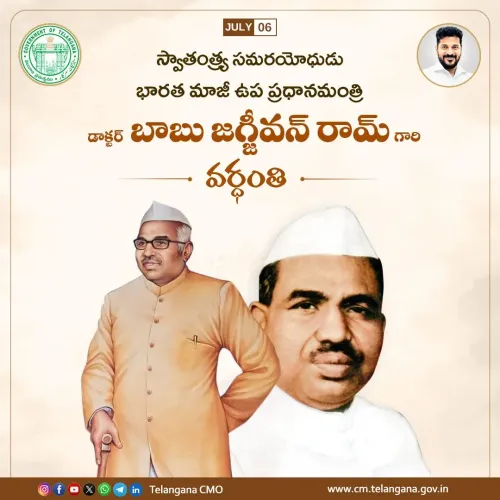
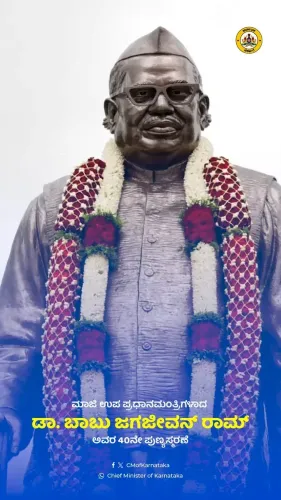
Union Coal and Mines Minister G. Kishan Reddy on Monday, 6 July 2026, paid tribute to freedom fighter and former Deputy Prime Minister Babu Jagjivan Ram on his death anniversary, hailing him as a 'distinguished freedom fighter, visionary statesman, and champion of social justice.' Reddy, who also serves as Telangana BJP state president, posted the tribute on X, underscoring Ram's legacy of equality and nation-building.
Context
Babu Jagjivan Ram was born on 5 April 1908 in Bihar and passed away on 6 July 1986, making this his 40th death anniversary. He remains one of independent India's most consequential Dalit leaders, having served in the Union Cabinet across multiple decades and under several prime ministers. His death anniversary, observed as his Punyatithi, is marked each year by political figures across the spectrum.
Reddy described Ram as someone who 'dedicated his life to the service of the nation and the empowerment of the underprivileged,' adding that his 'enduring legacy of equality, public service, and nation-building continues to inspire generations.'
Policy Backdrop
Jagjivan Ram served as Labour Minister from 1946 to 1952, a tenure that contributed to foundational labour welfare legislation and efforts to eliminate untouchability in public employment. He later held portfolios including Agriculture and Defence, and served as Deputy Prime Minister in the Janata Party government from 1977 to 1979. His political journey spanned the freedom struggle, the Constituent Assembly, and decades of post-independence governance.
Ram was a founding voice for Scheduled Caste rights within mainstream Indian politics at a time when such representation in senior executive positions was rare. His advocacy shaped early affirmative-action discourse in independent India.
Stakeholders and Impact
Ram's legacy holds particular resonance for Scheduled Caste communities across India, who regard him as a defining political icon. His daughter, Meira Kumar, served as Speaker of the Lok Sabha and as a presidential candidate, extending the family's footprint in national politics.
Indian ministers and party leaders across affiliations routinely mark the death anniversaries of pre- and post-independence figures as a way of connecting current governance with the social-reform legacy of the freedom struggle. For the BJP, such commemorations also reflect outreach to diverse social constituencies, including Dalit voters who have been a focus of the party's electoral strategy in states like Telangana, Uttar Pradesh, and Bihar.
What's Next
The 6 July anniversary is likely to see commemorative references in parliamentary proceedings and state-level events in future years, particularly as debates on social-justice legislation continue. Jagjivan Ram's contributions to labour welfare and Dalit empowerment remain touchstones in policy discussions around reservation, affirmative action, and constitutional equality. Reddy's tribute signals that the BJP's broader narrative of inclusive nation-building will continue to invoke Ram's memory as part of its social-outreach agenda.
Point of View
Situating the BJP within a social-justice lineage that the party has increasingly sought to claim. For a Telangana BJP chief operating in a state with a significant Scheduled Caste electorate, invoking Ram's legacy of Dalit empowerment carries clear outreach value. The tribute also reflects a broader BJP strategy of appropriating the memory of Congress-era icons whose social constituencies the party is courting. Whether such commemorations translate into substantive policy momentum on Dalit welfare remains the more consequential question.
NationPress
5 Oct 2026
Frequently Asked Questions
Who was Babu Jagjivan Ram?
Babu Jagjivan Ram (1908–1986) was a freedom fighter from Bihar, a member of the Constituent Assembly, and one of independent India's most prominent Dalit leaders. He served as Deputy Prime Minister from 1977 to 1979 and held portfolios including Labour, Agriculture, and Defence.
When is Babu Jagjivan Ram's death anniversary?
Babu Jagjivan Ram passed away on 6 July 1986. His death anniversary, observed as his Punyatithi, falls on 6 July each year.
Why did G. Kishan Reddy pay tribute to Jagjivan Ram?
G. Kishan Reddy paid tribute to mark Babu Jagjivan Ram's Punyatithi on 6 July 2026, honouring his legacy as a freedom fighter, social-justice champion, and advocate for Scheduled Caste rights.
What was Jagjivan Ram's contribution to Dalit rights?
Jagjivan Ram was a leading advocate for Scheduled Caste rights in mainstream Indian politics. As Labour Minister from 1946 to 1952, he worked on early labour welfare laws and pushed against untouchability in public employment, helping shape India's early affirmative-action discourse.
Who is G. Kishan Reddy?
G. Kishan Reddy is a senior BJP leader serving as Union Minister of Coal and Mines and as the Telangana BJP state president. He regularly posts public tributes to national figures on social media as part of his political outreach.