KPSC exam security overhauled for 1.47 lakh candidates on Nov 15 after scam
Synopsis
Stung by a bribery-and-leak scandal that led to four arrests including a former IAS officer, Karnataka is deploying its most secure exam setup ever — CCTV, mobile jammers, three-copy OMR sheets, and same-day public upload — for 1.47 lakh candidates sitting the KPSC Gazetted Probationer preliminary exam on 15 November. It is the commission's first credibility test since the scam broke.
Key Takeaways
The KPSC preliminary exam for 319 Gazetted Probationer posts (202 Group 'B', 117 Group 'A') is scheduled for 15 November across 345 sub-centres in Karnataka.
A total of 1,47,067 candidates (91,238 men, 53,074 women) are registered for the exam.
New measures include CCTV surveillance , mobile jammers , a five-option OMR system , three-copy OMR sheets, and same-day public upload of scanned answer sheets.
Alleged bribes of ₹20 lakh to ₹80 lakh per post were at the centre of the KPSC scam, which involved suspected irregularities in 13 recruitment drives .
Four individuals have been arrested, including former KPSC Chairman Shivashankarappa Sahukar and former IAS officer Gyanendra Kumar Gangwar .
Shivakumar has ordered Aadhaar-based identity verification for future exams and directed Deputy Commissioners to train staff on election-duty lines.
The Karnataka government on Thursday, 12 November 2026, unveiled a sweeping set of first-of-their-kind security measures for the Karnataka Public Service Commission (KPSC) preliminary examination scheduled for Sunday, 15 November, covering 319 Gazetted Probationer posts across the state. The overhaul directly follows the KPSC recruitment scam that exposed alleged question-paper leaks, OMR sheet manipulation, and bribery running into crores — and comes as 1,47,067 aspirants prepare to sit the exam.
What the New Measures Entail
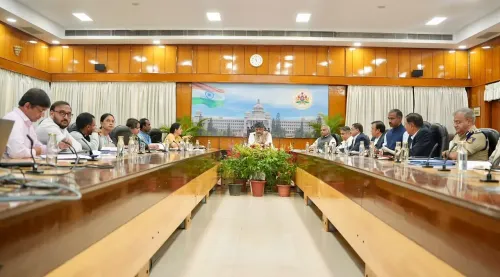
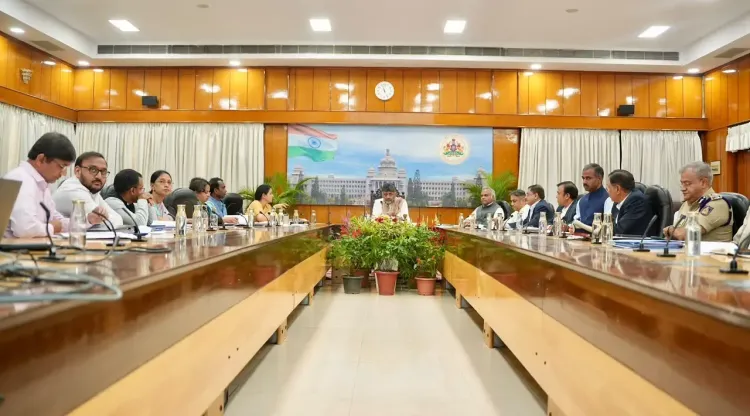
KPSC Controller of Examinations H. Prasanna briefed a preparedness meeting outlining the reforms. Under a new five-option OMR system, candidates must mandatorily darken the fifth bubble if they do not know an answer — no question can be left blank. Each OMR sheet will now have three copies: one for the candidate, one retained by the KPSC for evaluation, and one stored in the Deputy Commissioner or KPSC strong room.
CCTV cameras and mobile jammers are being installed across all examination halls. Superintendents of Police have been instructed to personally certify that jammers are functioning properly before the exam begins. Two invigilators will be deployed per hall to verify identity cards, conduct frisking, and monitor candidates from the rear of the room.
In a significant transparency step, scanned copies of all OMR sheets will be uploaded to the KPSC website for public viewing on the day of the examination itself. Scanning arrangements have been made in 12 districts, and a total of 2,94,134 OMR sheets across the two papers will be processed.
Chief Minister Shivakumar's Directives
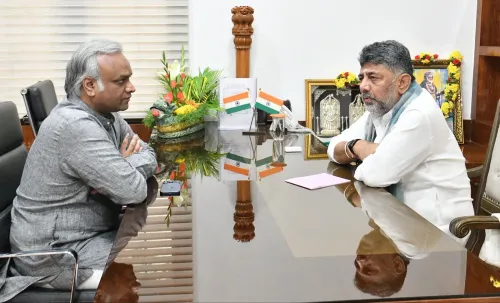
Chief Minister D.K. Shivakumar has directed the Department of e-Governance to introduce Aadhaar-based identity verification at examination centres for future exams, to prevent impersonation. He also instructed officials to set up OMR scanning centres at all district headquarters in coordination with the Department of Technical Education, enabling faster result declaration.
Shivakumar further directed Deputy Commissioners to train all examination staff on the lines of election duty and submit compliance reports. He also flagged persistent delays in the issuance of Caste Validity Certificates, which he said had held up appointments from earlier recruitments, warning that such bottlenecks would not be tolerated going forward.
Exam Structure and Reach
The preliminary examination will be held at 345 sub-centres spread across Bengaluru Urban, Mysuru, Kalaburagi, Raichur, Ballari, Bagalkot, Vijayapura, Dharwad, Belagavi, Uttara Kannada, Shivamogga, Dakshina Kannada, Hassan, Davanagere, and Tumakuru districts. Of the 1,47,067 registered candidates, 91,238 are men and 53,074 are women.
Paper I on General Studies and Humanities will run from 10 am to 12 noon; Paper II on State-related General Studies, Science and Technology, and Mental Ability will follow from 2 pm to 4 pm. Each paper carries 100 questions for a total of 200 marks. The 319 posts on offer include 202 Group 'B' and 117 Group 'A' positions.
The Scam That Triggered the Overhaul
The enhanced security framework is a direct response to the KPSC recruitment scam, which centred on the recruitment of 400 Veterinary Officers in the Animal Husbandry and Fisheries Department and allegedly involved irregularities in 13 other KPSC recruitment drives. Investigators have alleged that bribes ranging from ₹20 lakh to ₹80 lakh per post were collected from candidates in exchange for leaked question papers, answer keys, and manipulation of provisional merit lists.
Among those arrested in connection with the case are former KPSC Chairman Shivashankarappa Sahukar, former KPSC Controller of Examinations and IAS officer Gyanendra Kumar Gangwar, KPSC member B.V. Geetha, and alleged middleman and BJP leader Basavaraj Kannale. The case drew national headlines and triggered widespread demands for a systemic reform of the state's recruitment machinery.
With more than 1.47 lakh aspirants set to appear on 15 November, the Karnataka government is now racing to demonstrate that the KPSC can deliver a credible, tamper-proof examination — the first credibility test for the commission since the scandal broke.
Point of View
But it is worth asking why these measures — CCTV, jammers, multi-copy OMR sheets — were not standard practice before the scam. The fact that a former IAS officer and a sitting KPSC chairman are among the arrested suggests that institutional capture, not mere procedural gaps, was the real problem. Same-day OMR uploads and Aadhaar verification are welcome steps, but they address the detection end; the more important — and unanswered — question is what internal oversight failed to catch bribery allegedly running at ₹80 lakh per post across 13 recruitment drives. The government would do well to announce an independent audit of all KPSC recruitments since 2020, not just the two that have so far attracted scrutiny.
NationPress
12 Nov 2026
Frequently Asked Questions
What security measures has Karnataka introduced for the KPSC Gazetted Probationer exam on 15 November?
The Karnataka government has deployed CCTV cameras, mobile jammers, two invigilators per hall, a five-option OMR system, and three-copy OMR sheets for the exam. All scanned OMR sheets will also be uploaded to the KPSC website on the day of the examination for public viewing.
What is the KPSC recruitment scam that triggered these reforms?
The KPSC scam involved alleged question-paper leaks, OMR sheet manipulation, and bribery in the recruitment of 400 Veterinary Officers, with suspected irregularities in 13 other recruitment drives. Investigators allege bribes of ₹20 lakh to ₹80 lakh per post were paid, and four people — including a former KPSC chairman and a former IAS officer — have been arrested.
How many candidates are appearing for the KPSC Gazetted Probationer exam?
A total of 1,47,067 candidates — 91,238 men and 53,074 women — have registered for the preliminary examination to be held on 15 November across 345 sub-centres in Karnataka.
Who has been arrested in the KPSC scam?
Four individuals have been arrested: former KPSC Chairman Shivashankarappa Sahukar, former KPSC Controller of Examinations and IAS officer Gyanendra Kumar Gangwar, KPSC member B.V. Geetha, and alleged middleman and BJP leader Basavaraj Kannale.
What longer-term reforms has CM D.K. Shivakumar announced for KPSC examinations?
Chief Minister D.K. Shivakumar has directed the Department of e-Governance to introduce Aadhaar-based identity verification at exam centres to prevent impersonation, and ordered OMR scanning centres to be set up at all district headquarters for faster result processing. He has also asked Deputy Commissioners to treat exam staff training on par with election duty.