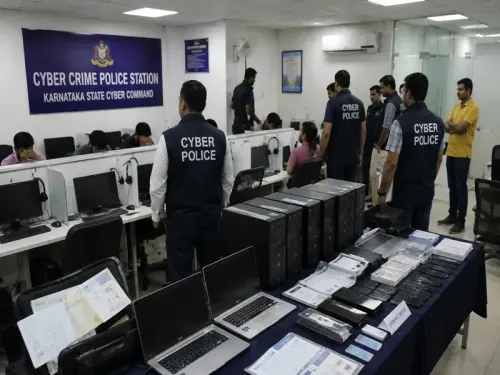
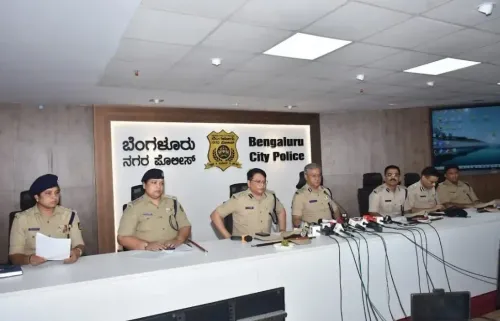
Karnataka Cyber Command busts Bengaluru SIM box network, 4 arrested
Synopsis
A residential SIM box operation with 320 active connections — spread across two Bengaluru apartments and linked to an e-SIM supply chain stretching to Maharashtra — has been dismantled by Karnataka Cyber Command. With suspected ties to digital-arrest scams and sextortion, and potential financial exposure in the hundreds of crores, this bust reveals how organised cybercrime is embedding itself inside ordinary apartment buildings.
Key Takeaways
Karnataka Cyber Command Unit busted an illegal SIM box network in Bengaluru's Whitefield division on 22 October 2026 .
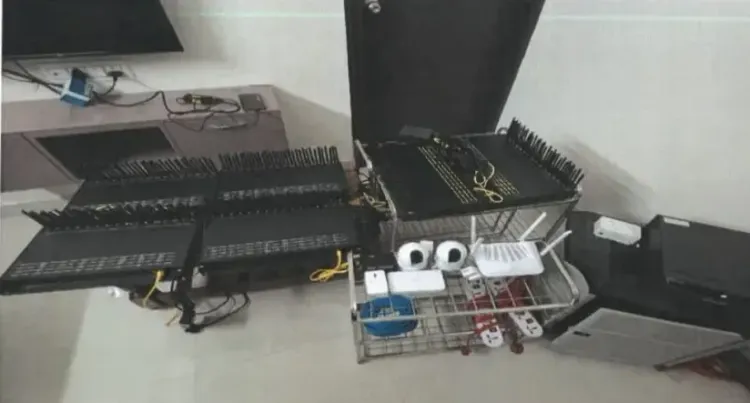
10 SIM box devices with a combined capacity of 320 SIM connections were recovered from apartments in Kadugodi and Pattandur Agrahara .
Four persons have been arrested; their suspected role centres on the e-SIM supply chain .
Preliminary leads connect the network to digital-arrest scams , sextortion and financial cyber frauds, with potential exposure running into hundreds of crores of rupees — figures yet to be verified.
Investigation has extended to Tiroda, Gondia district, Maharashtra , over alleged SIM card sales and e-SIM conversions.
The case was originally registered on 26 August 2026 following a complaint by Bharti Airtel Limited .
The Karnataka Cyber Command Unit has dismantled an illegal SIM box network operating out of two apartments in Bengaluru's Whitefield division, seizing 10 SIM box devices with a combined capacity of 320 SIM connections and arresting four persons. The operation, disclosed on Thursday, 22 October 2026, has surfaced suspected links to digital-arrest scams, sextortion and financial cyber frauds across India, with preliminary leads pointing to potential financial exposure running into hundreds of crores of rupees — though investigators caution that the full scale of victims and losses is yet to be established.
How the Operation Unfolded
The case was registered on 26 August 2026 at the Cyber Crime Police Station, Whitefield, following a complaint by the Chief Circle Nodal Officer of Bharti Airtel Limited, Bengaluru, who flagged suspected unauthorised use of Airtel SIM cards in a SIM box setup within the Whitefield and Kadugodi areas. A detailed investigation was subsequently initiated, eventually culminating in a special operation conducted in coordination with the Department of Telecommunications, Karnataka.
Police identified two separate SIM box facilities — both traced to the same network of accused — operating from distinct apartments within the Whitefield Cyber Crime Police Station's jurisdiction.
What Was Recovered at Each Location
At Kadugodi, officers recovered six SIM box devices, each carrying 32 SIM slots, accounting for 192 slots configured with e-SIM-provisioned connections from multiple telecom service providers. At Pattandur Agrahara, four devices with 32 slots each were seized, adding another 128 slots to the total. Together, the two facilities had an operational capacity of 320 SIM connections, which investigators suspect formed part of an organised telecommunications infrastructure used to route fraudulent communications.
The seized devices are currently being forensically examined to determine their precise mode of operation and establish direct links to the suspected offenders.
Maharashtra Lead and the e-SIM Supply Chain
The investigation has also traced leads to Tiroda in Maharashtra's Gondia district, in connection with the alleged sale of SIM cards and their conversion into e-SIM profiles for use in the network. The four arrested individuals are suspected of involvement in the e-SIM supply chain — covering procurement, provisioning and distribution of the e-SIM resources allegedly deployed in the operation.
Director General of Police, Cyber Command, Pronab Mohanty, confirmed that further inter-agency coordination is underway to identify additional persons involved and map the full extent of the network.
Scale of Fraud and Ongoing Investigation
Preliminary leads suggest the wider network may be connected to digital-arrest scams, sextortion and other financial cyber frauds operating across multiple states. However, authorities have been careful to note that the actual number of victims, total financial losses and the full reach of the network remain subject to verification through continuing investigation.
This is not an isolated incident — SIM box fraud has emerged as a growing vector for organised cybercrime in India, enabling perpetrators to disguise international or VoIP calls as local mobile calls, complicating detection and attribution. The Bengaluru bust is among the larger seizures of SIM box infrastructure reported in the country in recent months, and it underscores the scale at which such operations can be run from residential premises. Investigators are expected to pursue the Maharashtra angle and widen the net of accused as forensic analysis of the devices progresses.
Point of View
Provisioned with e-SIMs sourced from another state entirely. That supply-chain architecture — decentralised, tech-enabled, hard to trace — is what makes modern SIM box fraud resilient to single-point takedowns. The Airtel complaint that triggered this case also raises a structural question: telecom operators are effectively the first line of detection, yet their nodal officers cannot act on their own. India's cybercrime response framework still depends on reactive FIRs rather than real-time network monitoring with law-enforcement teeth. Until the Department of Telecommunications and state cyber commands have a faster, pre-emptive interception loop, SIM box operations will keep re-spawning elsewhere.
NationPress
22 Oct 2026
Frequently Asked Questions
What is a SIM box and how is it used for fraud?
A SIM box is a device that holds multiple SIM cards and routes calls — typically international or VoIP calls — through local mobile networks, making them appear as ordinary domestic calls. Fraudsters use them to disguise the origin of calls made during scams such as digital-arrest cons, sextortion and financial fraud, while also evading detection by telecoms and law enforcement.
Where were the SIM box facilities found in Bengaluru?
Police found two facilities: one at Kadugodi , which held six SIM box devices with 192 SIM slots, and another at Pattandur Agrahara , which held four devices with 128 slots. Both locations fall under the Whitefield Cyber Crime Police Station's jurisdiction and were run by the same network of accused.
What cyber frauds is the busted network suspected of enabling?
Investigators have found preliminary leads linking the network to digital-arrest scams, sextortion and other financial cyber frauds across India. The potential financial exposure is reportedly in the hundreds of crores of rupees, but the actual victim count and total losses are yet to be established through ongoing investigation.
What is the Maharashtra connection in this case?
The investigation has traced leads to Tiroda in Gondia district, Maharashtra , over the alleged sale of SIM cards and their conversion into e-SIM profiles that were then fed into the Bengaluru network. The four arrested persons are suspected of involvement in this e-SIM supply chain.
How was the illegal SIM box network first detected?
The case was registered on 26 August 2026 at the Whitefield Cyber Crime Police Station after the Chief Circle Nodal Officer of Bharti Airtel Limited, Bengaluru filed a complaint about suspected unauthorised use of Airtel SIM cards in a SIM box setup. A subsequent joint operation with the Department of Telecommunications, Karnataka, led to the identification and raid of both facilities.