KTR pays tribute to Adivasi hero Kumram Bheem on death anniversary
Synopsis
BRS working president K. T. Rama Rao marked the death anniversary of Gond tribal leader Kumram Bheem on 26 October 2026, honouring the Adilabad revolutionary's sacrifices for Adivasi rights and his iconic Jal, Jungle, Zameen legacy.
Key Takeaways
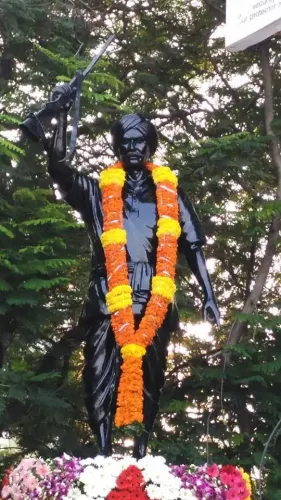
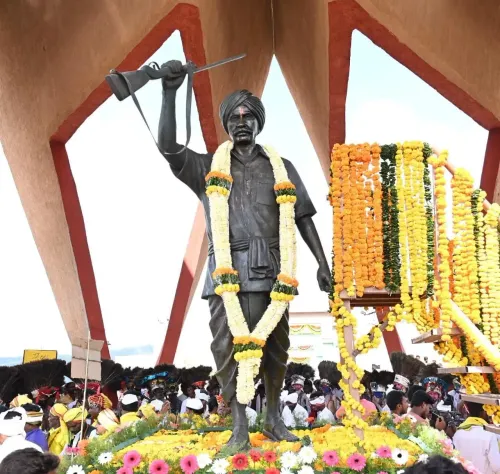
KTR paid tribute to Kumram Bheem on his death anniversary on 26 October 2026 , calling him a 'revolutionary hero' and 'Gond leopard'.
Kumram Bheem was a Gond tribal leader from Adilabad who resisted the Nizam's administration in the 1930s–1940s for Adivasi land and forest rights.
His slogan Jal, Jungle, Zameen remains a cornerstone of Adivasi rights discourse in India.
KTR described Bheem's sacrifices for 'the rights of Adivasi people and the protection of the oppressed' as 'eternally memorable'.
The tribute reflects BRS 's consistent political emphasis on Telangana's distinct regional history and marginalised communities since the state's formation in 2014 .
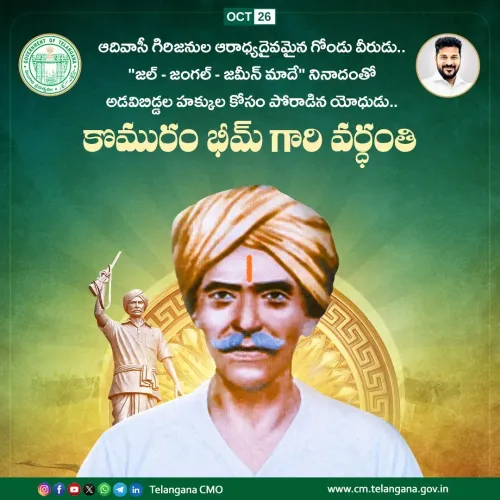
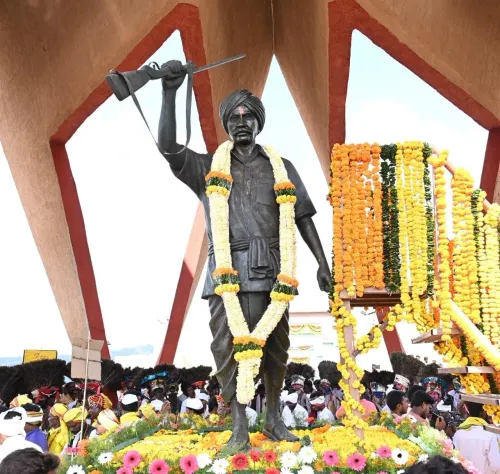
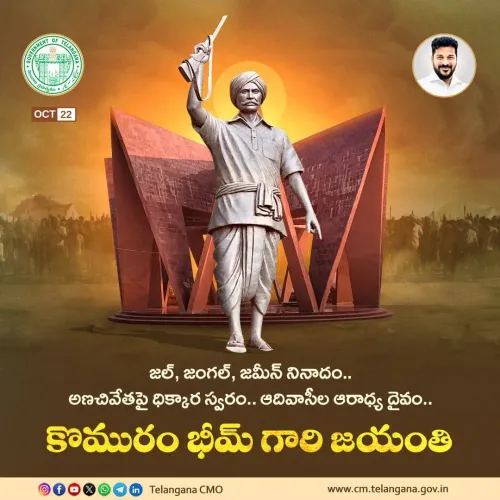
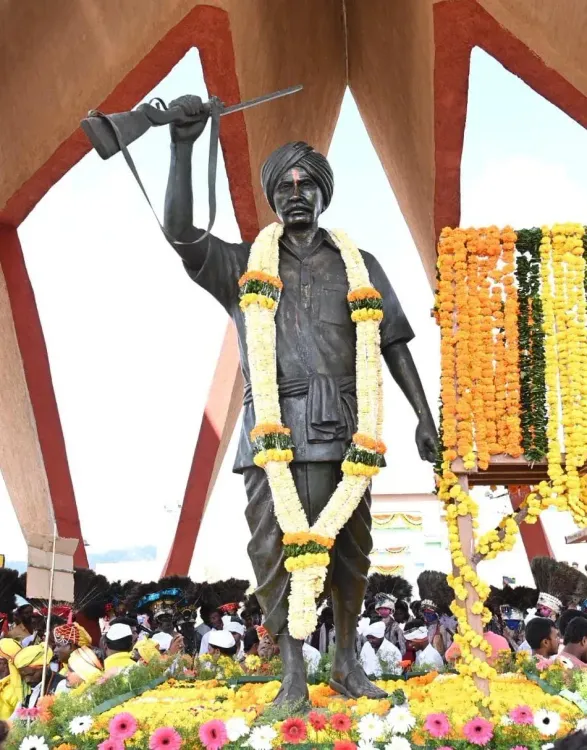
A revolutionary who defied the Nizam's authority with the battle cry of Jal, Jungle, Zameen — land, forest, water — Kumram Bheem, the Gond tribal leader from Adilabad, was remembered on his death anniversary on Monday, 26 October 2026 by BRS working president K. T. Rama Rao, who offered a solemn tribute to the freedom fighter's enduring legacy.
In a post in Telugu, KTR described Kumram Bheem as a 'revolutionary hero who stood his ground against injustice and tyranny' and the 'Gond leopard' — a term of reverence that has long echoed through Adivasi communities in the region. 'The sacrifices and service of Kumram Bheem for the rights of Adivasi people and the protection of the oppressed are eternally memorable,' he wrote, offering his respects on the occasion of the death anniversary.
The Gond leopard's fight for Jal, Jungle, Zameen
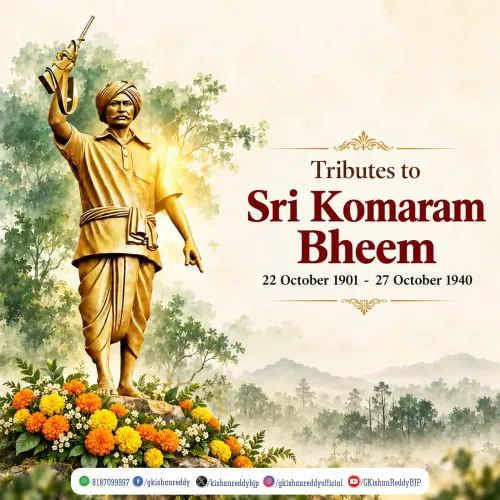
Kumram Bheem rose to prominence in the 1930s and 1940s in the dense forests of what is today the Adilabad district of Telangana, rallying Gond tribals against the forest bureaucracy and Nizam administration that sought to strip communities of their ancestral lands. His three-word slogan — Jal, Jungle, Zameen (water, forest, land) — distilled a demand that continues to define Adivasi rights discourse across India nearly a century later. He was killed in a confrontation with Nizam forces, cementing his status as a martyr and a symbol of indigenous resistance.
His legacy sits at the intersection of regional identity and social justice — two themes the Bharat Rashtra Samithi has consistently sought to claim since Telangana was carved into a separate state in 2014. The party has frequently invoked pre-independence tribal figures to underline its narrative that Telangana's history and its marginalised communities deserve distinct recognition.
Tribute politics and the Adivasi rights thread in Telangana
Public commemorations of Kumram Bheem form a recurring feature of political culture in Telangana, with leaders across parties marking the anniversary to signal solidarity with Adivasi communities. For the BRS and KTR in particular, such tributes carry a specific subtext: the party's long-standing positioning as the voice of Telangana's distinct regional identity, including the contributions of tribal communities whose struggles predate the mainstream independence movement.
The post carries no new policy announcement — it is a gesture of remembrance. But in a state where Adivasi land rights, forest governance, and tribal welfare remain live political questions, the act of publicly honouring Kumram Bheem is rarely just ceremonial. It keeps the conversation — and the community's expectations — visible.
Nearly a century after Kumram Bheem raised his voice in the forests of Adilabad, that voice still echoes in the halls of Telangana's politics.
Point of View
Jungle, Zameen slogan remains potent because Adivasi land and forest rights in Adilabad and surrounding districts are still unresolved governance questions, giving such commemorations a latent policy charge. For BRS, which is rebuilding its electoral base after losing power in Telangana in 2023, invoking revered tribal figures on key dates is also a low-cost, high-visibility way to maintain community linkages. Whether these gestures translate into concrete tribal welfare advocacy will be the metric by which Adivasi voters ultimately judge the party's commitment.
NationPress
26 Oct 2026
Frequently Asked Questions
Who was Kumram Bheem?
Kumram Bheem was a Gond tribal leader from the Adilabad region of present-day Telangana who led resistance against the Nizam's administration and forest officials in the 1930s–1940s, championing Adivasi rights with the slogan Jal, Jungle, Zameen — water, forest, land. He is revered as a martyr and symbol of indigenous resistance in the region.
What does Jal Jungle Zameen mean?
Jal, Jungle, Zameen translates to 'water, forest, land' in Hindi and is the iconic slogan associated with Kumram Bheem's movement for Adivasi rights. It encapsulates tribal communities' demand for rights over their ancestral natural resources and remains a rallying cry in Adivasi rights discourse across India.
Why did KTR pay tribute to Kumram Bheem?
BRS working president K. T. Rama Rao paid tribute to Kumram Bheem on the occasion of his death anniversary on 26 October 2026, honouring the Gond leader's sacrifices for Adivasi people and the oppressed. Such commemorations are a regular part of how Telangana's political leaders signal solidarity with tribal communities.
What is Kumram Bheem's connection to Telangana?
Kumram Bheem operated in the Adilabad district, which is part of present-day Telangana. His struggle against the Nizam's rule and his fight for Adivasi land and forest rights are considered a significant part of the region's distinct pre-independence history, and his legacy is prominently commemorated in Telangana's political and cultural life.
What is BRS's stance on Adivasi rights?
The Bharat Rashtra Samithi has consistently positioned itself as a party representing Telangana's marginalised communities, including tribal populations. It regularly invokes pre-independence tribal figures like Kumram Bheem to underscore its commitment to Adivasi rights and the state's distinct regional identity.