Shivraj hails Sarvesh Kushare's historic Asian Games silver

Synopsis
Sarvesh Kushare cleared 2.25m to claim silver in the men's high jump at the 2026 Asian Games, ending a 56-year medal drought for India in the event. Union Agriculture Minister Shivraj Singh Chouhan hailed the feat as a landmark performance on X.
Key Takeaways
Sarvesh Kushare won silver in the Men's High Jump at the 2026 Asian Games with a clearance of 2.25 metres .
India had not won an Asian Games medal in the men's high jump for 56 years , since 1970 .
Union Agriculture Minister Shivraj Singh Chouhan publicly congratulated Kushare on X, calling it 'a landmark performance.' The Asian Games is a continental multi-sport event held every four years under the Olympic Council of Asia .
The result signals growing depth in Indian field athletics, an area historically overshadowed at the continental level.
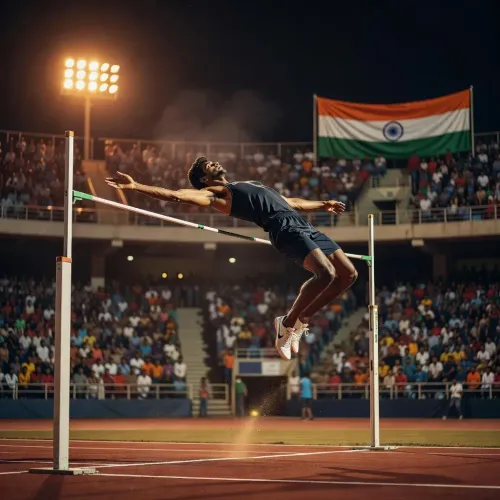
Fifty-six years of waiting ended in a single soaring leap. Sarvesh Kushare cleared 2.25 metres in the Men's High Jump at the 2026 Asian Games on Sunday, September 27, winning India a silver medal in an event the country had last stood on the continental podium for in 1970 — and Union Agriculture Minister Shivraj Singh Chouhan was among the first to mark the moment on social media.
Chouhan posted on X calling it 'a moment to savour,' congratulating Kushare on what he described as 'a landmark performance.' The post captures a mood that has been building across Indian athletics for years: field disciplines, long overshadowed by track sprints and road events on the continental stage, are beginning to deliver history-making results.
56 years and one clearance
The significance of the gap is stark. India's previous Asian Games medal in the men's high jump dates back more than half a century, a stretch that spans multiple generations of athletes, coaches, and federation cycles. Kushare's 2.25m clearance did not just win a medal — it closed a chapter that had stayed open since before most of today's Indian Olympic squad were born.
The Asian Games, held every four years under the Olympic Council of Asia, brings together the continent's best athletes across dozens of disciplines. High jump, a technically demanding event that rewards a rare blend of speed, timing, and explosive power, has historically been dominated by East and West Asian nations. Breaking into that hierarchy at 2.25m is a performance that will be measured against the sport's continental benchmarks for years.
India's athletics medal count in focus
Kushare's silver arrives at a moment when Indian athletics is under close watch for its continental haul. Every medal in a field discipline carries additional weight because it signals depth — not just one sprint phenomenon, but a widening base of competitive athletes across events. A silver in the high jump, an event India had essentially gone absent from at this level for over five decades, is the kind of result that reshapes how selectors, coaches, and sponsors think about investment in field athletes.
For Chouhan, whose ministerial portfolio centres on rural development and farmers' welfare, the congratulatory post also reflects a broader political tradition of senior leaders publicly marking Indian sporting achievements — signalling that the moment registers not just in sports circles but in the country's wider national conversation.
Sarvesh Kushare has just written his name into Indian athletics history. The question now is whether a new generation of high jumpers takes that 2.25m bar as a floor, not a ceiling.
Point of View
Not just track. For the BJP government, celebrating such milestones through senior ministers like Chouhan reinforces the political messaging around sporting nationalism that has been a consistent thread since 2014. The 56-year gap underlines how structurally neglected field events have been in Indian athletics infrastructure, making this medal both a triumph and an implicit argument for sustained investment. Whether the system now builds on Kushare's breakthrough or treats it as an anomaly will define the event's actual policy legacy.
NationPress
28 Sept 2026
Frequently Asked Questions
Who is Sarvesh Kushare?
Sarvesh Kushare is an Indian high jump athlete who won a silver medal at the 2026 Asian Games with a clearance of 2.25 metres in the men's event.
How high did Sarvesh Kushare jump at the 2026 Asian Games?
Sarvesh Kushare cleared 2.25 metres to win the silver medal in the men's high jump at the 2026 Asian Games.
When did India last win an Asian Games medal in men's high jump?
India's previous Asian Games medal in the men's high jump came 56 years before 2026, placing it in 1970.
What did Shivraj Singh Chouhan say about Sarvesh Kushare's medal?
Union Agriculture Minister Shivraj Singh Chouhan congratulated Kushare on X, calling the performance 'a moment to savour' and a 'landmark performance' that brought home an Asian Games medal in the event after 56 years.
What are the Asian Games?
The Asian Games are a continental multi-sport event held every four years, organised by the Olympic Council of Asia, featuring athletes from across the continent competing across dozens of disciplines.