Maharashtra Census 2026: Self-enumeration kicks off May 1 in India's first digital count
Synopsis
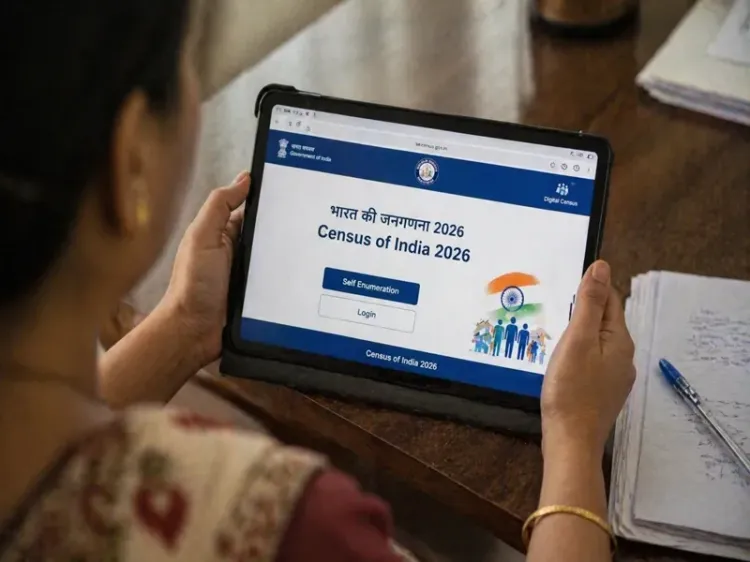
For the first time in India's history, citizens can submit Census data online — and Maharashtra is the launchpad. Starting 1 May 2026, residents log on to se.census.gov.in, generate an 11-digit household ID, and hand it to enumerators who follow up door-to-door. With 2.64 lakh field staff and a real-time monitoring portal, this is the most ambitious administrative exercise India has attempted since 2011.
Key Takeaways
Maharashtra's Census 2026 self-enumeration phase begins on 1 May 2026 , marking India's first fully digital population count exercise.
Citizens must use only the official portal https://se.census.gov.in and should only trust SMS containing the keyword RGICEN .
Completing online submission generates an 11-digit unique ID starting with 'H', required for verification during enumerator visits.
House listing and housing Census will follow from 16 May to 14 June 2026 , with around 2.64 lakh field personnel deployed.
Jurisdictional boundaries across Maharashtra are frozen from 1 January 2026 to 31 March 2027 to ensure data consistency.
Census entries are not legal documents or proof of identity, officials clarified.
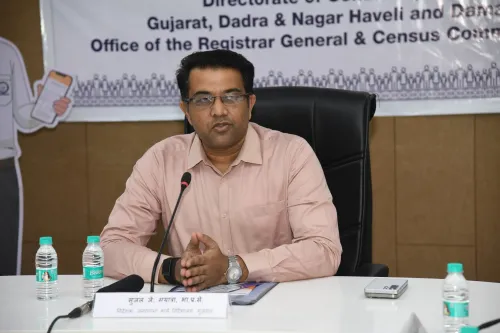
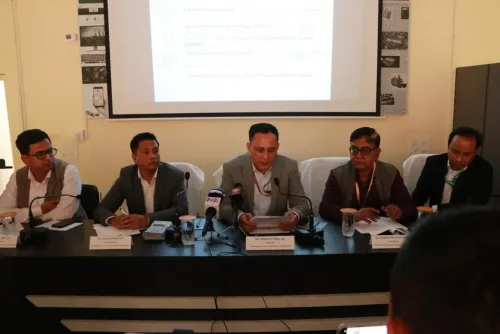
Maharashtra's Census 2026 self-enumeration phase is set to commence on 1 May 2026, marking the launch of India's first fully digital population count exercise, officials announced at a press conference in Mumbai on 30 April 2026. Nirupama Dange, Chief Principal Census Officer and Director of Census Operations for Maharashtra, described the initiative as a pivotal step in the country's shift toward digital governance.
How the Self-Enumeration Process Works
Citizens opting to self-enumerate must use only the official government portal https://se.census.gov.in. Officials have cautioned residents to disregard any SMS that does not contain the keyword RGICEN, warning against fraudulent communications. Once an individual completes the online submission, an 11-digit unique identification number beginning with the letter 'H' will be generated, which must be preserved and shared with enumerators during subsequent door-to-door visits for verification.
Key Dates and Timeline
The self-enumeration window runs from 1 May to 15 May 2026. This will be followed by the house listing and housing Census from 16 May to 14 June 2026, during which trained field enumerators will conduct door-to-door visits — preferably during morning or evening hours — covering approximately eight to ten households per day. The follow-up phase involving ward-wise population counting is scheduled for 2027 as part of the broader Census process.
Scale of Deployment and Administrative Groundwork
A workforce of approximately 2.64 lakh field personnel, comprising enumerators and supervisors along with a 10 per cent reserve staff, will be deployed after structured training. A dedicated Census Monitoring and Management System portal will oversee large-scale supervision, coordination, and data handling throughout the exercise.
To facilitate the Census, the state froze jurisdictional boundaries of districts, talukas, cities, and villages from 1 January 2026 to 31 March 2027, formalised through a gazette notification issued on 15 July 2025. A subsequent notification on 26 February 2026 operationalised the Census activities on the ground.
Coverage and Legal Standing of Entries
Enumeration will be carried out across both slum and non-slum areas using pre-defined maps. Migratory populations will be counted at their place of work under the de facto method, in line with established Census norms. Notably, officials clarified that Census entries are recorded at the household level and do not constitute legal documents or proof of identity — a distinction relevant for residents who may conflate the exercise with Aadhaar or voter registration processes.
With mobile applications and a real-time data collection portal deployed for the first time, the 2026 Census represents a significant administrative leap from the paper-based exercise last conducted in 2011. The success of Maharashtra's rollout is being closely watched as a template for the national exercise.
Point of View
Delayed first by the pandemic and then by administrative inertia — making the 2026 exercise the longest gap between counts in independent India's history. Maharashtra's digital-first rollout is a genuine leap, but the 11-digit household ID system introduces a new friction point: millions of residents, particularly in rural and semi-urban areas, may struggle with the online portal, pushing the burden back onto the very enumerators the self-enumeration was meant to relieve. The freeze on jurisdictional boundaries until March 2027 is also significant — it means no new administrative units can be carved out for over a year, with political implications in a state where taluka and district reorganisation has been a persistent demand. Whether the Census Monitoring and Management System delivers real-time accountability or becomes another underutilised dashboard will be the real measure of this digital ambition.
NationPress
17 Sept 2026
Frequently Asked Questions
When does the Maharashtra Census 2026 self-enumeration begin?
The self-enumeration phase begins on 1 May 2026 and runs until 15 May 2026. Citizens can register their household data online at the official portal https://se.census.gov.in during this window.
How do I self-enumerate for the Census 2026 in Maharashtra?
Visit the official portal https://se.census.gov.in and complete your household submission online. You will receive an 11-digit unique ID starting with 'H', which must be shared with the enumerator who visits your home for verification after 16 May 2026.
Is the Census entry a valid identity or address proof?
No. Officials have clarified that Census entries are recorded at the household level and do not serve as legal documents or proof of identity. Residents should not treat them as substitutes for Aadhaar, voter ID, or other official documents.
How many field workers will conduct the Maharashtra Census 2026?
Approximately 2.64 lakh field personnel, including enumerators and supervisors, will be deployed across Maharashtra, supported by a 10 per cent reserve staff. All personnel will undergo structured training before deployment.
What happens after the self-enumeration phase ends on 15 May 2026?
The house listing and housing Census phase begins on 16 May 2026 and continues until 14 June 2026. Enumerators will conduct door-to-door visits, covering eight to ten households per day, preferably in morning or evening hours, to verify and supplement the data collected online.