Maharashtra Rajya Sabha Elections: Key Nominations Filed by Mahayuti and MVA Candidates
Synopsis
In a pivotal move for Maharashtra's political landscape, key figures from the Mahayuti alliance, including Union Minister Ramdas Athawale, filed nominations for Rajya Sabha seats alongside NCP chief Sharad Pawar. This crucial election will shape the future of the state's legislative representation.
Key Takeaways
Key Nominations: Six Mahayuti candidates and Sharad Pawar have filed nominations.
Election Date: Polling is set for March 16.
Controversial Deal: Parth Pawar's land deal has attracted public criticism.
Congress Support: The Congress party backs Sharad Pawar's candidacy.
Withdrawal Deadline: Candidates can withdraw by March 9.
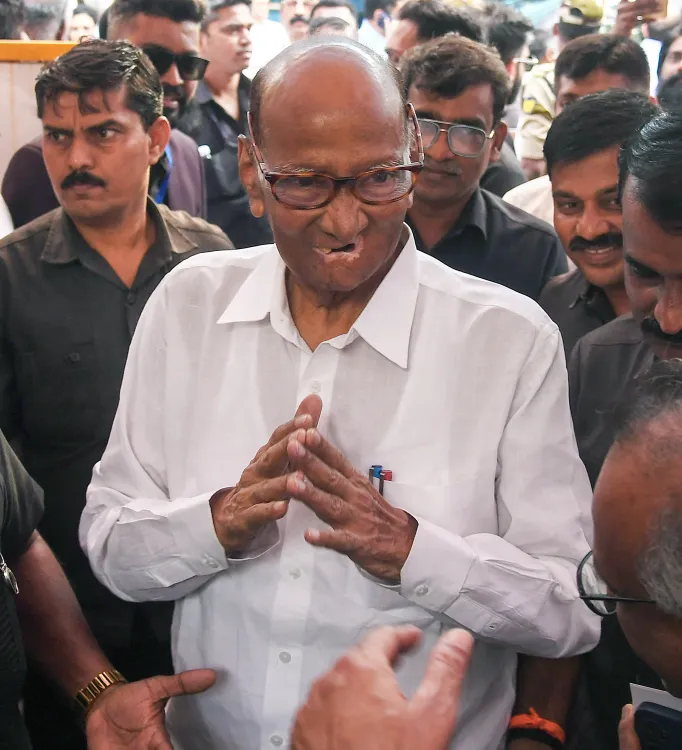
Mumbai, March 5 (NationPress) On Thursday, six candidates from the Mahayuti alliance, including Union Minister Ramdas Athawale and BJP General Secretary Vinod Tawde, submitted their nominations for the seven Rajya Sabha seats that will become vacant in Maharashtra next month. Additionally, Sharad Pawar, the candidate for the Opposition Maha Vikas Aghadi (MVA) and chief of the NCP (SP), also filed his nomination.
Among the BJP candidates, the party also nominated former Nagpur Mayor and current Corporator Maya Chintaman Ivnate and former NCP MLC Ramrao Wadkute. The Shiv Sena has chosen party spokesperson Jyoti Waghmare to contest for a seat in the Upper House.
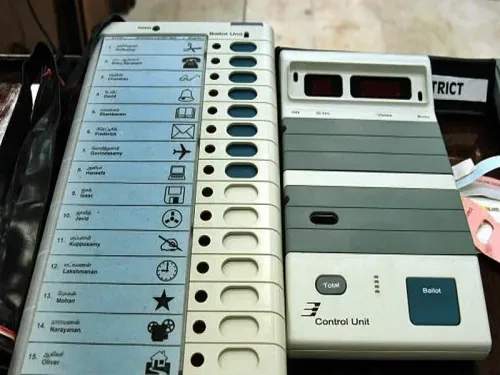
The deadline for filing nominations was today until 3 P.M., with the option to withdraw applications available until March 9. Voting is set to take place on March 16.
The ruling BJP has put forth a formidable lineup, which includes Vinod Tawde, who previously served as the state's education minister after winning the 2014 Maharashtra Assembly elections. Although he was not granted a ticket in the 2019 Assembly elections, Tawde rose to the national level and now serves as the party's general secretary.
Ramrao Wadkute, once a close associate of Sharad Pawar in the former NCP, is connected to the Hatkar community from the Marathwada region. He was elected to the legislative council with Pawar's support before moving to the BJP. Ivnate notably became the first Mayor of Nagpur with a tribal background.
The Eknath Shinde-led Shiv Sena nominated Jyoti Waghmare, amid rumors that former MP Rahul Shewale, a close ally of Shinde, would be chosen for the Upper House, following his defeat in the 2024 Lok Sabha elections.
Sharad Pawar is poised to secure a new term in the Rajya Sabha as the Congress party has publicly endorsed him as the candidate for the Opposition bloc from Maharashtra, with only one seat available for them out of seven.
This announcement, made by AICC General Secretary Ramesh Chennithala, put an end to speculation regarding the MVA candidate, as all three allies—Congress, NCP(SP), and Shiv Sena(UBT)—were vying for the sole seat they could potentially win based on their Assembly strength.
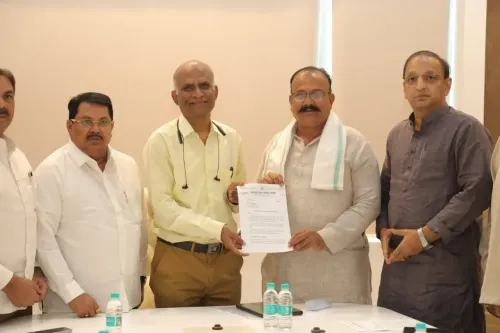
While Sharad Pawar recovers from illness, legislative staff visited his residence in south Mumbai on behalf of the electoral officer to take his oath.
Subsequently, the necessary formalities for his nomination submission were completed by his lawyer, alongside his daughter and MP Supriya Sule and other party leaders.
The son of the late Ajit Pawar, Parth Pawar, is also in the race representing the ruling NCP. Previously, he contested in the 2019 Lok Sabha elections for the Maval constituency but was unsuccessful. He recently made headlines due to a controversial land deal in Pune's Mundhwa, which drew public outrage. The ₹300-crore deal involved the sale of a 40-acre land parcel to Amadea Enterprises LLP, a company in which Parth holds a 99% stake. The deal was scrutinized after it was revealed that the land belonged to the government, leading to its cancellation.
Parth's mother, Sunetra Pawar, who ascended to the role of Deputy CM of Maharashtra after her husband Ajit Pawar's tragic passing in a plane crash on January 28, remains a Rajya Sabha member and has not yet resigned from her position.
The current Rajya Sabha members from Maharashtra whose six-year terms end in April include: Sharad Pawar, Ramdas Athawale, Fauzia Khan from NCP(SP), Rajni Patil (Congress), Priyanka Chaturvedi (Shiv Sena-UBT), and Dhananjay Patil and Bhagwat Karad (both from BJP). This coalition's combined strength guarantees the election of at least one candidate.
According to this calculation, the Mahayuti alliance is positioned to win six out of seven seats, barring any cross-voting or strategic voting transfers under the preferential voting system. Additionally, two independents, Umesh Mhetre and K Sainna, have also submitted their nominations but are anticipated to be rejected due to procedural discrepancies.
Point of View
Setting the stage for an intriguing election that could reshape the state's political dynamics.
NationPress
20 Sept 2026
Frequently Asked Questions
Who filed nominations for the Rajya Sabha elections in Maharashtra?
Six Mahayuti candidates, including Union Minister Ramdas Athawale and BJP General Secretary Vinod Tawde, along with NCP chief Sharad Pawar, filed their nominations for the upcoming Rajya Sabha elections.
What is the election date for the Rajya Sabha seats in Maharashtra?
The polling for the Rajya Sabha elections in Maharashtra is scheduled for March 16.
What controversies surround Parth Pawar?
Parth Pawar recently faced scrutiny over a controversial land deal in Pune, which involved selling government land to a company where he holds significant stakes.
What is the role of the Congress party in Sharad Pawar's candidacy?
The Congress party has publicly endorsed Sharad Pawar as the candidate for the Opposition bloc from Maharashtra for one of the Rajya Sabha seats.
What happens if candidates withdraw their nominations?
Candidates can withdraw their nominations until March 9, prior to the polling on March 16.