Maharashtra Zero Royalty sand policy for border districts, curbs illegal transport
Synopsis
Maharashtra is scrapping royalty charges on inter-state sand imports for five border districts — a direct response to a construction crisis in Nandurbar where the Tapi riverbed's sand is inaccessible year-round. With RailTel-powered truck tracking and a new War Room, the government is simultaneously trying to shut down illegal sand transport. The policy must be finalised before the current assembly session ends.
Key Takeaways
Maharashtra will announce a Zero Royalty policy on inter-state sand imports, to be finalised before the current assembly session concludes.
The policy covers border districts: Nandurbar , Bhandara , Gondia , Chandrapur , and Amravati .
Inter-state sand transport will be permitted only during daytime ; nighttime transit is completely banned.
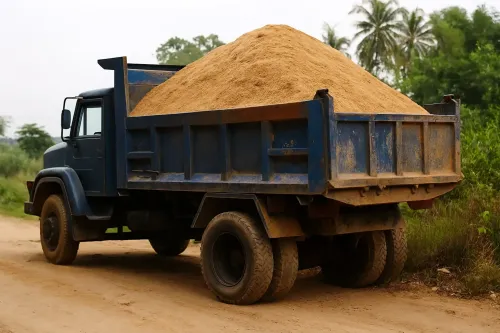
The government is exploring nominal transit charges to fund rural road repairs, as heavy trucks carrying 20–30 tonnes of sand damage rural roads.
A RailTel -powered online monitoring system and a centralised War Room at the Konkan Divisional Commissioner's office will track every sand-carrying truck statewide.
A special proposal to allow suction pumps in the Tapi riverbed of Nandurbar is being introduced, subject to Environment Department volume limits.
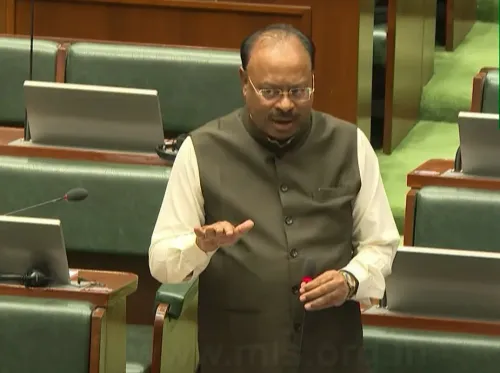
The Maharashtra government is set to announce a 'Zero Royalty' policy on inter-state sand imports, aimed at easing an acute construction-sector shortage and ensuring timely availability of sand for public housing schemes. Revenue Minister Chandrasekhar Bawankule confirmed on Wednesday in the Legislative Council that the policy decision will be finalised before the conclusion of the ongoing assembly session.
Key Provisions of the Zero Royalty Policy
The policy will apply specifically to border districts — Nandurbar, Bhandara, Gondia, Chandrapur, and Amravati — where local sand reserves are either insufficient or not yet operational. Districts with abundant local sand resources will not be granted priority access to inter-state sand under this scheme.
Transportation of inter-state sand will be permitted only during daytime hours, with a complete ban on nighttime transit. For sand to be imported from Gujarat or other states, the District Collector of the exporting state must formally communicate sand availability to the respective Collector in Maharashtra, after which a mutual tie-up between both Collectors will be established.
Why Maharashtra Cannot Levy Double Royalty
Citing Supreme Court directives, Minister Bawankule clarified that Maharashtra cannot impose a double royalty on sand that has already paid royalty in the state of origin. 'In alignment with Supreme Court directives, Maharashtra cannot levy a double royalty on sand that has already paid royalty in Gujarat. Consequently, the state does not generate revenue from this,' he stated.
However, the government is legally exploring the option of levying nominal transit or transport charges — while maintaining the Zero Royalty framework — to generate funds for rural road repairs under the Mineral Development Fund. This comes amid concerns that heavy vehicles carrying 20 to 30 tonnes of sand are severely damaging rural roads.
Nandurbar's Sand Crisis and the Tapi Riverbed Question
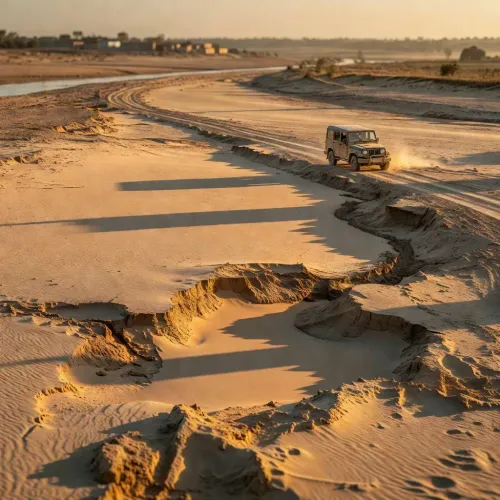
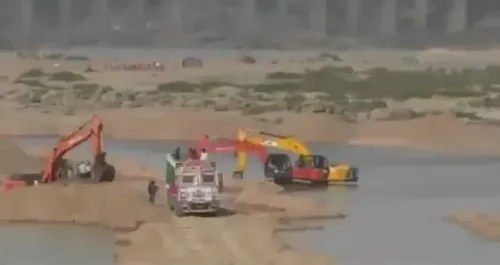
The policy announcement followed a Calling Attention Motion moved by MLC Chandrakant Raghuvanshi regarding the acute sand shortage in Nandurbar district and challenges surrounding sand imports from Gujarat. Raghuvanshi pointed out that while the Tapi riverbed in Nandurbar holds abundant sand reserves, traditional extraction is impossible as the river flows year-round. He noted that neighbouring Gujarat permits suction pumps for continuous sand extraction, a provision currently absent in Maharashtra.
In response, Minister Bawankule stated that the government is introducing a special proposal to allow suction pump operations in the Tapi riverbed, strictly within volume limits approved by the Environment Department. He noted that similar policy-based permissions for suction pumps have previously been granted in select coastal areas of the Konkan region.
Online Monitoring and War Room to Check Illegal Sand Mining
To curb illegal sand transportation, an online monitoring system has been developed in collaboration with central government public sector unit RailTel, which has also been awarded the contract for supervising sand transport statewide — replacing the previous government's 'Shaurya' agency, whose contract has expired. All middleman mechanisms have reportedly been dismantled.
A state-level 'War Room' has been operationalised at the Konkan Divisional Commissioner's office, with the Commissioner appointed as Nodal Officer. Every sand-carrying truck in Maharashtra will be tracked online through this centralised system, according to the Minister.
With the policy expected to be formalised within the current assembly session, the construction sector and government housing programmes in Maharashtra's border districts are set for a significant supply relief — provided inter-state coordination mechanisms are activated swiftly.
Point of View
But the architecture of the policy reveals its own fragility. Tying sand imports to a formal Collector-to-Collector letter exchange adds bureaucratic friction at precisely the point where speed matters most. The exploration of nominal transit charges — even within a 'Zero Royalty' framework — risks becoming a semantic loophole that contractors and middlemen can exploit. More fundamentally, the Tapi riverbed situation exposes a regulatory gap: Gujarat's suction-pump permissions have created an asymmetry that is now fuelling cross-border sand arbitrage. Until Maharashtra resolves its own extraction policy, inter-state dependence will remain a recurring pressure point rather than a temporary fix.
NationPress
30 Sept 2026
Frequently Asked Questions
What is Maharashtra's Zero Royalty sand policy?
It is a policy under which sand imported from other states into Maharashtra's border districts will not attract any royalty charge. The policy is aimed at easing construction-sector shortages and will be finalised before the current assembly session ends.
Which districts are covered under the Zero Royalty sand policy?
The policy applies to five border districts: Nandurbar, Bhandara, Gondia, Chandrapur, and Amravati. Districts with sufficient local sand reserves will not be given priority for inter-state sand under this scheme.
Why is there a sand shortage in Nandurbar?
The Tapi riverbed in Nandurbar holds large sand reserves, but the river flows year-round, making traditional extraction impossible. Maharashtra has not yet permitted suction pumps for continuous extraction — unlike neighbouring Gujarat — leading to a severe local shortage that has stalled construction and development projects.
How will Maharashtra prevent illegal sand transportation?
An online monitoring system developed with central PSU RailTel will track every sand-carrying truck in the state. A War Room has been operationalised at the Konkan Divisional Commissioner's office, and the Commissioner has been appointed Nodal Officer for the system.
Can Maharashtra charge any fees on inter-state sand under this policy?
Under Supreme Court directives, Maharashtra cannot levy double royalty on sand that has already paid royalty in the state of origin. However, the government is legally exploring nominal transit or transport charges — separate from royalty — to fund rural road repairs under the Mineral Development Fund.