Mahua Moitra Calls for Regime Change Over Flag Detention
Synopsis
TMC MP Mahua Moitra on 17 October 2026 explicitly called for regime change, alleging the government illegally detained unarmed citizens who unfurled the national flag and deployed police as fake judicial officers to jail them.
Key Takeaways
Mahua Moitra posted an unambiguous call for 'regime change' on 17 October 2026 .
She alleged unarmed citizens were 'illegally abducted' by the state for unfurling India's national flag.
She accused the government of using 'police machinery in the garb of judicial officers' to imprison protesters.
The post appears to be a direct, defiant reply to criticism that the opposition seeks regime change — Moitra confirmed it does.
Trinamool Congress has accused central governments of misusing agencies against opponents since 2014 .
The specific detention incident cited by Moitra has not been independently verified.
Three words — 'we want regime change' — landed like a grenade in India's political discourse on Saturday, 17 October 2026, as TMC MP Mahua Moitra turned a reported crackdown on flag-unfurling protesters into a full-throated demand to unseat the central government.
The accusation at the heart of Moitra's post
Moitra's post did not mince language. She accused the ruling regime of 'illegally abducting its own unarmed citizens for unfurling the national flag,' and of deploying 'police machinery in the garb of judicial officers' to imprison them. The phrase 'any regime that does this has no right to remain in power' framed the allegation not merely as a legal grievance but as a question of democratic legitimacy itself.
The post appears to be a direct response to criticism — almost certainly from ruling-party quarters — that the opposition was seeking 'regime change.' Moitra's reply was, in effect: yes, and here is exactly why.
Detaining flag-bearers: the flashpoint Moitra is invoking
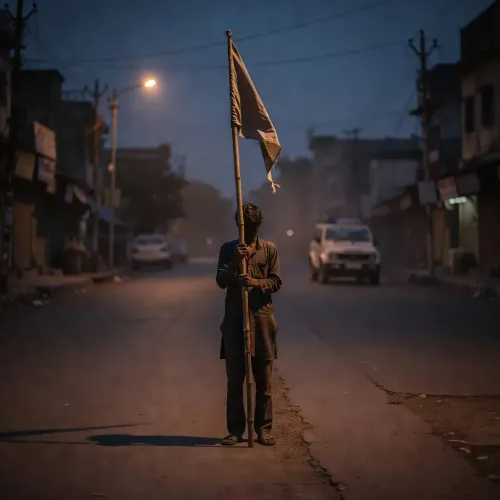
The specific incident Moitra references — citizens detained for unfurling India's national flag — could not be independently verified from available records. But the political charge it carries is enormous. The tricolour is constitutionally protected; arrests connected to its display would, if proven, represent a stark inversion of patriotic symbolism and give the opposition a viscerally powerful image to rally around.
Trinamool Congress has consistently argued since 2014 that central investigative and police machinery has been weaponised against political opponents. Friday's post escalates that long-running argument from procedural complaint to an existential verdict on the government's right to govern.
The 'regime change' frame and what it signals
The phrase 'regime change' has historically carried heavy geopolitical freight — associated with foreign-policy interventions abroad rather than domestic electoral politics. Deploying it inside Indian democratic discourse is a deliberate rhetorical provocation, designed to force a response. It shifts the debate from 'was a specific arrest lawful?' to 'is this government legitimate?'
As a leading voice in the INDIA opposition bloc, Moitra's framing will be watched closely by alliance partners. Whether bloc leaders close ranks around the language — or quietly distance themselves from its sharpness — will be a signal of the coalition's cohesion heading into the next political cycle.
A parliament with precedent for privilege notices
Statements of this intensity from sitting MPs have, in past sessions, triggered parliamentary privilege notices or committee referrals from the treasury benches. Moitra herself is no stranger to high-decibel parliamentary confrontations. Any formal parliamentary response to this post will be a key moment to track in the days ahead.
For now, the post stands as a marker: the opposition is not retreating from confrontational language — it is doubling down, betting that the louder the charge, the harder it is for the government to ignore.
Point of View
She forces the ruling establishment to either engage with the underlying allegations of illegal detention or risk looking evasive. The invocation of the national flag is strategically potent — it is nearly impossible to defend arresting citizens for a patriotic act without significant political cost. For the INDIA bloc, this kind of confrontational framing can energise the base, but the alliance will need to substantiate the specific detention claims quickly or risk handing the government a deflection narrative. The durability of this moment depends entirely on whether evidence of the flag-arrest incidents enters the public record.
NationPress
17 Oct 2026
Frequently Asked Questions
What did Mahua Moitra say about regime change?
On 17 October 2026 , Moitra posted that the opposition openly wants regime change, arguing that any government that illegally detains unarmed citizens for unfurling the national flag and uses police as fake judicial officers has forfeited its right to remain in power.
Why did Mahua Moitra demand regime change?
Moitra cited two specific allegations: citizens being 'illegally abducted' for unfurling India's national flag, and police being deployed 'in the garb of judicial officers' to jail them — framing both as disqualifying abuses of state power.
What is TMC's position on central government use of agencies?
Trinamool Congress has consistently accused the central government of weaponising investigative and police agencies against political opponents since 2014 , a charge it has raised repeatedly in Parliament and in public.
Can people be arrested for unfurling the Indian national flag?
Under the Flag Code of India , citizens have the right to display the national flag with dignity; arrests solely for unfurling it lawfully would be constitutionally indefensible. Moitra's allegation, if substantiated, would constitute a serious state overreach.
What could happen after Mahua Moitra's regime change post?
Parliamentary privilege notices or committee referrals from the treasury benches are a possible response, as is a demand for a statement in Parliament. Reactions from other INDIA bloc leaders will also indicate whether the coalition endorses or distances itself from the language.