DGGI Detains Main Suspect in Massive Rs 1,825 Cr GST Scam at Delhi Airport

Synopsis
In a major crackdown, a man linked to a staggering Rs 1,825 crore GST refund fraud was apprehended at Delhi's airport. This case reveals a complex web of deceit involving fake firms and inflated export figures. The DGGI's relentless pursuit underscores the fight against tax fraud.
Key Takeaways
Massive Fraud: The case involves a staggering Rs 1,825 crore GST refund fraud.
Key Arrest: Kapil Chugh was apprehended upon returning from Dubai.
Complex Scheme: Involves fake firms and inflated invoices.
Ongoing Investigation: Authorities are actively pursuing the case.
Regulatory Actions: Related individuals, including Vipin Sharma, are facing scrutiny.
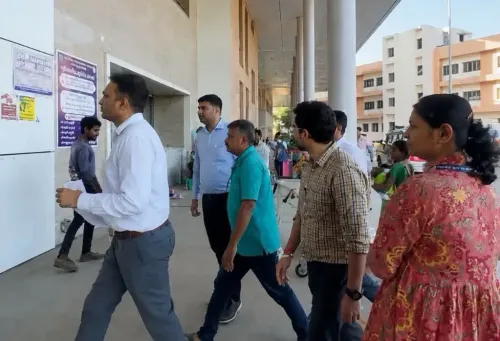
Ahmedabad/New Delhi, April 20 (NationPress) A key figure implicated in a GST refund fraud amounting to approximately Rs 1,825 crore was detained at Indira Gandhi International Airport in New Delhi upon his return from Dubai, as per officials' reports on Monday.
Kapil Chugh was captured on Sunday by agents from the Directorate General of GST Intelligence (DGGI), Ahmedabad Zonal Unit.
As outlined by officials, Chugh had evaded their inquiries, disregarded 22 summonses from the agency, and fled to Dubai after executing the alleged fraud across various jurisdictions.
The investigation revealed that Chugh, alongside his accomplice Vipin Sharma, created and managed a sophisticated scheme to illegitimately obtain input tax credit (ITC) and cash it through refund applications associated with zero-rated supplies.
Authorities stated that Chugh ran this operation through fake companies, employees, and close associates.
Officials noted that the businesses involved were established using borrowed KYC documents and were defunct, lacking essential infrastructure, staff, and genuine commercial activities at their declared locations.
The proprietors or directors listed acted merely as name lenders, receiving fixed monthly payments, while all essential functions—including GST registration, invoice creation, banking transactions, filing returns, and submitting refund applications—were handled centrally.
The investigation uncovered that fraudulent ITC was generated through fictitious purchase invoices, with no actual goods received.
High-value tobacco products were falsely represented in invoices to produce significant ITC, which was then circulated through various intermediary companies to create layered transactions.
This mechanism allowed ineligible ITC to seep into the GST framework and accumulate within selected entities falsely presented as exporters, particularly from the Kandla Special Economic Zone.
Simultaneously, investigators discovered that low-value tobacco, substandard smoking mixtures, and other items were purchased locally at minimal costs, often without invoices, and misrepresented as high-value goods like kimam and jarda for export at inflated prices.
No manufacturing facilities were found to substantiate such transformations.
Officials reported that the inflated turnover declared in GST filings was predominantly due to fake billing, enabling the accumulation of fraudulent ITC and refund claims under zero-rated supplies without tax payment.
Authorities further indicated that the exports were largely fictitious or significantly overstated. E-way bills were created using dubious or duplicated vehicle numbers, and shipping documents were forged to support transactions on paper.
Financial trail analysis indicated minimal or circular fund movements despite the high-value transactions.
Payments were funneled through related entities or withdrawn in cash soon after, with no corresponding pattern of legitimate supplier payments or logistics costs.
Multiple companies were found to share common contact numbers, IP addresses, and accounting staff, signifying centralized control.
Officials also reported that Chugh misrepresented and inflated the turnover of his export business, leading to the embezzlement of around Rs 11 crore from Yes Bank.
Moreover, he has been charge-sheeted by the Central Bureau of Investigation (CBI) in a separate case involving fraudulent credit facility claims using forged documents.
In a related case, the Securities and Exchange Board of India (SEBI) issued an order on March 30 against Vipin Sharma, managing director of Elitecon, for inflating the company's valuation through fictitious turnover generated by bogus billing tied to the GST fraud.
The investigation remains ongoing.
Point of View
The arrest of Kapil Chugh not only highlights the challenges posed by tax fraud but also underscores the vigilance of the Directorate General of GST Intelligence. As investigations continue, it is crucial for authorities to ensure accountability and restore integrity to the tax system.
NationPress
25 Sept 2026
Frequently Asked Questions
What is the GST refund fraud case about?
The case involves a scheme to fraudulently claim GST refunds totaling around Rs 1,825 crore through fake companies and inflated invoices.
Who was arrested in connection to the fraud?
Kapil Chugh was arrested at Indira Gandhi International Airport after returning from Dubai.
What methods were used in the fraud?
The fraud involved creating dummy firms, generating fake invoices, and misrepresenting export values to claim ineligible input tax credits.
Are there other individuals involved in this fraud?
Yes, Vipin Sharma, an associate of Chugh, is also implicated and has faced regulatory action from SEBI.
What actions are authorities taking?
The Directorate General of GST Intelligence is continuing its investigation to uncover the full extent of the fraud and ensure justice.