Mandaviya Greets Sports Journalists on World Sports Journalists Day

Synopsis
Union Sports Minister Mansukh Mandaviya on 2 July 2026 wished India's sports media fraternity on World Sports Journalists Day, calling journalists vital partners who celebrate achievements, highlight talent, and inspire the next generation of athletes, reinforcing the government's view of sports journalism as central to India's sporting ecosystem.
Key Takeaways
Mansukh Mandaviya , Union Minister for Youth Affairs and Sports, extended greetings on World Sports Journalists Day, 2 July 2026 .
Mandaviya described sports journalists as 'vital partners in India's sporting journey' who inspire the next generation of athletes.
The minister credited sports media with strengthening India's sporting ecosystem through hard work, dedication, and professional integrity.
The Khelo India scheme, launched in 2017 , underpins the government's grassroots sports push, with media coverage seen as integral to its success.
Discussions on a revised National Sports Code and potential media-accreditation frameworks remain areas to watch in the months ahead.
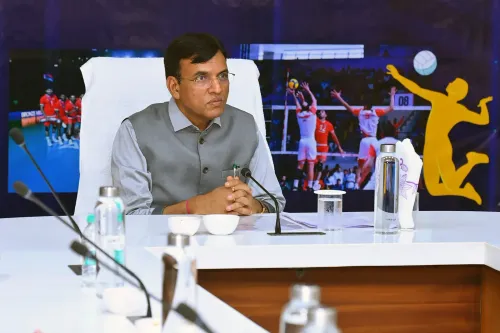
Union Labour and Sports Minister Mansukh Mandaviya on Thursday, 2 July 2026, extended greetings to the sports media fraternity on the occasion of World Sports Journalists Day, calling journalists 'vital partners' in India's sporting journey.
Context
World Sports Journalists Day is observed annually on 2 July to recognise the contribution of media professionals who cover sport globally. Minister Mandaviya, who holds charge of the Ministry of Youth Affairs and Sports alongside the Ministry of Labour and Employment, used the occasion to publicly acknowledge the role of sports reporters, commentators, and photographers in shaping public engagement with athletics in India.
In his post, Mandaviya stated that sports journalists are 'vital partners in India's sporting journey, celebrating achievements, highlighting talent, and inspiring the next generation of athletes.' He added that their 'hard work, dedication, and professional integrity continue to strengthen India's sporting ecosystem.'
Policy Backdrop
The Ministry of Youth Affairs and Sports has, over successive governments, positioned media coverage as a key lever for raising public interest in sport and driving participation at the grassroots level. The Khelo India scheme, launched in 2017, was designed to revive grassroots sport, build infrastructure, and create talent-identification pathways — all areas where sustained media attention has been considered integral to success.
India's National Sports Policy of 2001 laid the early framework for sports promotion and international participation, and the ecosystem has since expanded to include structured media engagement around marquee events such as the Olympic Games and Asian Games. Successive administrations have treated strong sports journalism as part of the country's soft-power architecture, linking credible coverage to improved medal tallies and athlete visibility.
Stakeholders and Impact
The primary beneficiaries of this recognition are India's sports journalists — reporters, columnists, broadcasters, and photographers who cover domestic leagues, national federations, and international competitions. Their work directly influences public and sponsor interest in athletes, particularly those from disciplines outside cricket.
Young athletes and aspiring sports professionals also stand to benefit indirectly: sustained, high-quality sports journalism creates the visibility that attracts institutional support, sponsorships, and policy attention toward emerging talent across disciplines such as wrestling, athletics, badminton, and hockey.
What's Next
With India continuing to expand its international sporting calendar and discussions around a revised National Sports Code ongoing in Parliament, the role of an accredited and professionally recognised sports media corps is likely to gain further policy salience. Observers will watch for any formal announcements on media accreditation norms, journalist awards, or dedicated recognition frameworks that could follow from the government's stated appreciation for sports journalism.
The ministry's public acknowledgement on this occasion signals that sports media is increasingly viewed not merely as a reporting function but as a structural pillar of India's broader sporting ambitions.
Point of View
While ceremonial in tone, reflects a deliberate effort by the BJP-led government to publicly align itself with the sports media community at a time when India's international sporting profile is rising. By framing journalists as structural partners rather than passive observers, the ministry signals an intent to co-opt media goodwill into its broader sporting-ecosystem narrative. This fits a pattern of the government using symbolic occasions to reinforce policy messaging around schemes like Khelo India and athlete-welfare initiatives. The timing also keeps the ministry visible ahead of anticipated parliamentary debates on the revised National Sports Code, where media stakeholders could play an advocacy role.
NationPress
1 Oct 2026
Frequently Asked Questions
What is World Sports Journalists Day and when is it observed?
World Sports Journalists Day is observed on 2 July every year to honour the contribution of media professionals who cover sport worldwide. It is recognised internationally by sports journalism associations.
What did Mansukh Mandaviya say on World Sports Journalists Day 2026?
Mansukh Mandaviya called sports journalists 'vital partners in India's sporting journey' and said their hard work, dedication, and professional integrity 'continue to strengthen India's sporting ecosystem.'
What is Mansukh Mandaviya's role in Indian sports?
Mansukh Mandaviya is the Union Minister holding charge of the Ministry of Youth Affairs and Sports , making him the senior government official responsible for national sports policy, athlete development, and coordination with sports federations.
What is the Khelo India scheme?
Khelo India is a central government scheme launched in 2017 to promote grassroots sports participation, build sports infrastructure, and create talent-identification pathways for young athletes across India .
Why does sports journalism matter to India's sporting ecosystem?
Sports journalism raises public awareness of athletes and disciplines beyond cricket, attracts sponsorships and institutional support, and helps build the audience engagement that governments and federations rely on to justify investment in sport.