CM Bhagwant Mann Files SIR Form in Sangrur, Urges Voters to Enrol
Synopsis
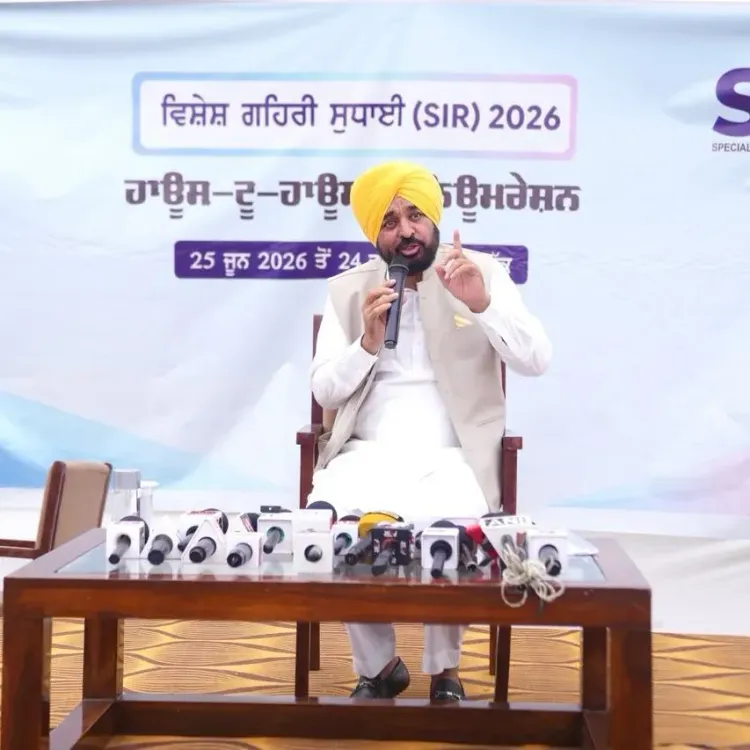
Punjab Chief Minister Bhagwant Mann filed his SIR voter-registration form in Sangrur on 2 July 2026, appealing to all eligible voters to enrol. He assured no legitimate vote would be deleted, confirmed BLO home visits, and announced a ₹1,000–₹1,500 monthly scheme for women.
Key Takeaways
CM Bhagwant Mann personally filed his SIR form in Sangrur on 2 July 2026 along with family members.
He appealed to every eligible voter in Punjab to submit their SIR form on time.
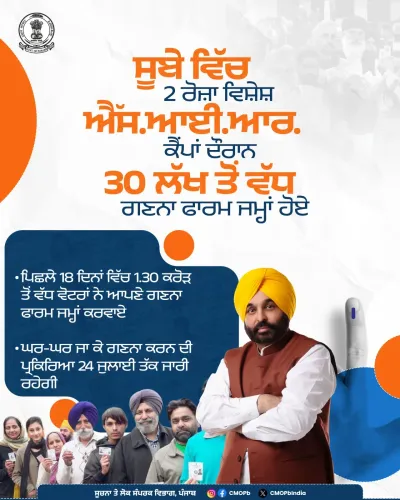
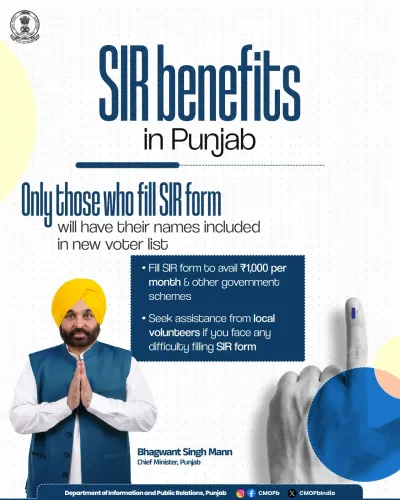
Booth Level Officers (BLOs) will conduct door-to-door visits to assist voters with the registration process.
Only duplicate or deceased voter entries will be removed; no eligible voter's name will be struck off.
A monthly cash-transfer scheme of ₹1,000 to ₹1,500 for women in Punjab was announced as launched.
Accelerating development of Sangrur into a modern city was reiterated as a government priority.
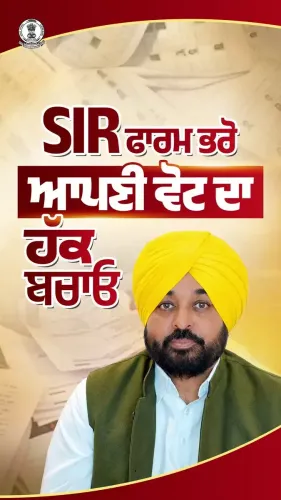
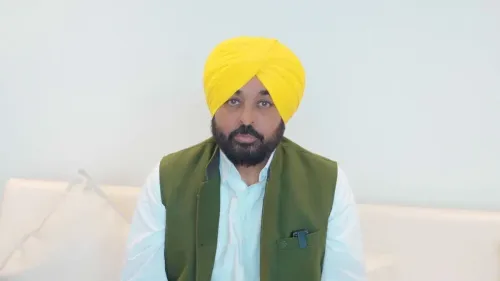
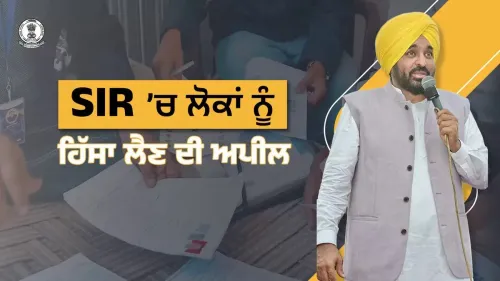
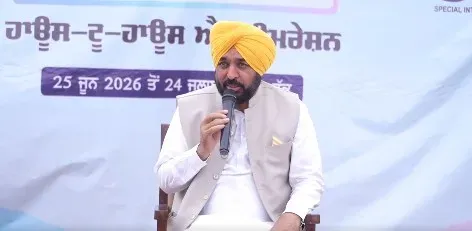
Punjab Chief Minister Bhagwant Mann on Thursday, 2 July 2026, filed his Special Summary Revision (SIR) form in Sangrur along with family members, participating personally in the ongoing electoral roll revision exercise. He appealed to every eligible voter in Punjab to submit their SIR form on time and assured that no legitimate vote would be deleted from the rolls.
Context
Posting in Punjabi on X, Mann said: 'ਸੰਗਰੂਰ ਤੋਂ ਕੱਲ੍ਹ ਆਪਣੇ ਪਰਿਵਾਰ ਸਮੇਤ SIR ਫਾਰਮ ਭਰ ਕੇ ਚੋਣ ਪ੍ਰਕਿਰਿਆ ਵਿੱਚ ਹਿੱਸਾ ਪਾਇਆ' ('Yesterday, I participated in the electoral process by filling the SIR form along with my family from Sangrur'). He stressed that only duplicate or deceased entries would be removed, and that the exercise was aimed at making the voter list more transparent and accurate. Booth Level Officers (BLOs) have been directed to visit homes to assist voters with the process.
The Chief Minister's personal participation is a deliberate signal to citizens who may be anxious about voter-list purges — a concern that has surfaced in Punjab and other states ahead of electoral cycles. By filing the form publicly in Sangrur, his constituency, Mann sought to normalise the process and build confidence in the revision drive.
Policy Backdrop
The Election Commission of India (ECI) periodically conducts Special Summary Revisions to clean electoral rolls of ineligible entries — primarily duplicate registrations and names of deceased individuals. This practice has been a recurring feature of Indian electoral administration since the early 2000s, with each revision cycle intended to improve roll accuracy ahead of state or national polls.
The ECI deploys Booth Level Officers as the ground-level interface for these drives. BLOs are responsible for door-to-door verification, form collection, and updating local rolls — a mechanism Mann highlighted in his post to reassure voters that the process would reach them at home.
Stakeholders and Impact
Every eligible voter in Punjab is directly affected by the revision exercise. Mann's assurance that no eligible voter's name will be struck off is aimed particularly at communities that have historically been wary of large-scale electoral-roll clean-ups. The involvement of BLOs at the doorstep is intended to lower the barrier for participation, especially for elderly, differently abled, or rural voters.
Separately, Mann announced in the same post that a welfare scheme providing ₹1,000 to ₹1,500 per month for women — ਮਾਵਾਂ-ਭੈਣਾਂ ('mothers and sisters') — had been launched. He also reiterated the administration's priority of accelerating development in Sangrur to make it a 'more beautiful and modern city.' The pairing of an electoral-roll drive with a women-centric cash-transfer announcement reflects a pattern seen across Indian states of combining administrative outreach with welfare visibility.
What's Next
The immediate focus will be on the pace of SIR form collection across Punjab, with BLOs expected to conduct household visits in the days ahead. The scale of duplicate and deceased-voter entries removed during this revision will be a key metric watched by election administrators and civil-society observers.
The rollout of the ₹1,000–₹1,500 monthly scheme for women will also be closely tracked — including its eligibility criteria, beneficiary database, and disbursement timeline. How effectively the AAP government links these two simultaneous drives — electoral-roll accuracy and direct benefit transfer — could shape voter engagement ahead of Punjab's next electoral cycle.
Point of View
A recurring flashpoint in Indian electoral politics. By personally leading the drive and guaranteeing that only duplicate and deceased entries will be removed, he attempts to reframe a technocratic administrative exercise as a trust-building exercise between the state and its citizens. The simultaneous announcement of a women-centric cash-transfer scheme in the same post is consistent with the AAP playbook of bundling administrative credibility with welfare visibility. Together, these moves suggest the party is shoring up its grassroots standing well ahead of Punjab's next electoral test.
NationPress
1 Oct 2026
Frequently Asked Questions
What is the SIR form in Punjab elections?
The SIR form is used during the Election Commission of India's Special Summary Revision exercise to verify and update the electoral roll. Eligible voters fill it to confirm or add their details, while Booth Level Officers use the data to remove duplicate or deceased entries and keep the voter list accurate.
Will my name be deleted from the Punjab voter list during the SIR drive?
According to Chief Minister Bhagwant Mann, no eligible voter's name will be removed. Only duplicate registrations and entries of deceased individuals will be deleted to make the voter list more transparent and accurate.
What is the ₹1,000–₹1,500 scheme for women announced by Bhagwant Mann?
Mann announced in his 2 July 2026 post that a monthly financial assistance scheme of ₹1,000 to ₹1,500 for women — referred to as 'mothers and sisters' — had been launched. Specific eligibility criteria and the official scheme name have not been detailed in the post.
What does a Booth Level Officer (BLO) do during the voter revision drive?
A Booth Level Officer is an Election Commission of India field functionary responsible for maintaining and updating the local electoral roll. During the SIR drive, BLOs visit homes to help voters fill forms, verify details, and process any required changes to voter registration.
Why did Bhagwant Mann file his SIR form in Sangrur?
Sangrur is Mann's political base and he filed the SIR form there along with family members to personally demonstrate participation in the electoral revision process. The move was accompanied by an appeal to all eligible Punjab voters to submit their own forms before the deadline.