CM Mann: Punjab women to get jobs within 40 km radius
Synopsis
Chief Minister Bhagwant Mann announced at a Hoshiarpur lok milni on 18 June 2026 that Punjab will post women government employees within 40 kilometres of their homes, extending the AAP government's gender-sensitive employment agenda and addressing commute-related barriers to female workforce participation.
Key Takeaways
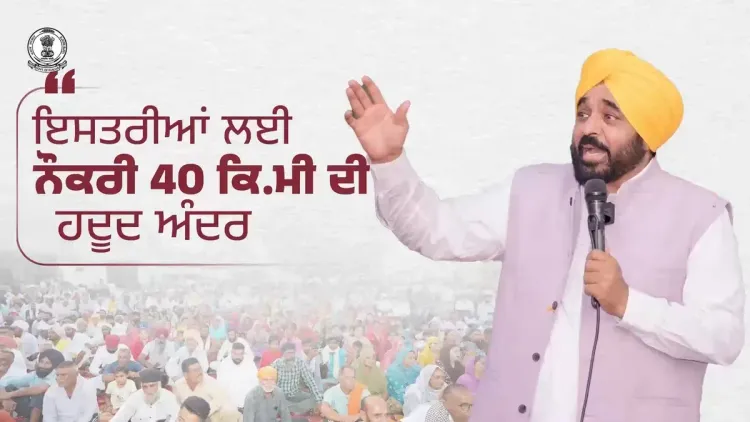
CM Bhagwant Mann announced on 18 June 2026 that women in Punjab will be given government jobs within a 40-kilometre radius of their homes.
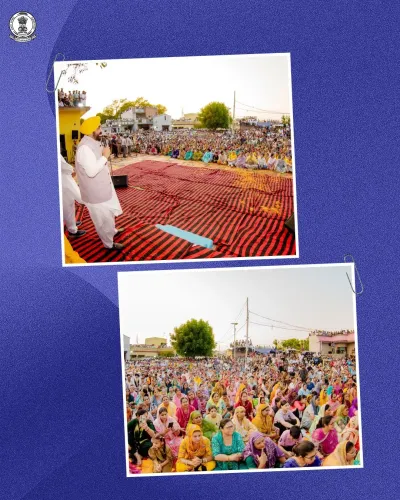
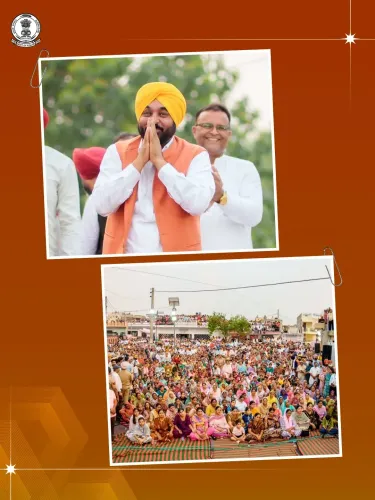
The announcement was made at a lok milni public interaction programme in Hoshiarpur .
The policy aims to reduce commute-related barriers and family-care concerns that discourage women from taking or retaining government posts.
The AAP government has pursued multiple women-focused welfare and employment measures since winning the 2022 Punjab assembly elections.
A formal government order specifying job categories and enforcement mechanism is yet to be issued.
Departments with large female workforces — education, health, and social welfare — are expected to be most directly affected.
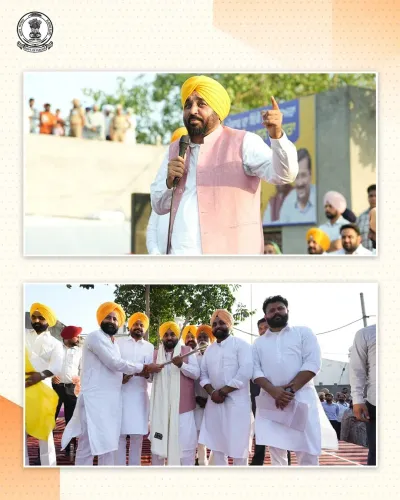
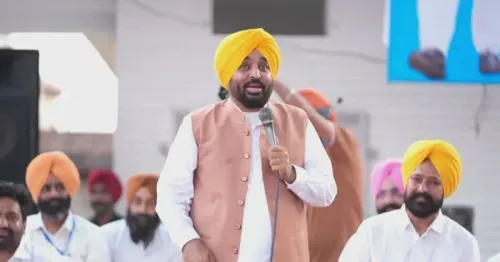
The Chief Minister's Office of Punjab announced on Thursday, 18 June 2026, that Chief Minister Bhagwant Mann has committed to posting women government employees within a 40-kilometre radius of their homes, a declaration made during a public interaction programme — known as a lok milni (people's meeting) — held at Hoshiarpur.
Speaking directly to residents at the lok milni, CM Mann stated that 'keeping in view the convenience of the women of the state, jobs will be provided to them within a limit of 40 kilometres.' The announcement signals a formal policy intent to make public-sector employment more accessible to women by reducing the burden of long-distance postings.
Context
The lok milni format is a signature outreach mechanism of the Bhagwant Mann-led Aam Aadmi Party (AAP) government, designed to allow citizens to raise grievances directly with the Chief Minister. Hoshiarpur, a district in the Doaba region of Punjab, has a significant population of women in the public-sector workforce, including in school education and health services.
The 40 km proximity rule addresses a well-documented barrier to female labour-force participation: long or unsafe commutes and the difficulty of managing family responsibilities when posted far from home. By formalising a geographic limit, the government aims to remove a structural disincentive that has historically kept qualified women from accepting or retaining government positions.
Policy Backdrop
Since coming to power after the February 2022 assembly elections, the AAP government in Punjab has rolled out a series of women-focused welfare and employment measures, including targeted skill-development programmes and improved recruitment access. The 40 km posting norm extends that agenda into the realm of service conditions, not just entry-level hiring.
Several Indian states have experimented with proximity-based posting rules in specific sectors. Punjab's announcement, if formalised through a government order, would apply a standardised radius across recruitment categories — a broader approach than the sector-by-sector adjustments seen elsewhere. Departments such as school education and rural health already informally prioritise local postings for women, but a codified rule would carry greater administrative weight.
Stakeholders and Impact
The primary beneficiaries are women job seekers and existing female government employees in Punjab who currently face long-distance transfer orders. For families in semi-urban and rural districts like Hoshiarpur, a nearby posting can be the difference between a woman accepting a government job and declining it.
Departments with large female workforces — education, health, and social welfare — are most likely to feel the operational impact of implementing the rule. Administrators will need to map available vacancies within each applicant's 40 km zone and develop a mechanism to handle cases where no suitable vacancy exists within that radius.
What's Next
The critical next step is the issuance of a formal government order specifying which job categories are covered, how the 40 km radius is measured, and what procedure applies when no vacancy falls within the prescribed limit. Until such an order is notified, the announcement remains a policy commitment made at a public forum.
Civil-society groups and women's organisations in Punjab are likely to monitor whether the intent translates into enforceable service rules. The government's follow-through on this commitment will be a key indicator of how seriously the Mann administration intends to institutionalise gender-sensitive employment norms ahead of future electoral cycles.
Point of View
Particularly in semi-rural Punjab. By making the pledge at a grassroots lok milni rather than a formal cabinet briefing, CM Mann is clearly calibrating the message for a citizen audience, reinforcing the AAP brand of direct, accessible governance. The policy, however, carries administrative complexity: mapping vacancies to home districts at scale is non-trivial, and without a notified government order it risks remaining an aspiration. Whether Punjab converts this announcement into a codified service rule will determine whether it becomes a replicable model for other states or simply a campaign-trail pledge.
NationPress
20 Sept 2026
Frequently Asked Questions
What did CM Bhagwant Mann announce for women in Punjab?
CM Bhagwant Mann announced that women in Punjab will be provided government jobs within a 40-kilometre radius of their homes, a commitment made at a public interaction programme in Hoshiarpur on 18 June 2026.
Where did CM Mann make the 40 km jobs announcement?
The announcement was made at a lok milni — a public grievance-meeting — held in Hoshiarpur, a district in Punjab's Doaba region.
Which women will benefit from Punjab's 40 km job posting rule?
Women government employees and job seekers in Punjab are the primary beneficiaries, particularly those in departments such as school education, health, and social welfare where female staff are concentrated.
Has Punjab issued a formal order for the 40 km women's posting rule?
As of the announcement on 18 June 2026, a formal government order specifying job categories covered and the enforcement mechanism had not yet been issued. The commitment was made verbally at a public forum.
Why is proximity-based posting important for women's employment in India?
Long-distance postings create commute-related safety risks and make it difficult for women to manage family responsibilities, which are among the leading reasons women decline or leave government jobs. A proximity rule aims to remove this structural barrier.