How is PM Modi Encouraging States to Enhance Manufacturing and Food Exports?
Synopsis
PM Modi's recent address at the National Conference of Chief Secretaries highlights the importance of manufacturing, food exports, and a collaborative approach towards making India a global leader in services. His vision emphasizes quality in governance, the empowerment of youth, and the potential for transforming India into a significant food exporter.
Key Takeaways
Encouragement of manufacturing and services sectors.
Focus on quality in governance and production.
Potential for India to become a world food basket .
Collaborative approach between Centre and states.
Emphasis on human capital development .
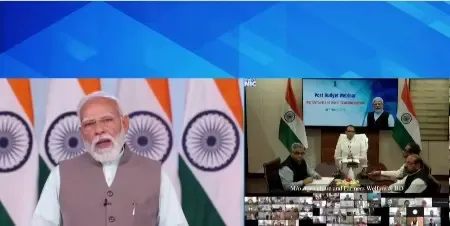
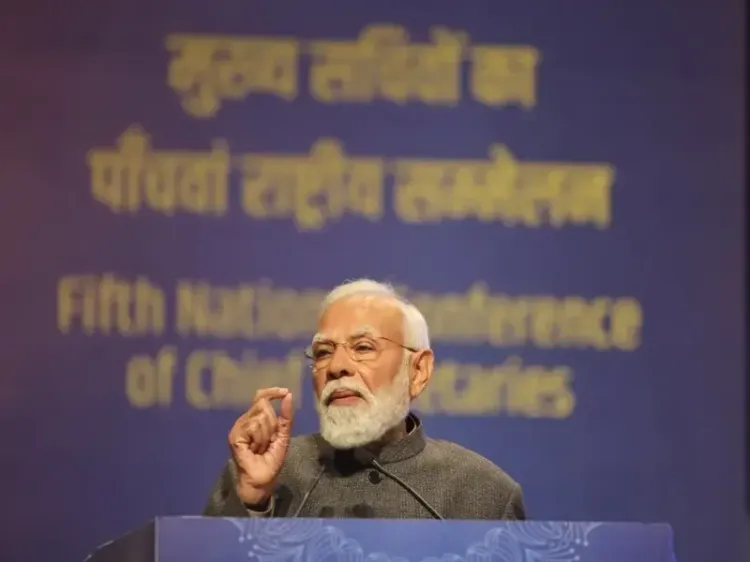
New Delhi, Dec 28 (NationPress) On Sunday, Prime Minister Modi urged states to promote manufacturing, enhance the Ease of Doing Business, and strengthen the services sector with the goal of transforming India into a Global Services Giant. He also called for a concentrated effort to increase food exports.
During the final day of the three-day Fifth National Conference of Chief Secretaries held in the national capital, the Prime Minister articulated a vision for how the Centre and states can collaborate to make India Aatmanirbhar, empower the underprivileged, and achieve the objective of a Viksit Bharat, an official reported.
In a post shared on X, the Prime Minister stated: “I addressed the Chief Secretaries' conference. This year’s theme was ‘Human Capital for Viksit Bharat’. I shared my insights on how we can work together to make India Aatmanirbhar, uplift the poor, and realize our vision of a Viksit Bharat.”
He highlighted the necessity of quality across all sectors, saying, “Quality in governance. Quality in delivery. Quality in manufacturing. Let’s strive to make the label ‘Made in India’ synonymous with quality and reinforce our commitment to ‘Zero Effect, Zero Defect’.”
PM Modi pointed out that the conference occurred during a period of transformative reforms in India.
“India has boarded the Reform Express, driven primarily by our youth and demographic advantage. Therefore, we strive to empower this demographic,” he mentioned in another post.
Stressing the importance of governance reforms, PM Modi noted significant steps have been taken to establish a new work culture in governance and service delivery, integrating cutting-edge technology to improve people's lives.
“We also discussed skill development, higher education, youth empowerment, sports, and more,” he added.
He emphasized that India holds the potential to become the world’s food basket. “We must transition towards high-value agriculture, horticulture, animal husbandry, dairying, and fisheries. This is how India can emerge as a leading food exporter,” the Prime Minister remarked.
Encouraging states to take an active role, PM Modi reiterated the need to promote manufacturing, enhance the Ease of Doing Business, and strengthen the services sector. “Let’s aim to establish India as a Global Services Giant,” he asserted.
The conference represented a significant milestone in reinforcing the Centre–State partnership through structured and ongoing dialogues about national development priorities.
Rooted in the Prime Minister’s vision of cooperative federalism, the conference served as a platform for the Centre and states to collaborate on a unified roadmap aimed at maximizing India's human capital potential and accelerating inclusive, future-ready growth.
The three-day conference concentrated on thorough discussions aimed at finalizing a common development agenda, shifting the perspective of India’s population from a mere demographic dividend to recognizing citizens as human capital.
Based on extensive discussions involving Central ministries, NITI Aayog, states, Union Territories, and domain experts, the conference spotlighted the theme ‘Human Capital for Viksit Bharat’, encompassing best practices and strategies for states and UTs.
This theme emphasized five crucial areas: early childhood education, schooling, skill development, higher education, sports, and extracurricular activities.
Six specialized sessions addressed deregulation in states; technology in governance—opportunities, risks, and mitigation; AgriStack for smart supply chains and market linkages; One State, One World-Class Tourist Destination; Aatmanirbhar Bharat and Swadeshi; and initiatives for a post-Left Wing Extremism future.
Moreover, focused discussions were held on heritage and manuscript preservation and digitization, along with Ayush for All—integrating traditional knowledge into primary healthcare delivery.
The National Conference of Chief Secretaries has been organized annually for the past four years, with the inaugural conference taking place in Dharamshala in June 2022, followed by sessions in New Delhi in January 2023, December 2023, and December 2024.
Chief Secretaries and senior officials from all states and Union Territories, alongside domain experts, participated in the conference.
Point of View
PM Modi's emphasis on strengthening state-federal cooperation is crucial for fostering economic growth and development. His call for enhancing manufacturing and food exports aligns with India's strategic goals of becoming self-reliant and a global economic powerhouse. It is essential that states take proactive measures to adopt these initiatives to maximize the country's potential.
NationPress
29 Sept 2026
Frequently Asked Questions
What did PM Modi emphasize during the conference?
PM Modi emphasized the need for states to promote manufacturing, improve the Ease of Doing Business, and strengthen the services sector, aiming to make India a Global Services Giant.
What is the significance of quality in governance according to PM Modi?
PM Modi highlighted that quality in governance, delivery, and manufacturing is essential, aiming to make the label 'Made in India' synonymous with excellence.
What potential does PM Modi see for India's agriculture sector?
PM Modi believes India has the potential to become the world's food basket by shifting towards high-value agriculture, horticulture, and animal husbandry.
How does the conference aim to maximize human capital?
The conference focused on recognizing citizens as human capital and aimed to finalize a common development agenda for states and UTs.
What themes were covered during the conference?
The conference covered themes such as early childhood education, skilling, higher education, sports, and extracurricular activities.