Jitendra Singh recalls Modi's Vaishno Devi visit before 2014 campaign
Synopsis
Union Minister Dr. Jitendra Singh recalled on 11 June 2026 that Narendra Modi visited Mata Vaishno Devi in Katra, Jammu, to seek blessings immediately after the BJP parliamentary board nominated him as its PM candidate in September 2013, before formally beginning the 2014 Lok Sabha campaign.
Key Takeaways
Jitendra Singh posted the recollection on 11 June 2026 .
The BJP parliamentary board formally nominated Narendra Modi as PM candidate on 13 September 2013 .
Modi visited Mata Vaishno Devi in Katra, Jammu , before launching his 2014 election campaign.
The visit reflects a consistent BJP practice of aligning political milestones with prominent religious observances.
Mata Vaishno Devi is one of India's most visited Hindu shrines, drawing millions of pilgrims annually.
Jitendra Singh is a BJP leader from the Jammu region and currently serves as Union Minister for Science and Technology.
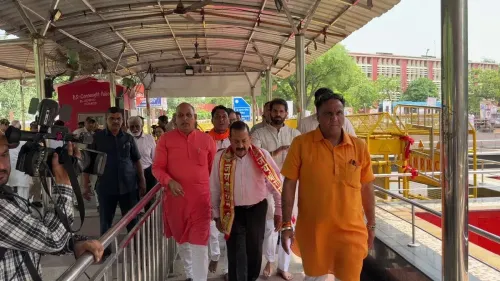
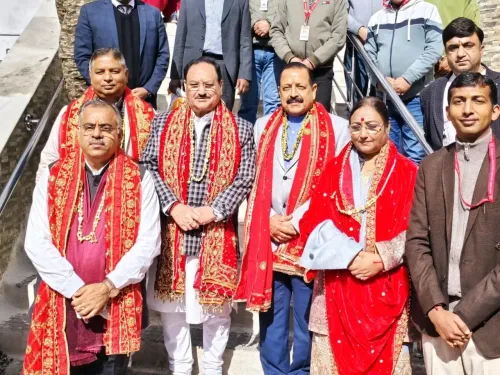
Union Science and Technology Minister Dr. Jitendra Singh on Thursday, 11 June 2026, shared a recollection on X of how Narendra Modi, after being nominated by the Bharatiya Janata Party (BJP) as its prime ministerial candidate, travelled to Mata Vaishno Devi in Katra, Jammu, to seek blessings at the holy shrine before formally launching his election campaign ahead of the 2014 Lok Sabha elections.
Context
The post by Dr. Jitendra Singh, a BJP leader representing the Jammu region, references a pivotal moment in recent Indian political history. The BJP parliamentary board formally nominated Narendra Modi as the party's prime ministerial candidate on 13 September 2013, setting in motion one of the most consequential election campaigns in independent India's history. According to the minister's post, Modi's first act after receiving that nomination was to visit Mata Vaishno Devi — one of Hinduism's most revered shrines — before commencing formal campaign activities.
Mata Vaishno Devi, situated in the Trikuta Mountains of Jammu, draws millions of pilgrims annually and holds deep significance for Hindu devotees across the country. The shrine's location in Jammu also lends the recollection a regional resonance, given Dr. Jitendra Singh's own political base in the area.
Policy Backdrop
The 2013 nomination of Modi as BJP's PM face was a landmark decision that reshaped the party's electoral strategy, centralising the campaign around a single leader's identity and vision. The visit to Vaishno Devi, as recalled in the post, fits within a broader pattern of BJP leaders aligning political milestones with visits to prominent religious sites — a practice that has been observed consistently across multiple electoral cycles since 2014.
Such gestures carry layered significance: they communicate personal faith, signal cultural and civilisational priorities to the party's core voter base, and set a tone of moral seriousness at the outset of a campaign. For the BJP, these rituals have become a recognisable part of its electoral mobilisation vocabulary.
Stakeholders and Impact
BJP workers and Hindu devotees are the primary audiences for such recollections, which serve to reinforce the party's narrative of cultural rootedness and spiritual grounding in leadership. By sharing this memory, Dr. Jitendra Singh underscores the continuity between Modi's personal conduct and the party's broader ideological emphasis on India's civilisational heritage.
For residents and pilgrims connected to Mata Vaishno Devi, the reference also affirms the shrine's national stature — not merely as a place of worship but as a site that has witnessed significant moments in contemporary Indian political life.
What's Next
With the 2029 Lok Sabha elections on the horizon and several state assembly elections expected in the intervening period, references to Modi's pre-campaign religious observances are likely to recur as BJP leaders draw on the 2014 template to frame the party's cultural and political identity. Shrines such as Mata Vaishno Devi may continue to feature in campaign narratives as symbols of both personal piety and national unity, reinforcing the BJP's long-standing emphasis on connecting electoral politics with India's religious and civilisational heritage.
Point of View
The minister also subtly foregrounds the region's symbolic importance to the party. The timing of such recollections, shared by a senior minister rather than a party functionary, suggests a coordinated effort to keep the 2014 origin story alive as the BJP looks toward future electoral cycles. It reflects the party's broader strategy of weaving religious symbolism into its political identity at every level of communication.
NationPress
26 Oct 2026
Frequently Asked Questions
Why did Modi visit Mata Vaishno Devi before the 2014 election campaign?
According to Union Minister Dr. Jitendra Singh's post, Modi visited Mata Vaishno Devi to pay obeisance at the holy shrine after being nominated by the BJP as its prime ministerial candidate, before formally beginning his election campaign.
When did BJP nominate Narendra Modi as its PM candidate?
The BJP parliamentary board formally nominated Narendra Modi as the party's prime ministerial candidate on 13 September 2013, ahead of the 2014 Lok Sabha elections.
Where is Mata Vaishno Devi located?
Mata Vaishno Devi is a major Hindu shrine located in Katra, in the Trikuta Mountains of the Jammu region, and is one of the most visited pilgrimage sites in India.
Who is Dr. Jitendra Singh?
Dr. Jitendra Singh is a Union Minister holding Independent Charge of the Ministries of Science and Technology and Earth Sciences, and is also Minister of State in the Prime Minister's Office. He is a BJP leader from the Jammu region.
Do BJP leaders regularly visit temples before election campaigns?
Visits to prominent temples and shrines by BJP leaders before major national campaigns have been a consistent practice since 2014, reflecting the party's emphasis on cultural and civilisational themes in its electoral mobilisation.