Did More than 15.75 Crore Rural Households Get Tap Water Supply?
Click to start listening
Synopsis
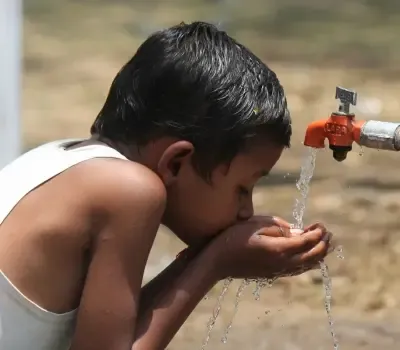
New Delhi marks a significant milestone in rural water access as over 15.75 crore households now enjoy tap water supply, a notable increase since the launch of the Jal Jeevan Mission in 2019. This article explores the progress made and the ongoing efforts to enhance water accessibility across rural India.
Key Takeaways
- Over 15.75 crore rural households now have tap water supply.
- Increase of approximately 12.52 crore since the launch of Jal Jeevan Mission.
- States like Kerala and Jharkhand lag in coverage.
- Total budget for JJM is Rs 3.60 lakh crore.
- Extension of JJM until December 2028.
New Delhi, Dec 8 (NationPress) Over 15.75 crore (or 81.37 percent) of rural households are now reported to have tap water supply in their residences, marking an increase of approximately 12.52 crore since the inception of the Jal Jeevan Mission (JJM) in August 2019, as stated by the Minister of State for Jal Shakti, V. Somanna, on Monday.
The data provided by the MoS indicated that while numerous states have attained 100 percent coverage for tap water supply in rural areas, the states with the lowest performance levels include Kerala (54.77 percent), Jharkhand (55.09 percent), West Bengal (56.45 percent), and Rajasthan (57.55 percent).
“Initially, at the commencement of the Mission, only 3.23 crore (equating to 16.7 percent) of rural households had tap water connections. As of December 3, 2025, approximately 12.52 crore additional households have been granted tap water connections under JJM,” Somanna remarked.
“Consequently, as of December 3, 2025, out of 19.36 crore rural households across the nation, more than 15.75 crore (or 81.37 percent) now have access to tap water supply,” he affirmed in a written response during the Rajya Sabha session.
Regarding the financing of JJM, the MoS elucidated that the total budget for the Mission is projected at Rs 3.60 lakh crore, with the central government contributing Rs 2.08 lakh crore. “The sanctioned central budget has nearly been utilized up to 2024-25,” Somanna added.
He further noted that in light of the advancements made and ongoing initiatives, the Finance Minister has proclaimed an extension of JJM to December 2028, with an increased overall budget through the 2025-26 budget announcements, focusing on the quality of infrastructure and the operation and maintenance of rural piped water supply systems for long-term viability and citizen-focused water service delivery.
Point of View
It is crucial to acknowledge the government's efforts in improving water accessibility for rural households through the Jal Jeevan Mission. While significant progress has been made, particularly in ensuring more households receive tap water, the highlighted disparities in certain states remind us of the work that still lies ahead. The focus on sustainability and infrastructure development is a positive step towards long-term solutions.
NationPress
09/12/2025
Frequently Asked Questions
How many rural households now have tap water supply?
As of December 3, 2025, over 15.75 crore rural households are reported to have tap water supply.
What was the situation before the Jal Jeevan Mission?
Initially, only 3.23 crore rural households had tap water connections, which was around 16.7 percent.
What is the estimated budget for the Jal Jeevan Mission?
The total outlay for the Jal Jeevan Mission is estimated at Rs 3.60 lakh crore.
Which states have the lowest tap water coverage?
The states with the lowest coverage include Kerala, Jharkhand, West Bengal, and Rajasthan.
When is the Jal Jeevan Mission expected to be extended until?
The Jal Jeevan Mission is expected to be extended until December 2028.