What Did PM Modi Say About Mother India and Goddess Chandi in the Vande Mataram Debate?
Click to start listening
Synopsis
In a powerful address, PM Modi reflects on the historical and cultural significance of Vande Mataram, emphasizing its role in India's struggle for freedom and the reverence for Mother India as both a symbol of prosperity and strength.
Key Takeaways
- Vande Mataram symbolizes India's fight against colonial oppression.
- The song was written by Bankim Chandra Chattopadhyay and featured in Anandamath.
- It embodies the spirit of Mother India as a symbol of strength and prosperity.
- Adopted as the National Song in 1950, it continues to inspire patriotism.
- The themes of freedom and self-reliance resonate strongly in PM Modi's address.
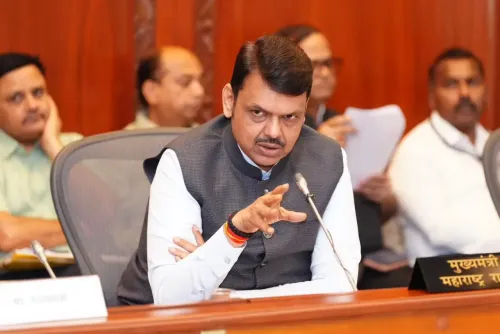
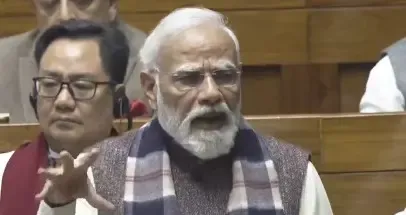
New Delhi, Dec 8 (NationPress) In a compelling address, Prime Minister Narendra Modi highlighted numerous historical events during a special session of Parliament on Monday, celebrating the 150th anniversary of India's national anthem, Vande Mataram.
He made a passionate argument against the colonial oppression of the time, emphasizing how this song, crafted by Bankim Chandra Chattopadhyay roughly 18 years post the 1857 Revolt, stood as both a symbol of rebellion and a counter to the British anthem, God Save the King.
Chattopadhyay's poetic work, which blends Sanskrit and Bengali, was later published in his book Anandamath in 1882.
The narrative is set against the backdrop of the 18th-century uprising of the 'Sannyasis' (Hindu monks) against East India Company rule in Bengal.
In Anandamath, the 'Santan' (children) are depicted as valiantly resisting colonial tyranny to free 'Bharat Mata' (Mother India).
The Prime Minister quoted, “Janani Janmabhumishcha Swargadapi Gariyasi” (My motherland is more precious than Heaven), a line from Anandamath that explains “Vande Mataram” (I bow to Mother).
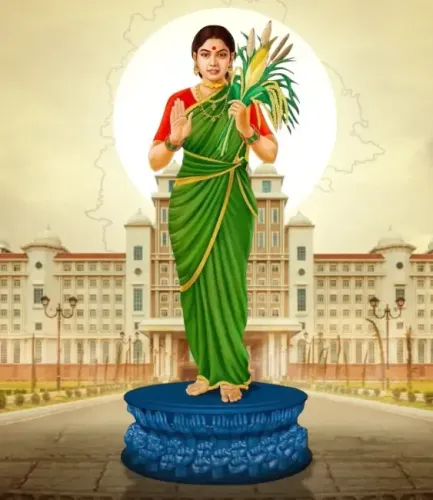
Mother India symbolizes the Goddess of wisdom and wealth, and when confronted with adversaries, she takes the form of the weapon-bearing Goddess Chandi, PM Modi reminded the audience.
As Chandi, an aspect of Goddess Durga, she embodies Shakti, the divine force that vanquishes evil.
The Prime Minister recited verses from Vande Mataram where Chattopadhyay illustrated the divine powers manifested as Goddess Durga.
The central theme of the novel revolves around a fraternity of Sannyasis, termed 'Santan', who devoted their lives to the cause of Motherland.
They revere their land personified as the Mother Goddess; their loyalty is directed purely towards their birthplace.
Vande Mataram serves as the anthem sung by the Santan of Anandamath.
This song emerged as the emblem of the “religion of patriotism”, a core message of the novel.
Within their sacred space, they housed three representations of the mother signifying the motherland: the Mother of the past, grand and glorious; the Mother in despair, lowly in the dust; and the Mother of the future, radiant in her original splendor.
According to Sri Aurobindo, “The Mother of his vision held trenchant steel in her twice seventy million hands and not the bowl of the mendicant.”
The Santan referred to a Mother who once appeared as a beautiful, accomplished figure, adorned as 'Jagadharti', representing Durga in her role as the universe's protector.
In the oppressive times, she took on the guise of Goddess Kali, fierce and brandishing weapons, emerging from the shadows.
However, the Santan longed for a liberated and joyous Motherland, envisioned as the ten-armed Goddess symbolizing happiness, blessings, and well-being for her children.
These forms illustrated the realities of the nation and the plight of the Motherland.
The aspirations of those fighting for her freedom and tranquility were encapsulated in the form they revered.
As PM Modi articulated, Vande Mataram instilled a sense of valor and solidarity, emphasizing that the struggle was not merely for territory but to eliminate subjugation; it was a call for “Swadeshi”, or self-reliance.
Adopted as India's National Song by the Constituent Assembly in 1950, Vande Mataram was first performed by Nobel Laureate Rabindranath Tagore at the Congress Session in Calcutta in 1896.
Before its book publication, Anandamath was serialized in the March-April 1881 edition of the Bengali magazine 'Bangadarshan', founded by Chattopadhyay.
In 1907, Madam Bhikaji Cama first unfurled the tricolor flag outside India in Stuttgart, Berlin, with the words 'Vande Mataram' emblazoned on it. Since its inception, the song has served as a powerful protest anthem, amplifying the call for patriotism throughout India's struggle for independence.
Point of View
The address made by PM Modi during the Vande Mataram debate encapsulates the essence of India's historical struggle for freedom. By invoking the themes of patriotism and reverence for Mother India, the Prime Minister reinforces a collective national identity, reminding citizens of their shared heritage and the sacrifices made for independence.
NationPress
09/12/2025
Frequently Asked Questions
What is the significance of Vande Mataram?
Vande Mataram is India's national anthem, symbolizing the spirit of patriotism and the struggle against colonial oppression. It serves as a reminder of the sacrifices made for independence.
Who wrote Vande Mataram?
Vande Mataram was penned by Bankim Chandra Chattopadhyay, and it was first published in his novel Anandamath in 1882.
What themes does Anandamath explore?
Anandamath explores themes of patriotism, resistance against colonial rule, and the veneration of Mother India as a divine figure.
When was Vande Mataram adopted as India's National Song?
Vande Mataram was adopted as India's National Song in 1950 by the Constituent Assembly.
What role did Vande Mataram play in India's freedom struggle?
Vande Mataram served as a potent form of protest and a rallying cry for patriotism throughout India's struggle for independence from British rule.