MP CM Mohan Yadav honours Ahilyabai Holkar on 231st death anniversary
Synopsis
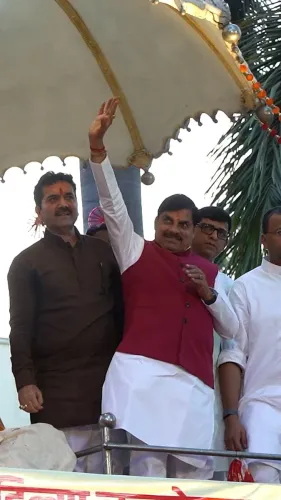
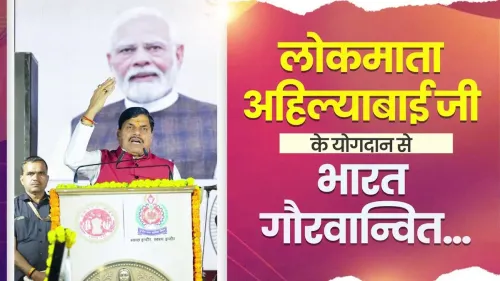
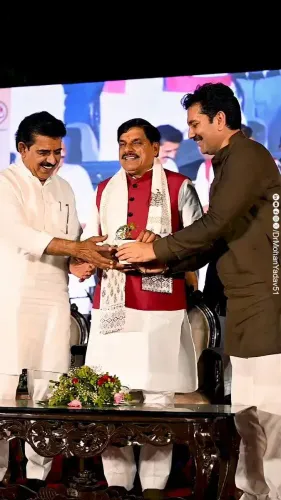
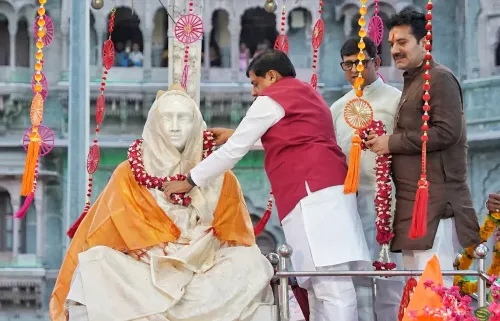
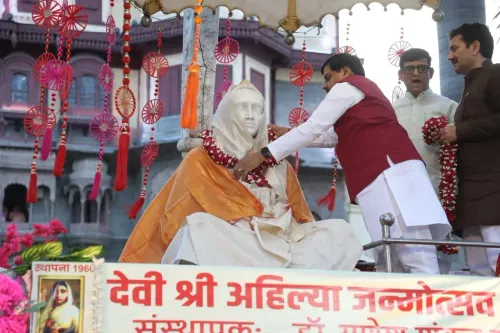
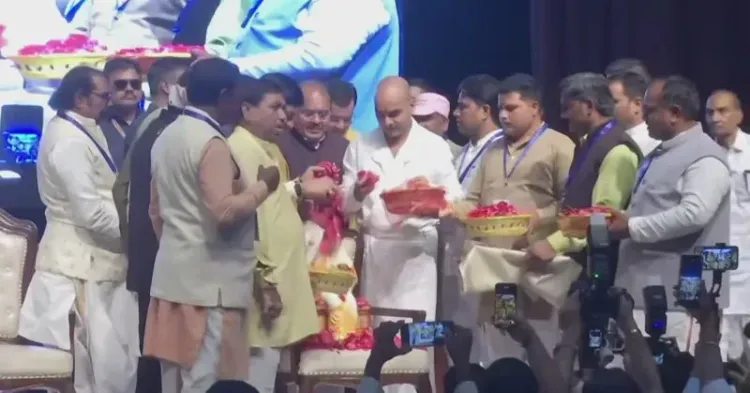
Chief Minister Dr. Mohan Yadav presided over the state's annual tribute to 18th-century Malwa ruler Devi Ahilyabai Holkar at Ravindra Bhawan, Bhopal, on her 231st death anniversary — a formal observance the Madhya Pradesh government has maintained for decades.
Key Takeaways
Mohan Yadav led the official commemoration of Devi Ahilyabai Holkar's 231st death anniversary on 13 August 2026 .
The event was held at Ravindra Bhawan, Bhopal , the state's principal official auditorium.
Ahilyabai Holkar ruled the Malwa kingdom from 1767 to 1795 , renowned for temple restoration and public welfare across India.
The state government formally addresses her as Punyashlok Lokmata — 'the virtuous mother of the people.' Madhya Pradesh has held this annual observance consistently since at least the early 2000s, making it an institutionalised state tradition.
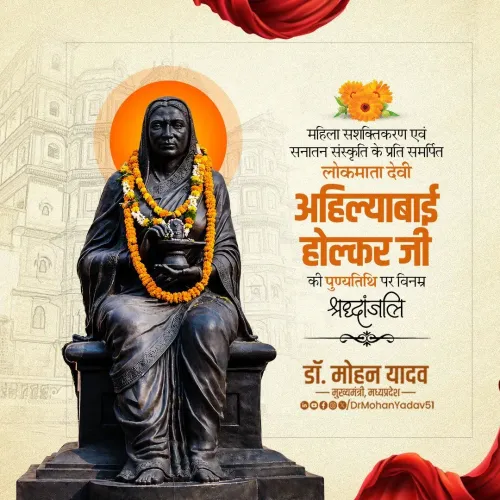
Every year on 13 August, Madhya Pradesh pauses to remember a queen who built temples, restored ghats, and fed pilgrims across a subcontinent — long before the idea of a welfare state had a name. This year, Chief Minister Dr. Mohan Yadav led the state's official tribute to Devi Ahilyabai Holkar at Ravindra Bhawan, Bhopal, marking her 231st death anniversary — referred to in the official programme as her punyasmriti (sacred remembrance).
A queen the 18th century could not contain
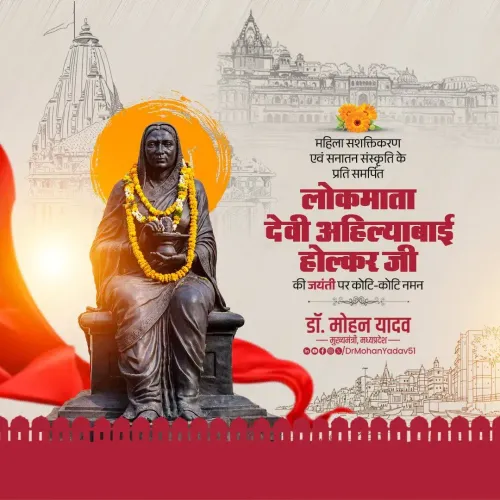
Devi Ahilyabai Holkar ruled the Malwa kingdom from 1767 to 1795 under the Holkar dynasty, governing from Maheshwar on the banks of the Narmada. She is credited with commissioning or restoring temples, dharamshalas, and water infrastructure at pilgrimage sites stretching from Varanasi to Dwarka — an extraordinary patronage network at a time of political fragmentation across the subcontinent. The honorific Punyashlok Lokmata — roughly, 'the virtuous mother of the people' — is the title the state government formally uses for her, reflecting a reverence that cuts across party lines and regional identities.
Bhopal's Ravindra Bhawan as the stage for state memory
Ravindra Bhawan is Bhopal's principal state auditorium, regularly chosen for official cultural and commemorative programmes. The Government of Madhya Pradesh has marked Ahilyabai Holkar's death anniversary with formal state events at least since the early 2000s, making this an institutionalised annual observance rather than a one-off gesture. Dr. Mohan Yadav, who has served as Chief Minister since December 2023 representing the BJP, presided over the ceremony — continuing a tradition maintained by successive state administrations.
The broader pattern is deliberate: Indian state governments routinely stage public commemorations of pre-colonial regional rulers to reinforce cultural identity and historical pride. In Madhya Pradesh, the Holkar dynasty occupies a particularly prominent place in that civic imagination, given the dynasty's deep roots in the region's temple heritage and public infrastructure.
Watch for possible follow-up announcements in the coming months on heritage conservation projects or new public facilities named in Ahilyabai Holkar's honour — the anniversary often serves as a natural moment to unveil such initiatives.
A queen who ruled nearly two and a half centuries ago still commands a state auditorium, a Chief Minister's presence, and a title that translates to 'mother of the people.' That is not ceremony — that is a living argument about what leadership is supposed to look like.
Point of View
This particular observance predates the current administration and has enjoyed cross-party support, giving it a non-partisan durability unusual in today's political climate. By framing Holkar with the honorific Lokmata, the state government subtly positions her welfare-oriented reign as a historical template for contemporary governance. The consistency of the event signals that regional identity politics in MP are as much about civilisational pride as electoral calculation. Heritage anniversaries like this one also serve as low-risk, high-visibility platforms for a Chief Minister to project statesmanship without legislative controversy.
NationPress
27 Sept 2026
Frequently Asked Questions
Who was Devi Ahilyabai Holkar?
Devi Ahilyabai Holkar was the ruler of the Malwa kingdom from 1767 to 1795 under the Holkar dynasty. She is celebrated for commissioning and restoring temples, dharamshalas, and water infrastructure at pilgrimage sites across India, earning the title Punyashlok Lokmata — 'the virtuous mother of the people.'
When is Ahilyabai Holkar's death anniversary?
Ahilyabai Holkar's death anniversary falls on 13 August each year. In 2026, the state of Madhya Pradesh marked her 231st death anniversary with an official programme in Bhopal.
What event did CM Mohan Yadav attend on 13 August 2026?
Chief Minister Dr. Mohan Yadav presided over the state's official commemorative programme for Devi Ahilyabai Holkar's 231st death anniversary at Ravindra Bhawan, Bhopal , organised by the Government of Madhya Pradesh.
Why does Madhya Pradesh hold an annual tribute to Ahilyabai Holkar?
Ahilyabai Holkar's Holkar dynasty had deep roots in the Malwa region of present-day Madhya Pradesh. The state government has marked her death anniversary with official programmes since at least the early 2000s, recognising her contributions to temple heritage, public welfare, and regional identity.
What is Ravindra Bhawan in Bhopal?
Ravindra Bhawan is Bhopal's principal state auditorium, regularly used for official cultural and government programmes, including the annual Ahilyabai Holkar death anniversary commemoration.