MP CM Mohan Yadav launches ₹25,000 reward under Rahveer Yojana
Synopsis
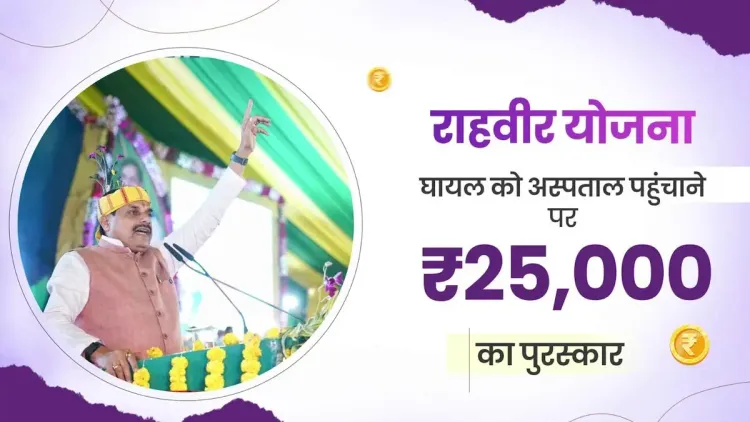
Madhya Pradesh CM Dr. Mohan Yadav announced the Rahveer Yojana on 25 October 2026, offering a ₹25,000 government reward to any individual who transports a road accident victim to hospital in time, building on the Supreme Court's 2016 Good Samaritan guidelines.
Key Takeaways
Rahveer Yojana offers a ₹25,000 cash reward to anyone who helps a road accident victim reach hospital on time in Madhya Pradesh .
The announcement was made by CM Dr.
Mohan Yadav on 25 October 2026 .
The scheme directly addresses bystander hesitation — a key factor in preventable road-accident deaths during the critical 'golden hour'.
The Supreme Court of India issued guidelines in 2016 protecting Good Samaritans from police harassment and legal liability, providing the legal foundation this scheme builds on.
Exact claim procedures, required documents, and disbursement timelines are pending in the government's formal order.
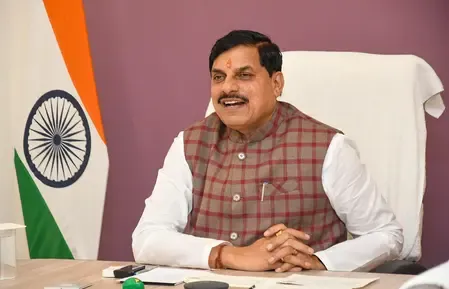
A bystander who stops, helps, and saves a life on a Madhya Pradesh highway will now pocket ₹25,000 — no questions asked, no legal harassment feared. Chief Minister Dr. Mohan Yadav announced on Sunday, 25 October 2026 that the state government will pay the cash reward to any individual who transports a road accident victim to a hospital in time under the newly declared Rahveer Yojana.
As CM Yadav put it: 'Rahveer Yojana ke antargat sadak durghatna mein ghaayal vyakti ko samay par aspatal pahunchaakar uski jaan bachane mein madad karne wale vyakti ko sarkar ki or se ₹25,000 ka puraskaar diya jaega' — ('Under Rahveer Yojana, a person who helps save the life of a road accident victim by getting them to hospital on time will be given a reward of ₹25,000 by the government.')Why 'Good Samaritan' hesitation costs lives in India
India's roads are among the deadliest in the world, and a well-documented killer hides in plain sight: bystander paralysis. Witnesses routinely drive past crash sites fearing police interrogation, hospital paperwork, and court summons. The result is a fatal gap between the 'golden hour' — the critical sixty minutes after trauma when medical intervention is most effective — and actual hospital admission.
It was exactly this pattern that prompted the Supreme Court of India in 2016 to issue landmark guidelines shielding Good Samaritans from police harassment and legal liability. Those directions gave bystanders a legal umbrella. Rahveer Yojana now adds a financial one — flipping the equation from 'help and risk trouble' to 'help and earn reward.'
Where Madhya Pradesh fits the national road-safety picture
Madhya Pradesh has consistently figured among India's high-fatality states on national highway accident data. Emergency response in large parts of the state — particularly on rural stretches of national and state highways — remains thin, with ambulance response times far exceeding the golden hour. A citizen-activation scheme like Rahveer Yojana is designed precisely for that gap: turning every private vehicle into a potential first-responder transport.
Several Indian states have periodically introduced incentive frameworks for bystander assistance following judicial directions and national road-safety campaigns. Madhya Pradesh's ₹25,000 ceiling is a notable direct-cash commitment, placing real monetary weight behind a moral obligation that the state is effectively trying to institutionalise.
What still needs to be spelled out
The announcement frames the intent clearly; the operational architecture is the next test. How a rescuer files a claim, what documentation a district hospital issues, whether the reward is linked to existing road-safety or health schemes, and how quickly the disbursement clears — these details will determine whether Rahveer Yojana changes behaviour at the roadside or remains a well-meaning headline. The government's formal order is awaited.
If the machinery works as intended, the scheme could turn Madhya Pradesh into a template: proof that a government can price the cost of indifference and replace it with an incentive to act.
Point of View
Targeting the well-documented 'bystander effect' that costs lives on Indian roads. The announcement aligns with the Supreme Court's decade-old directive on Good Samaritan protection, suggesting the state is finally adding teeth to a framework that existed only on paper. For CM Mohan Yadav, the scheme is also politically astute — it packages road safety as a welfare measure, extending the government's reach into a daily-risk space that directly touches ordinary citizens. The real test, however, lies in implementation: India's road-safety history is littered with well-intentioned schemes that faltered on disbursement mechanics and awareness gaps.
NationPress
25 Oct 2026
Frequently Asked Questions
What is Rahveer Yojana in Madhya Pradesh?
Rahveer Yojana is a Madhya Pradesh government scheme that offers a ₹25,000 cash reward to any individual who transports a road accident victim to a hospital in time to save their life.
Who announced Rahveer Yojana and when?
Chief Minister Dr. Mohan Yadav announced the scheme on 25 October 2026 via the official Chief Minister's Office account on X.
Is there a law protecting good samaritans who help accident victims in India?
Yes. The Supreme Court of India issued guidelines in 2016 that protect good samaritans — bystanders who help road accident victims — from police harassment, forced detainment, and legal liability.
How can someone claim the ₹25,000 Rahveer Yojana reward in MP?
The government's formal order with claim procedures, required documents, and disbursement details is yet to be released. The announcement has been made but operational guidelines are awaited.
Why do bystanders hesitate to help road accident victims in India?
Fear of police questioning, court summons, and hospital formalities has historically deterred bystanders. This 'bystander paralysis' causes fatal delays during the critical golden hour after a road accident, which schemes like Rahveer Yojana are designed to overcome.