MP CM Mohan Yadav Pushes Ujjain Temple Revival Drive

Synopsis
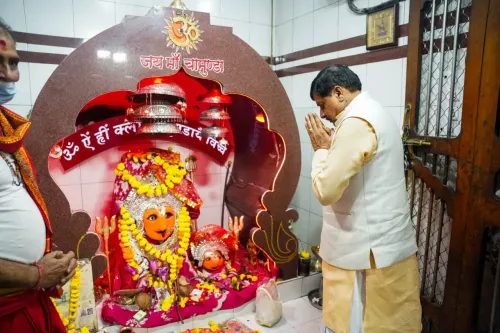
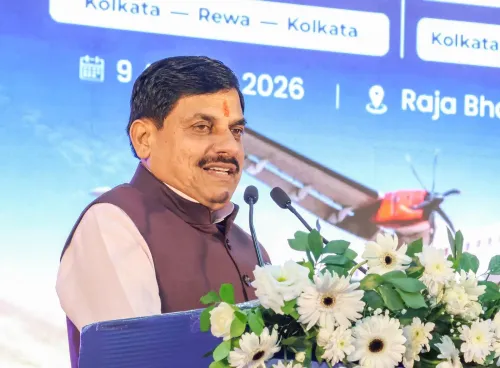
Chief Minister Dr. Mohan Yadav announced that the Madhya Pradesh government is developing Mata Harsiddhi temple in Ujjain as a havan and Devi worship centre, while also undertaking a full rejuvenation of the Garhkalika Mata temple, extending the state's post-Mahakal Lok religious infrastructure push.
Key Takeaways
Mata Harsiddhi temple in Ujjain is being developed as a dedicated centre for havan, puja, and Devi worship by the Madhya Pradesh government.
Rejuvenation work for Garhkalika Mata temple — recognised as a Shaktipeeth in south India — is simultaneously under way in Ujjain.
Mohan Yadav framed Ujjain as a city of triple religious significance: Mahakaleshwar Jyotirlinga, Mata Harsiddhi Shaktipeeth, and Lord Krishna's seat of learning.
The projects follow the completion of the Mahakal Lok corridor in 2022–23 , extending the state's temple-upgrade strategy beyond the flagship shrine.
No specific funding figures or completion timelines were disclosed in the 10 November 2026 announcement.
Two of Ujjain's ancient Shaktipeeth temples — long overshadowed by the city's headline Mahakaleshwar corridor — are now squarely in the crosshairs of the Madhya Pradesh government's religious infrastructure push. On Tuesday, 10 November 2026, the Chief Minister's Office of Madhya Pradesh, citing Chief Minister Dr. Mohan Yadav, announced that the state is developing Mata Harsiddhi temple as a dedicated centre for havan, puja and Devi worship — and separately carrying out a full rejuvenation of Garhkalika Mata temple.
Ujjain's sacred triangle: Mahakal, Harsiddhi, Garhkalika
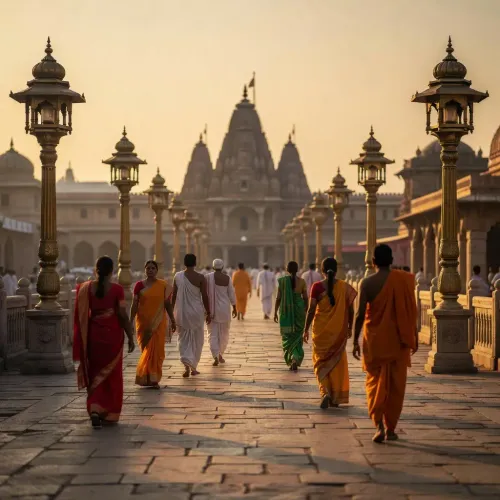
Ujjain already commands one of India's most consequential pilgrimage addresses: home to the Mahakaleshwar Jyotirlinga, one of the twelve Jyotirlingas, and to Mata Harsiddhi, recognised as a Shaktipeeth across north India. The CM's post underscores a third pillar — Garhkalika Mata, venerated in south India's Shaktipeeth tradition — alongside the city's identity as the seat of Lord Krishna's education, the shiksha-sthali where the deity is said to have studied under sage Sandipani.
The official statement reads: 'Sarkar Mata Harsiddhi Mandir ko havan-pujan aur Devi aradhana ke kendra ke roop mein viksit kar rahi hai' — 'The government is developing Mata Harsiddhi temple as a centre for havan, puja and Devi worship.' Work on the rejuvenation of Garhkalika Mata temple, the post adds, is also under way.
After Mahakal Lok: the next phase of Ujjain's transformation
The announcement lands against a clear policy backdrop. The Madhya Pradesh government completed the landmark Mahakal Lok corridor in 2022–23, a sweeping redevelopment of the Mahakaleshwar temple precinct that drew massive national attention and dramatically expanded pilgrim footfall. The Harsiddhi and Garhkalika projects signal that the state now intends to extend that upgrade logic across Ujjain's wider temple ecosystem — not just its headline shrine.
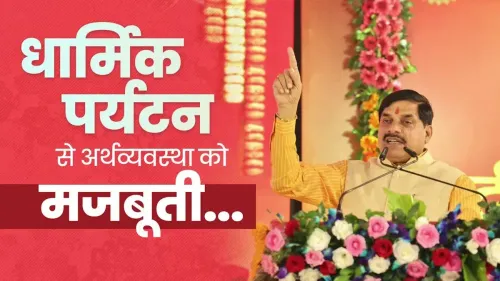
Dr. Mohan Yadav, who took charge as Chief Minister in December 2023, has consistently framed religious tourism as both a cultural imperative and an economic engine for the state. Ujjain, sitting on the Kshipra river in central Madhya Pradesh, is the host city of the Kumbh Mela cycle and draws tens of millions of pilgrims. Each new temple upgrade, from the government's perspective, multiplies that draw.
What the Harsiddhi and Garhkalika upgrades mean for pilgrims
The government's framing is deliberate: Harsiddhi, specifically, is being positioned not just as a heritage site but as a living ritual space — a functioning havan and Devi aradhana centre. That distinction matters. It signals infrastructure investments in fire-ritual platforms, priest facilities, and ceremonial capacity, not just aesthetics. Garhkalika's 'kayakalp' — a word the CM's office uses, implying total transformation — points to structural and perhaps landscaping works, though specific timelines and budget figures have not been disclosed in this announcement.
For Ujjain's pilgrim economy — hoteliers, priests, local vendors — a simultaneous upgrade of three temple clusters in the same ancient city represents a multiplier. The Mahakal Lok effect already demonstrated how corridor-scale investment can reshape visitor numbers almost overnight.
Ujjain is building something rarer than a single shrine upgrade: a fully connected sacred circuit, and the government is making sure every node on that circuit is worth the journey.
Point of View
Then expand the upgrade mandate across the full pilgrimage ecosystem. For CM Dr. Mohan Yadav, the religious-tourism economy is not a soft priority — it is central to Madhya Pradesh's growth identity. By invoking both north-Indian and south-Indian Shaktipeeth traditions in a single post, the government is also signalling a pan-national appeal for Ujjain beyond its traditional MP-UP pilgrim base. The absence of specific timelines or budget figures in the announcement suggests this is still a signalling move ahead of detailed project rollouts.
NationPress
10 Nov 2026
Frequently Asked Questions
What is the Mata Harsiddhi temple in Ujjain?
Mata Harsiddhi is a prominent Shaktipeeth temple in Ujjain, Madhya Pradesh, recognised especially across north India as a major centre of Devi worship. The MP government is now developing it as a dedicated havan and puja centre.
What is the Garhkalika Mata temple and why is it significant?
Garhkalika Mata temple in Ujjain is considered a Shaktipeeth with particular recognition in south India. The Madhya Pradesh government has announced a 'kayakalp' — a comprehensive rejuvenation — of the temple complex.
What is the Mahakal Lok corridor and how does it relate to these projects?
The Mahakal Lok corridor is a large-scale redevelopment of the Mahakaleshwar Jyotirlinga precinct in Ujjain, completed in 2022–23. The new Harsiddhi and Garhkalika projects extend the same infrastructure-upgrade approach to Ujjain's other major shrines.
Who is Dr. Mohan Yadav and what is his role in Ujjain's development?
Dr. Mohan Yadav has been the Chief Minister of Madhya Pradesh since December 2023. He has prioritised religious tourism and temple infrastructure as key pillars of the state's development agenda, with Ujjain as a central focus.
Why is Ujjain important for pilgrims and tourists?
Ujjain hosts the Mahakaleshwar Jyotirlinga (one of India's twelve Jyotirlingas), the Mata Harsiddhi Shaktipeeth, the Garhkalika Mata temple, and is traditionally regarded as the site of Lord Krishna's education — making it one of India's most spiritually layered cities.