MP CM Office Unveils 600 km Industrial Corridor Plan
Synopsis
Madhya Pradesh's Chief Minister's Office announced a 600-kilometre integrated industrial corridor connecting three metropolitan regions, aiming to unlock industrial investment, employment, and regional economic growth under CM Dr. Mohan Yadav's leadership.
Key Takeaways
The Chief Minister's Office of Madhya Pradesh announced a 600-kilometre integrated industrial corridor on 6 November 2026 .
The corridor will span three metropolitan regions within the state, targeting clustered industrial growth.
Stated goals include industrial investment, better connectivity, employment generation, and regional economic prosperity .
Mohan Yadav , in office since December 2023, and the state Industries Ministry are jointly driving the initiative.
Madhya Pradesh's central location bordering five major states underpins the strategic logic of an inland industrial corridor.
Route finalisation, funding details, and investor commitments are the key milestones to watch in upcoming budgets and summits.
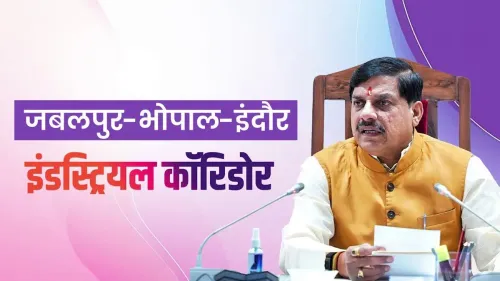
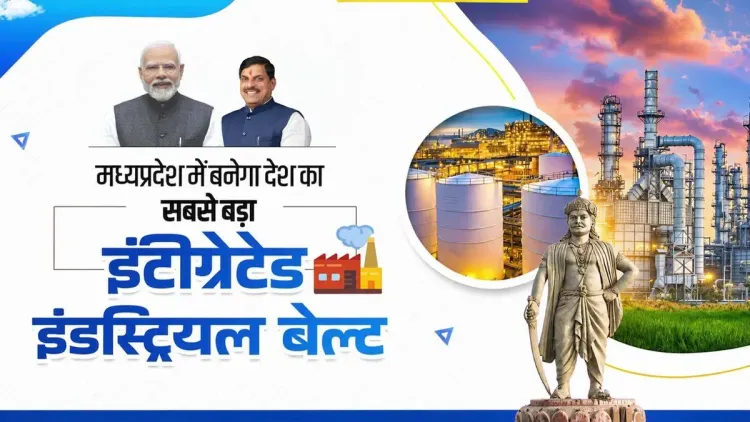
A 600-kilometre integrated industrial corridor threading through three metropolitan regions is Madhya Pradesh's boldest infrastructure bet yet — and the Chief Minister's Office of Madhya Pradesh made it official on Friday, 6 November 2026, announcing the project as the state's 'new flight' toward industrial investment, connectivity, and regional economic prosperity.
The post, shared from the official CMO handle, described the corridor as opening 'new doors of industrial investment, better connectivity, employment and regional economic prosperity' — औद्योगिक निवेश, बेहतर कनेक्टिविटी, रोजगार और क्षेत्रीय आर्थिक समृद्धि के नए द्वार. The announcement tagged Chief Minister Dr. Mohan Yadav and the state's Industries Ministry, signalling coordinated political ownership of the initiative.
Three metro regions, one spine
The corridor's defining feature is its reach: a single integrated industrial spine spanning roughly 600 kilometres and connecting three metropolitan regions within Madhya Pradesh. This kind of multi-city corridor model is designed to cluster manufacturing activity, reduce logistics friction, and pull economic energy away from India's already-saturated coastal industrial belts. Madhya Pradesh's dead-centre geography — it shares borders with five major states — makes it a natural overland hub for exactly this kind of corridor logic.
MP's industrial push under Dr. Mohan Yadav
Dr. Mohan Yadav, who took charge as Chief Minister in December 2023, has consistently positioned Madhya Pradesh as a manufacturing destination capable of competing with established hubs in Gujarat and Tamil Nadu. Those states built their industrial muscle partly through dedicated corridor infrastructure; MP is now pursuing the same playbook. The corridor approach is proven: concentrated industrial zones draw anchor investors, who in turn attract supplier ecosystems, logistics providers, and a growing local workforce.
Jobs, investment, and what comes next
The CMO framed the corridor's promise around three pillars — industrial investment, employment generation, and regional economic spread. For a state whose economic weight has historically lagged behind its geographic centrality, those three pillars matter enormously. The critical next steps — route finalisation, funding allocations, and confirmed investment commitments — are expected to surface through upcoming state budget discussions and investor summits. Watch those events closely: they will determine whether today's announcement graduates from vision to ground-breaking.
Madhya Pradesh just drew its most ambitious industrial map. The question now is who shows up to build on it.
Point of View
Deliberate move on a geography that has long been underleveraged. For CM Dr. Mohan Yadav, this is as much a political statement as an economic one: he is reframing MP not as a agrarian heartland but as a manufacturing pivot for landlocked India. The three-metropolitan-region framing also suggests an ambition to spread growth beyond a single anchor city, which, if executed, could address longstanding intra-state inequality. The real test arrives when route maps and budget lines are published — announcements of this scale live and die on those details.
NationPress
6 Nov 2026
Frequently Asked Questions
What is the Madhya Pradesh integrated industrial corridor?
It is a proposed 600-kilometre industrial corridor connecting three metropolitan regions of Madhya Pradesh, designed to attract manufacturing investment, improve logistics connectivity, and generate employment across the state.
Which metropolitan regions does the MP industrial corridor connect?
The Chief Minister's Office announced the corridor spans three metropolitan regions in Madhya Pradesh, though the specific cities along the route have not yet been officially confirmed in publicly available records.
Who announced the Madhya Pradesh industrial corridor?
The announcement was made by the Chief Minister's Office of Madhya Pradesh on 6 November 2026 , tagging Chief Minister Dr. Mohan Yadav and the state's Industries Ministry.
How does MP's corridor compare to industrial corridors in other Indian states?
States like Gujarat and Tamil Nadu have used dedicated industrial corridors to cluster manufacturing and boost exports. Madhya Pradesh's central geography, bordering five states, positions it as a potential inland logistics and manufacturing hub using a similar model.
When will the Madhya Pradesh industrial corridor be built?
A construction timeline has not been officially announced yet. Key milestones to watch include route finalisation, funding allocations , and investment commitments expected to emerge from future state budgets and investor events.