MP CM Mohan Yadav's Vijayadashami Message: Service Over Celebration
Synopsis
Chief Minister Mohan Yadav used Madhya Pradesh's official Vijayadashami message to connect Dussehra's dual symbolism — Rama's victory over Ravana and Durga's power — to a governance pledge of public service, citing PM Modi's leadership as inspiration.
Key Takeaways
CM Mohan Yadav issued an official Vijayadashami message on October 20, 2026 via the Madhya Pradesh Chief Minister's Office.
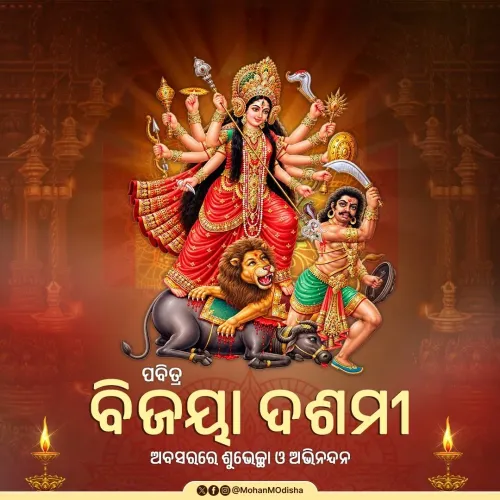
He invoked Lord Rama's victory over Ravana and Goddess Durga's slaying of Mahishasura as symbols of strength and women's power.
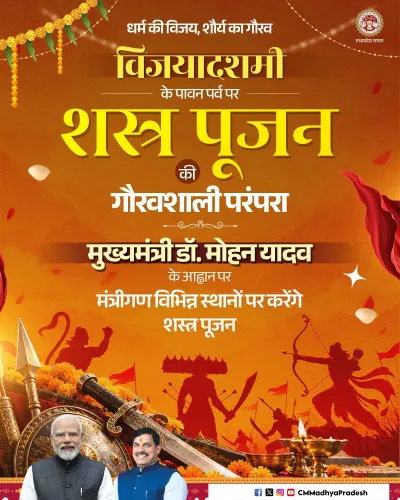
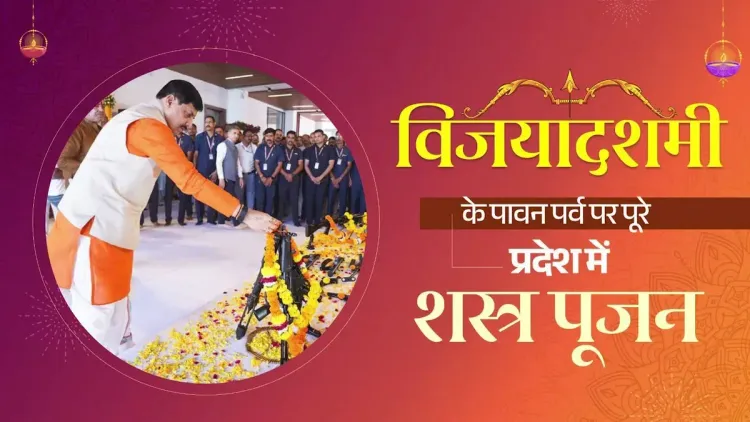
The message reframes the Shastra Puja tradition: bearing arms symbolises a resolve to serve the public and end their hardships , not mere celebration.
CM Yadav credited PM Narendra Modi's leadership for inspiring India to draw on its 'glorious past and golden history.' The statement explicitly justifies government participation in festivals as a means of strengthening social and cultural values.
On the auspicious occasion of Vijayadashami, Chief Minister Mohan Yadav of Madhya Pradesh reframed the festival's ancient symbolism into a living philosophy of governance — declaring that bearing arms is not a mark of joy alone, but a solemn pledge to serve the people and end their suffering.
The Chief Minister's Office of Madhya Pradesh posted the message on Tuesday, October 20, 2026, on the occasion of Dussehra, invoking both Lord Rama's triumph over Ravana and Goddess Durga's slaying of Mahishasura as twin emblems of power and feminine strength. 'शक्ति एवं नारी सामर्थ्य' — 'power and women's capability' — were explicitly named as the festival's core lessons.
Arms, duty, and the CM's pledge to the people
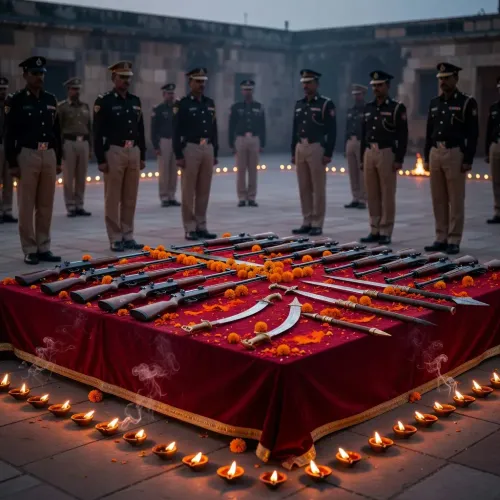
The most pointed line in CM Yadav's statement cuts through ceremonial convention: 'शस्त्र धारण करना केवल आनंद के लिए नहीं, बल्कि जनसेवा और लोगों के कष्ट मिटाने के संकल्प का प्रतीक है' — 'carrying arms is not merely for pleasure, but a symbol of the resolve to serve the public and erase people's hardships.' In a single sentence, the Chief Minister transforms the ritual of Shastra Puja (the Dussehra worship of arms) into a statement of political accountability.
He also credited Prime Minister Narendra Modi's leadership as the force drawing present-day India forward from its 'glorious past and golden history' — a framing that positions cultural pride as both motivation and compass for contemporary governance.
Why the Madhya Pradesh government joins the festival — publicly
CM Yadav's statement closes with a deliberate institutional note: festivals, he says, strengthen society's sanskar — its moral and cultural fabric — and that is precisely why the government participates as a partner in these celebrations alongside citizens. It is not a casual aside. BJP-governed states, including Madhya Pradesh, have consistently made official participation in major Hindu festivals a visible part of state outreach, reinforcing the argument that cultural continuity and administrative responsibility are inseparable.
This practice has become a recognisable pattern: religious occasions become platforms for articulating governance values — service, strength, sacrifice — that resonate with the festival's own narrative. Dussehra, with its unambiguous story of good defeating evil, provides unusually rich material for such messaging.
As the festive season moves toward Diwali, watch for whether this message catalyses any formal state-level cultural programming or policy announcements tied to the season's themes.
The arms of governance, CM Yadav is saying, are only as worthy as the suffering they resolve — and on Vijayadashami, that is a promise, not just a prayer.
Point of View
Not discretion, also signals an intent to normalise the state's presence in public religious life. As Madhya Pradesh approaches the winter festive calendar, such messaging sets the tone for how the administration frames its relationship with citizens: not bureaucratic, but participatory and culturally rooted.
NationPress
20 Oct 2026
Frequently Asked Questions
What did MP CM Mohan Yadav say on Vijayadashami 2026?
CM Mohan Yadav said that Vijayadashami represents the power of Rama's victory over Ravana and Durga's strength, and that bearing arms symbolises a resolve for public service — not mere celebration. He also credited PM Modi's leadership for guiding India forward from its glorious history.
Why does the Madhya Pradesh government participate in Vijayadashami celebrations?
CM Yadav stated that festivals strengthen society's moral and cultural fabric, and therefore the government participates as a partner in these occasions to celebrate alongside the public and reinforce shared values.
What is the significance of Vijayadashami according to CM Mohan Yadav?
According to CM Yadav, Vijayadashami signifies both strength and women's capability through two narratives: Lord Rama's victory over Ravana and Goddess Durga's slaying of Mahishasura.
What is Shastra Puja and how did CM Yadav reference it?
Shastra Puja is the Dussehra tradition of worshipping arms or tools. CM Yadav reinterpreted it by saying that carrying arms is not for pleasure but is a symbol of the pledge to serve the people and end their suffering.
How does BJP-ruled Madhya Pradesh approach major Hindu festivals officially?
The Madhya Pradesh government under Chief Minister Mohan Yadav publicly participates in major Hindu festivals, issuing official statements that connect religious narratives to themes of governance, public service, and cultural continuity.