MP CM Yogi Launches Balram Krishi Mahotsav Across Bhopal Division
Synopsis
The Chief Minister's Office of Madhya Pradesh has announced the Balram Krishi Mahotsav, a five-district agricultural festival across Bhopal division running from 7 to 16 August 2026, under CM Dr. Mohan Yadav's guidance as part of the state's Krishak Kalyan Varsh 2026 initiative.
Key Takeaways
The Balram Krishi Mahotsav will be held across five districts of Bhopal division between 7 and 16 August 2026 .
District schedule: Sehore (7 Aug), Rajgarh (9 Aug), Bhopal (11 Aug), Raisen (13 Aug), Vidisha (16 Aug) .
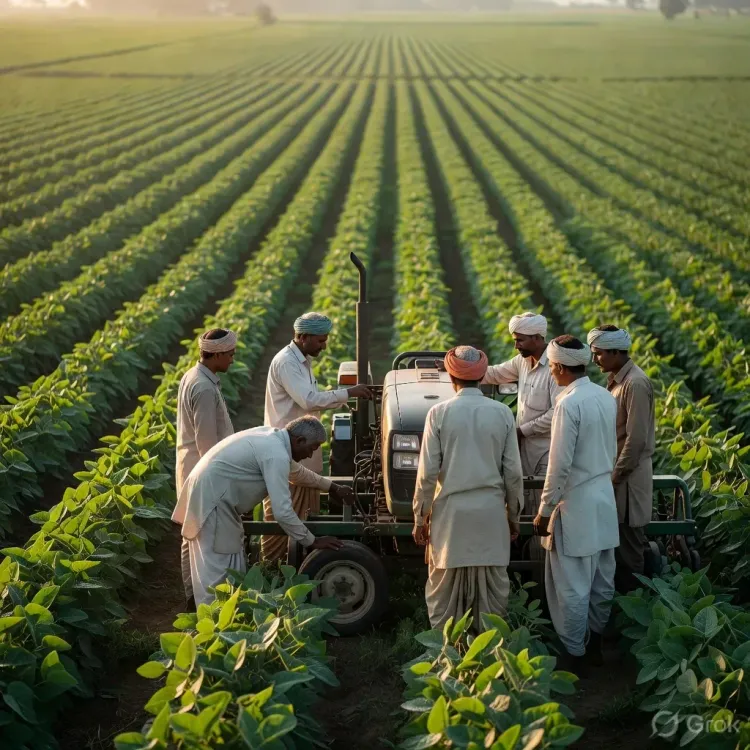
The festival is dedicated to advanced farming practices and modern agricultural technology adoption.
It operates under the state's Krishak Kalyan Varsh 2026 (Farmers Welfare Year 2026) framework.
Mohan Yadav , in office since December 2023, is providing direct guidance for the initiative.
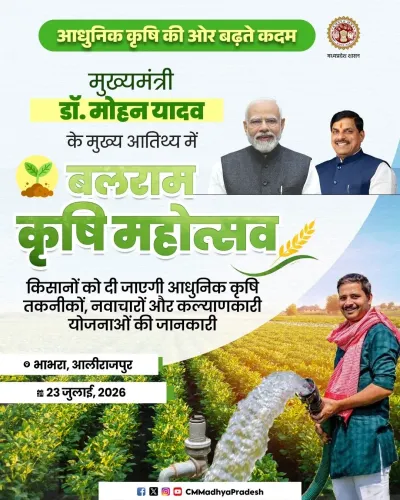
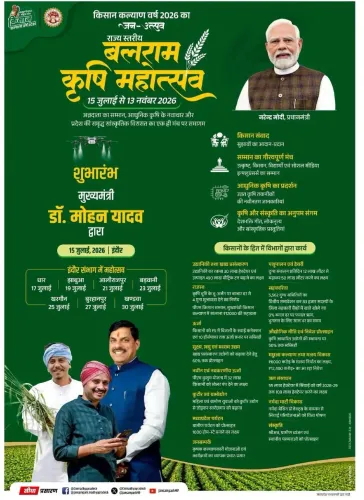
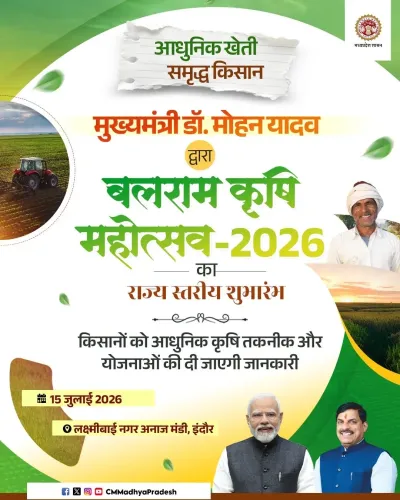
Five districts. Ten days. One clear signal that Madhya Pradesh is putting its farmers front and centre this harvest season. The Chief Minister's Office of Madhya Pradesh announced on Friday, 7 August 2026, that the Balram Krishi Mahotsav — a special agricultural festival dedicated to advanced farming and modern technology — will roll through every district of Bhopal division under the guidance of Chief Minister Dr. Mohan Yadav.
The festival kicks off in Sehore on 7 August, moves to Rajgarh on 9 August, then to Bhopal on 11 August, Raisen on 13 August, and closes in Vidisha on 16 August. The CMO's post, tagged under #कृषक_कल्याण_वर्ष_2026 (Farmers Welfare Year 2026), invited citizens to 'become participants in the effort to make farming more advanced and prosperous.'What the Balram Krishi Mahotsav is designed to do
District-level Krishi Mahotsav events have long been a fixture in Madhya Pradesh's agricultural outreach playbook — a format designed to bring improved seeds, mechanisation demonstrations, and market-linkage information directly to farmers rather than waiting for them to seek out government offices. The Balram Krishi Mahotsav follows that template but frames it under the state's overarching Krishak Kalyan Varsh 2026 (Farmers Welfare Year 2026) banner, signalling that this round of events carries added political and policy weight.
Bhopal division — comprising Sehore, Rajgarh, Bhopal, Raisen, and Vidisha — is a predominantly agrarian belt where such on-the-ground outreach can directly influence cropping decisions ahead of the rabi season. The circuit format, one district every two to three days, is built for maximum geographic reach in minimum time.
CM Dr. Mohan Yadav's agricultural push in 2026
Dr. Mohan Yadav, who has helmed Madhya Pradesh since December 2023, has consistently positioned agricultural modernisation as a centrepiece of his administration. The Krishak Kalyan Varsh 2026 framework reflects an attempt to consolidate state-level extension services with centrally-funded programmes such as PM-KISAN, creating a visible, on-ground delivery mechanism that reaches farmers directly at the district level.
What to watch as the circuit unfolds: attendance numbers, live technology demonstrations, and whether any new scheme announcements emerge at individual district events — each of which could shape farm-income expectations for the season ahead.
Point of View
The five-district circuit through Bhopal division offers a tangible, on-ground proof point for his administration's agrarian commitments — at a time when rural sentiment remains a decisive electoral variable in the state.
NationPress
7 Aug 2026
Frequently Asked Questions
What is the Balram Krishi Mahotsav in Madhya Pradesh?
The Balram Krishi Mahotsav is a special agricultural festival organised by the Madhya Pradesh government, focused on advanced farming practices and modern technology adoption. In 2026, it is being held across five districts of Bhopal division between 7 and 16 August under CM Dr. Mohan Yadav's guidance.
Which districts are covered in the Balram Krishi Mahotsav 2026 schedule?
The festival covers Sehore (7 August), Rajgarh (9 August), Bhopal (11 August), Raisen (13 August), and Vidisha (16 August) — all five districts of Bhopal division.
What is Krishak Kalyan Varsh 2026 in Madhya Pradesh?
Krishak Kalyan Varsh 2026, or Farmers Welfare Year 2026, is a state-level initiative by the Madhya Pradesh government aimed at promoting agricultural prosperity. The Balram Krishi Mahotsav is one of the flagship outreach programmes under this banner.
Who is organising the Balram Krishi Mahotsav?
The event is organised by the Madhya Pradesh government under the guidance of Chief Minister Dr. Mohan Yadav, with the Chief Minister's Office officially announcing the schedule.
What can farmers expect at the Balram Krishi Mahotsav events?
Based on the format of similar past Krishi Mahotsav events in Madhya Pradesh, farmers can expect demonstrations of modern agricultural technology, information on improved seeds, mechanisation, and linkages to government schemes including central programmes like PM-KISAN.