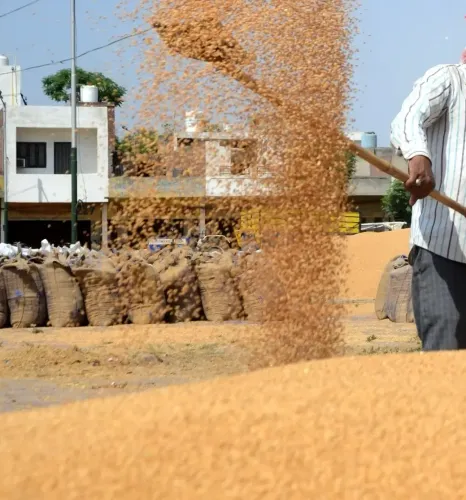
MP wheat procurement deadline extended to May 23, slot capacity doubled

Synopsis
Madhya Pradesh has extended its wheat procurement window by nearly two weeks to May 23 and more than doubled daily slot capacity to 2,250 quintals per centre — a significant operational overhaul aimed at preventing farmer distress and procurement bottlenecks during the peak rabi harvest season.
Key Takeaways
MP government extends wheat procurement deadline from May 9 to May 23 , announced on 29 April .
Daily slot booking capacity raised from 1,000 quintals to 2,250 quintals per procurement centre per day.
District-level capacity can be further raised to 3,000 quintals per centre if required.
Weighing scales at each centre increased to six , with provision for more at district level.
CM Mohan Yadav cited farmer convenience as the primary reason for the changes.
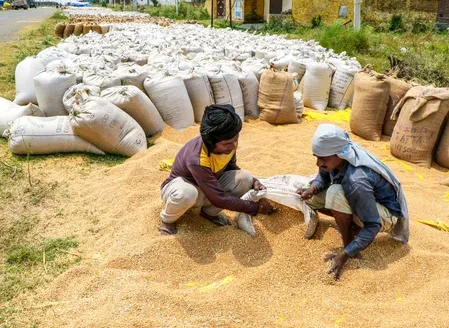
The Madhya Pradesh government has extended the wheat procurement window to May 23, pushing back the earlier deadline of May 9 to give farmers more time to book slots and sell their produce at government-approved rates. Chief Minister Mohan Yadav announced the decision on 29 April, citing the need to prevent overcrowding at procurement centres and ensure timely payments to farmers across the state.
Key Changes to Procurement Rules
The daily slot booking capacity at each procurement centre has been more than doubled — raised from 1,000 quintals to 2,250 quintals per day. At the district level, this limit can be further expanded to 3,000 quintals per centre if demand warrants it. The number of weighing scales at each centre has also been increased to six, with provisions to add more at the district level should the load increase.
What Chief Minister Mohan Yadav Said
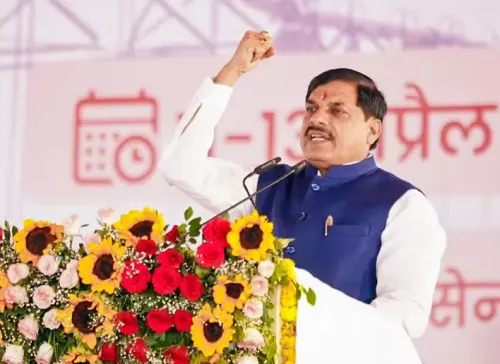
Writing on his X handle, Chief Minister Mohan Yadav stated that the extension was undertaken with the convenience of farmers in mind. He added that the increased weighing scale count and higher slot capacity would allow procurement from the maximum possible number of farmers while maintaining efficiency and fairness across centres.
Impact on Farmers
The combined effect of a longer procurement window, higher daily capacity, and additional weighing infrastructure is expected to significantly reduce waiting times at centres. Farmers who had been unable to secure slots before the earlier May 9 deadline now have a 14-day buffer to complete transactions. Officials have emphasised that the changes are designed to prevent bottlenecks and guarantee that no farmer is left out of the procurement cycle.
Broader Context
Madhya Pradesh is one of India's largest wheat-producing states, and timely government procurement at minimum support price (MSP) is critical for farmer income security. Procurement delays or capacity shortfalls at centres have historically led to distress selling in open markets at below-MSP rates. The revised framework is seen as a structural upgrade aimed at absorbing the scale of this season's rabi harvest without creating new pressure points closer to the revised deadline.
What Happens Next
With the window now open until May 23, district administrations are expected to coordinate the deployment of additional weighing scales wherever required. Officials have indicated that the system will be monitored closely and that further adjustments remain possible if farmer turnout exceeds projections.
Point of View
But it also signals that the original May 9 deadline was set without adequate capacity planning for the scale of this season's harvest. Doubling slot capacity mid-procurement is an admission that the infrastructure was undersized from the start. The deeper question is whether Madhya Pradesh's procurement machinery — weighing scales, storage, payment pipelines — can absorb the surge in the remaining window without new bottlenecks forming closer to May 23. Structural upgrades announced reactively tend to deliver partial relief at best.
NationPress
15 Sept 2026
Frequently Asked Questions
Why has Madhya Pradesh extended the wheat procurement deadline?
The MP government extended the deadline from May 9 to May 23 to give more farmers time to sell their wheat at government-approved MSP rates and to prevent overcrowding at procurement centres. Chief Minister Mohan Yadav announced the move on 29 April, citing farmer convenience.
What is the new daily slot booking capacity at MP wheat procurement centres?
The daily slot booking capacity has been raised from 1,000 quintals to 2,250 quintals per centre per day. At the district level, this can be further expanded to 3,000 quintals per centre if required.
How many weighing scales are now available at each procurement centre?
Each procurement centre now has six weighing scales, up from the previous count. District authorities can install additional scales if demand increases during the extended window.
Who benefits from the MP wheat procurement extension?
Farmers across Madhya Pradesh who were unable to secure slots before the earlier May 9 deadline benefit most. The changes are aimed at ensuring maximum farmer participation and timely MSP payments.
Can the slot booking capacity be increased further beyond 2,250 quintals?
Yes. At the district level, the daily slot booking capacity can be further expanded to 3,000 quintals per centre if required, giving district administrations flexibility to respond to higher-than-expected farmer turnout.