Nadda Hails Rajya Sabha Passage of Exam Integrity Bill 2026

Synopsis
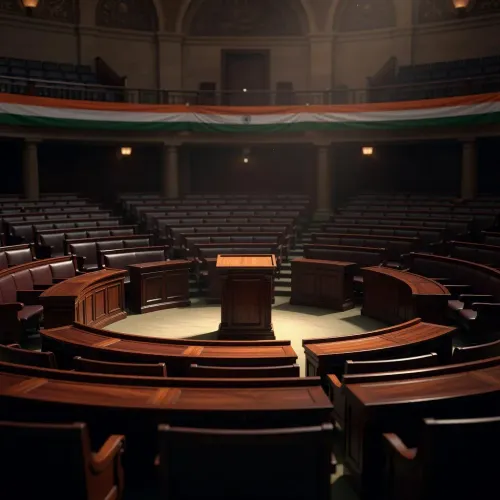
The Rajya Sabha passed the Public Examinations (Prevention of Unfair Means) Amendment Bill, 2026 on July 30, strengthening India's 2024 anti-paper-leak law. Union Minister J. P. Nadda hailed the cross-party-backed legislation as a landmark step to protect millions of exam aspirants from organised cheating syndicates.
Key Takeaways
The Rajya Sabha passed the Public Examinations (Prevention of Unfair Means) Amendment Bill, 2026 on July 30, 2026 .
The bill amends the original Public Examinations (Prevention of Unfair Means) Act, 2024 , which was India's first dedicated law against exam fraud.
Nadda called the passage 'a historic step' for the dreams and merit of crores of young Indians.
The legislation targets examination mafias, paper leak syndicates, and organised cheating networks with stringent penalties.
The bill received cross-party support in the upper house, reflecting broad political consensus on exam integrity.
Prime Minister Narendra Modi is credited with driving the reform under his leadership.
Crores of students who have watched their hard-earned exam dreams collapse under the weight of paper leaks and organised cheating syndicates got a legislative answer on Thursday, July 30, 2026 — the Rajya Sabha passed the Public Examinations (Prevention of Unfair Means) Amendment Bill, 2026, extending and sharpening a legal framework first forged in 2024. Union Health Minister J. P. Nadda called the passage 'a historic step towards safeguarding the dreams, hard work, and talent of crores of young Indians.'
Building on the 2024 Act: What the Amendment Targets
The Public Examinations (Prevention of Unfair Means) Act, 2024 was Parliament's first dedicated strike against the organised machinery of exam fraud — paper leak syndicates, impersonation rackets, and mass cheating networks that had repeatedly compromised national-level tests. The 2026 amendment builds on that foundation, tightening accountability and extending the law's reach. Nadda described the legislation as one that 'will effectively curb examination mafias, paper leak syndicates, and organised cheating, while ensuring stringent action against those found guilty.' The bill's passage through the upper house drew cross-party support — a rare alignment that Nadda acknowledged directly, thanking 'all the Members of Parliament and political parties who supported the bill in the House.' That bipartisan backing signals the depth of public anger over exam irregularities that have cost millions of aspirants years of preparation.Why Millions of Aspirants Were Watching
India's public examination ecosystem is among the world's largest — tens of millions of candidates sit for competitive tests each year, from central government recruitment drives to state-level selection boards. When leaks occur, the damage is not abstract: it is a specific young person, in a specific town, who spent years preparing for a shot at a government job or a professional seat, only to find the system had been rigged before they walked in. The amendment's promise of 'robust protection to the aspirations, merit, and future of our youth,' as Nadda framed it, speaks directly to that constituency. Prime Minister Narendra Modi is credited in the bill's framing as the driving force behind the reform. Nadda expressed 'heartfelt gratitude to PM Modi Ji for bringing this landmark reform,' positioning the legislation within the government's broader push to make public institutions more transparent and accountable.What Comes Next for Exam Integrity
Passage through the Rajya Sabha is a milestone, but the real test will come in implementation — the rules notified under the amended act, the speed of prosecution against those already implicated in past leaks, and whether the deterrent effect reaches the ground level before the next major examination cycle. India's examination integrity challenge is structural, not episodic. A law is only as strong as the enforcement machinery behind it. For now, the vote in the upper house marks a clear political and legislative commitment. The question every aspirant is asking is simple: will this one hold?Point of View
Signalling that the 2024 Act was treated as a floor, not a ceiling. The cross-party support is politically significant — it insulates the reform from opposition attack and gives it durable institutional legitimacy. For the BJP, framing the bill through the lens of youth aspiration and merit is also a deliberate electoral signal: the party is positioning itself as the guardian of the competitive-exam generation. The real measure of success, however, will be prosecutorial — whether the amended law produces actual convictions against syndicate operators, not just arrests.
NationPress
31 Jul 2026
Frequently Asked Questions
What is the Public Examinations (Prevention of Unfair Means) Amendment Bill 2026?
It is a 2026 amendment to India's 2024 law against exam fraud, designed to strengthen provisions targeting paper leak syndicates, organised cheating, and examination mafias in public competitive tests.
When was the exam integrity bill passed in Rajya Sabha?
The Rajya Sabha passed the Public Examinations (Prevention of Unfair Means) Amendment Bill, 2026 on Thursday, July 30, 2026 .
What was the original Public Examinations Act 2024?
The Public Examinations (Prevention of Unfair Means) Act, 2024 was India's first dedicated legislation to penalise organised malpractice in public examinations, including paper leaks and impersonation rackets.
Who introduced the exam amendment bill 2026?
The bill was introduced under the leadership of Prime Minister Narendra Modi . Union Minister J. P. Nadda credited PM Modi with driving the landmark reform.
Which parties supported the exam integrity bill in Parliament?
The bill received cross-party support in the Rajya Sabha. J. P. Nadda thanked all Members of Parliament and political parties who voted in favour of the legislation.