NDA challenges Rahul Gandhi's claims about President Murmu meeting over CEC row
Synopsis
The INDIA Bloc's Rashtrapati Bhavan visit to protest CEC Gyanesh Kumar has sparked a secondary row — not just over electoral roll revision but over what President Murmu actually said. Gandhi's public claim that she asked for evidence has drawn sharp NDA pushback questioning both the propriety and accuracy of disclosing presidential conversations, turning a procedural dispute into a constitutional dignity debate.
Key Takeaways
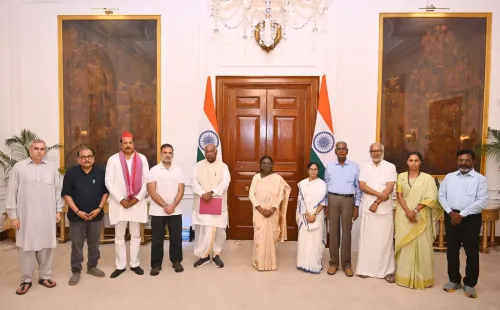
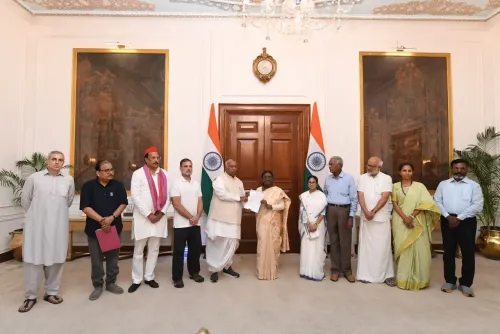
The INDIA Bloc delegation, led by Mallikarjun Kharge and Rahul Gandhi , met President Droupadi Murmu on Friday to submit a memorandum over alleged electoral irregularities by CEC Gyanesh Kumar .
Rahul Gandhi publicly stated that President Murmu asked the delegation to provide evidence for its 'vote chori' allegations.
BJP MP Rajiv Pratap Rudy questioned the propriety of disclosing presidential conversations, saying Gandhi's claims 'may even be untrue.' Bihar BJP President Sanjay Saraogi said no evidence was submitted on the SIR , noting around 20 lakh names have been deleted through a 150-day process with built-in safeguards.
JD(U) spokesperson Rajiv Ranjan argued the Opposition 'reaps what it sows' for ignoring voters, while acknowledging the right to democratic expression.
The dispute follows several days of Opposition protests against the Election Commission and demands for CEC Gyanesh Kumar's resignation.
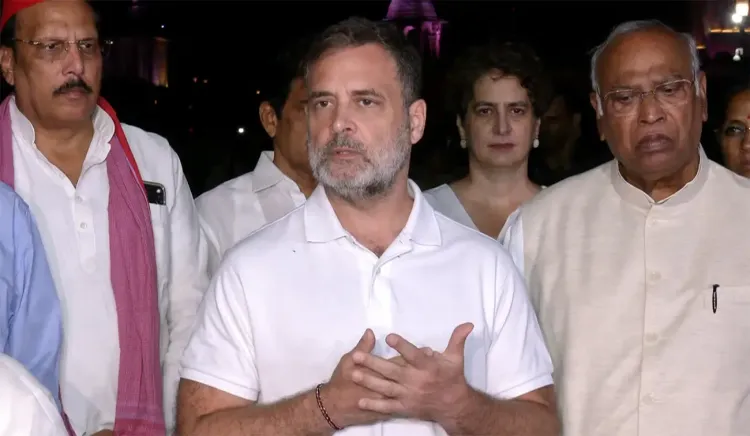
The National Democratic Alliance (NDA) on Saturday, 10 October sharply questioned the veracity of remarks made by Lok Sabha Leader of Opposition Rahul Gandhi after the INDIA Bloc delegation met President Droupadi Murmu at Rashtrapati Bhavan in New Delhi to submit a memorandum over alleged electoral irregularities. NDA leaders argued that while Gandhi had every right to seek an audience with the President, publicly disclosing the contents of that conversation was improper and potentially inaccurate.
Background: What the INDIA Bloc Alleged
A high-level INDIA Bloc delegation — led by Congress President Mallikarjun Kharge and Rahul Gandhi and including All India Trinamool Congress Chairperson Mamata Banerjee, Jammu and Kashmir Chief Minister Omar Abdullah, NCP-SP MP Supriya Sule, CPI-M General Secretary M.A. Baby, RJD Rajya Sabha member Prof Manoj Kumar Jha, CPI General Secretary D. Raja, Samajwadi Party MP Rajeev Rai, and VCK President Dr Thirumaavalavan Tholkappiyan — met the President on Friday and submitted a memorandum alleging electoral irregularities by Chief Election Commissioner (CEC) Gyanesh Kumar and what the bloc described as an attempt to undermine Indian democracy.
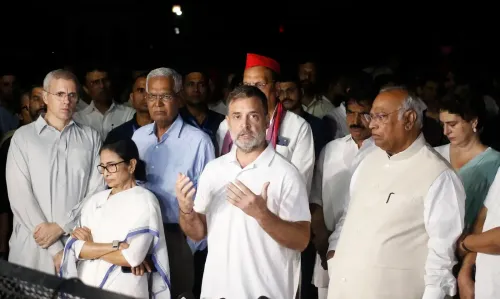
Gandhi subsequently said that President Murmu had asked the Opposition delegation to furnish evidence to substantiate its claims of 'vote chori' (vote theft) during their discussion about the controversy surrounding the CEC. The Opposition has been demanding Kumar's resignation and has protested against the Special Intensive Revision (SIR) of electoral rolls.
BJP's Response: Propriety and Presidential Dignity
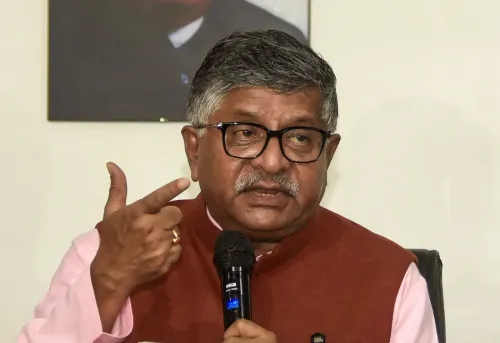
Bharatiya Janata Party (BJP) MP Rajiv Pratap Rudy challenged the propriety of Gandhi's public disclosure, raising questions about the dignity of the constitutional office of the President. 'When you meet a person holding the country's highest constitutional office and then disclose what was discussed, it raises serious questions about propriety. Neither you nor I can go and ask the President what she said. Rahul Gandhi's claims may even be untrue. However, as the Leader of the Opposition, he has the right to meet the President, but he does not have the right to comment on what the President said,' Rudy said.
Bihar BJP President Sanjay Saraogi echoed the criticism while also challenging the substance of the Opposition's allegations. He noted that while meeting the President was a constitutional right, no evidence was reportedly submitted on the SIR. 'The SIR process takes around 150 days, during which draft publications are shared with district presidents and a one-month period is given for objections. Across the country, around 20 lakh names have been deleted, and even ordinary citizens can fill Form 7,' Saraogi said.
JD(U) Strikes a Broader Note
Janata Dal (United) National Spokesperson Rajiv Ranjan acknowledged that political parties in a democracy were free to voice their concerns, but turned the argument back on the Opposition, questioning its political standing with voters. 'In a democracy, no political party is barred from expressing its views. However, Opposition parties must understand that they reap what they sow. You have consistently ignored the people. Gyanesh Kumar's tenure may be short-lived, but there are several states where the Congress was once a mainstream party and has been unable to regain that status,' Ranjan said.
Context: Protests Over Electoral Roll Revision
The Rashtrapati Bhavan visit followed several days of protests by Opposition leaders against the Election Commission, targeting both the SIR exercise and what they described as structural irregularities in the electoral process. The INDIA Bloc's memorandum and the subsequent public statements have sharply escalated the political confrontation ahead of state elections, setting up a direct clash between the Opposition's narrative of democratic subversion and the ruling alliance's charge that the allegations lack evidentiary backing.
With the Election Commission yet to formally respond and the government defending the SIR process, the dispute over who said what in Rashtrapati Bhavan is unlikely to be the last word in what is shaping up as one of the more acrimonious electoral disputes of the year.
Point of View
Making the Opposition defend both its evidence and its conduct. This is a familiar playbook: when cornered on substance, shift to procedure. But the Opposition has a point too — if the President did ask for evidence, that is itself newsworthy. The real gap is institutional: there is no protocol governing what a Leader of the Opposition may or may not disclose after a presidential audience, and that ambiguity is now being weaponised by both sides. The deeper story — the legitimacy of the SIR process and the CEC controversy — risks being buried under a dispute about meeting minutes.
NationPress
10 Oct 2026
Frequently Asked Questions
Why did the INDIA Bloc meet President Droupadi Murmu?
The INDIA Bloc delegation met President Murmu on Friday to submit a memorandum alleging electoral irregularities by Chief Election Commissioner Gyanesh Kumar and what it described as an attempt to undermine Indian democracy. The visit came after several days of Opposition protests against the Election Commission's Special Intensive Revision of electoral rolls.
What did Rahul Gandhi say the President told the delegation?
Rahul Gandhi publicly stated that President Droupadi Murmu asked the Opposition delegation to provide evidence substantiating its 'vote chori' (vote theft) allegations against the CEC. The NDA has disputed this account, with BJP MP Rajiv Pratap Rudy saying Gandhi's claims 'may even be untrue.'
Why did the NDA object to Rahul Gandhi's public remarks?
NDA leaders argued that publicly disclosing the contents of a conversation with the President raises serious questions about constitutional propriety and the dignity of the office. BJP MP Rajiv Pratap Rudy said that while Gandhi had the right to meet the President as Leader of the Opposition, he did not have the right to comment on what the President said.
What is the Special Intensive Revision (SIR) of electoral rolls?
The SIR is an Election Commission exercise to update electoral rolls, involving a process of approximately 150 days during which draft publications are shared with district presidents and a one-month objection window is provided. Bihar BJP President Sanjay Saraogi said around 20 lakh names have been deleted nationally, with the process open to citizens via Form 7.
Who were the INDIA Bloc members in the delegation to Rashtrapati Bhavan?
The delegation included Congress President Mallikarjun Kharge, Leader of the Opposition Rahul Gandhi, TMC Chairperson Mamata Banerjee, J&K Chief Minister Omar Abdullah, NCP-SP MP Supriya Sule, CPI-M General Secretary M.A. Baby, RJD MP Prof Manoj Kumar Jha, CPI General Secretary D. Raja, SP MP Rajeev Rai, and VCK President Dr Thirumaavalavan Tholkappiyan.