No PUC, No Fuel: Haryana enforces certificate rule in NCR from Oct 1
Synopsis
Haryana has operationalised the CAQM's 'No PUC, No Fuel' mandate across NCR districts from 1 October — requiring petrol pumps to deny fuel to vehicles without a valid pollution certificate, backed by ANPR cameras, bilingual signage, and fines of up to ₹10,000. With Delhi's winter smog season imminent, this is the sharpest enforcement mechanism the region has deployed at the pump level.
Key Takeaways
The 'No PUC, No Fuel' rule came into effect across Delhi and the NCR from 1 October , per CAQM directions.
The Haryana Transport Department has directed all petrol, diesel, and CNG stations in NCR districts to deny fuel to vehicles without a valid PUC certificate .
ANPR cameras will verify vehicle registration numbers against the online PUC database; manual verification is required until cameras are fully operational.
Pump operators must display bilingual warning boards in English and Hindi at all entry points and dispensing units.
Vehicles without a valid PUC must be directed to the nearest authorised PUC testing centre before refuelling.
Non-compliance can attract a fine of up to ₹10,000 under the Motor Vehicle Rules, along with an e-challan .
The Haryana Transport Department has directed all petrol pump operators and fuel retail outlets in the state's National Capital Region (NCR) districts to mandatorily verify a valid Pollution Under Control (PUC) certificate before dispensing fuel to any vehicle. The directive, issued in compliance with orders from the Commission for Air Quality Management (CAQM), follows the 'No PUC, No Fuel' rule that came into force across Delhi and the NCR from 1 October as part of a broader crackdown on vehicular air pollution.
What the Rule Requires
Under the new mandate, all petrol, diesel, and CNG stations in NCR districts are required to deny fuel to any vehicle that cannot produce a valid PUC certificate. Fuel stations are expected to cross-check vehicle registration numbers against the online PUC database using Automatic Number Plate Recognition (ANPR) camera systems being deployed at pumps across the region.
Pending the full installation and operationalisation of ANPR cameras, pump operators have been directed to ensure that staff manually verify the validity of PUC certificates for every vehicle before fuel is dispensed. If a driver or vehicle owner fails to produce a valid certificate, fuel must be denied immediately and the vehicle registration number recorded for official purposes.
Signage and Redirection Protocol
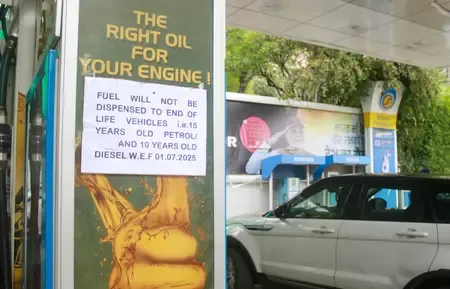
All petrol pumps have been instructed to install bilingual warning boards in English and Hindi at all entry points and fuel-dispensing units. The boards are required to clearly state: 'No Valid PUC Certificate – No Fuel Refilling. Ensure a valid PUC certificate to avoid e-challan/penal action.'
Additionally, pump operators must direct vehicles without a valid PUC certificate to the nearest authorised PUC testing centre — located at or near the retail outlet — so that the requisite certificate can be obtained before refuelling.
Penalties for Non-Compliance
The Transport Department has underscored that driving or operating a vehicle without a valid PUC certificate can attract a fine of up to ₹10,000 under the applicable Motor Vehicle Rules. Violators may also face an e-challan, further tightening the enforcement mechanism beyond the fuel-denial step at the pump itself.
Broader Context: NCR Air Quality Drive
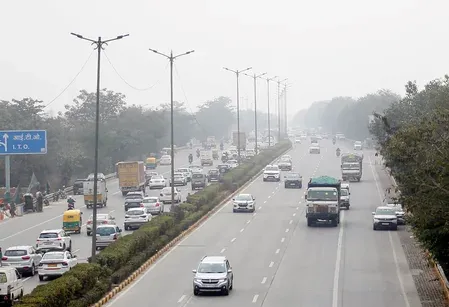
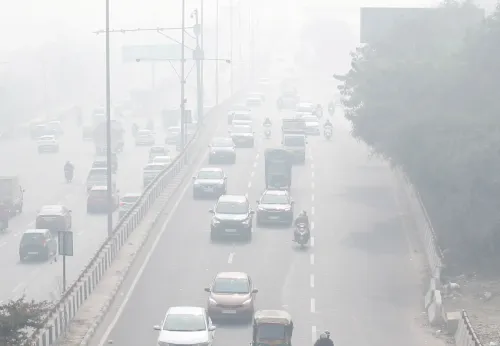
The enforcement push is part of a comprehensive state-level effort to curb vehicular pollution ahead of the winter months, when air quality in the Delhi-NCR region typically deteriorates sharply. The CAQM — the statutory body overseeing air quality management across Delhi and adjoining states — has been intensifying compliance measures, and Haryana's directive aligns the state with the region-wide framework already in place. Notably, this is among the most operationally specific enforcement orders issued under the CAQM's current winter action cycle, combining technology-driven verification through ANPR with manual fallback protocols and physical signage requirements.
With winter smog season approaching, how effectively the 'No PUC, No Fuel' rule is enforced at ground level across NCR's hundreds of fuel stations will be a key indicator of whether the CAQM's compliance architecture translates into measurable air quality improvement.
Point of View
No Fuel' rule is a rare example of enforcement being pushed upstream — to the point of sale — rather than relying on road-side checks that are easy to evade. The reliance on ANPR cameras is sound in principle, but the interim manual-verification fallback will only work if pump staff are trained, incentivised, and shielded from customer pressure. The bigger structural question is whether PUC testing infrastructure in NCR districts is adequate to absorb the surge in demand when fuel-denied drivers are redirected to testing centres — a bottleneck the directive does not address. If testing queues become unmanageable, the rule risks being quietly unenforced rather than reformed.
NationPress
4 Oct 2026
Frequently Asked Questions
What is the 'No PUC, No Fuel' rule in Haryana NCR?
It is a mandate issued by the Haryana Transport Department, in line with CAQM directions, requiring all petrol, diesel, and CNG stations in NCR districts to verify a valid Pollution Under Control (PUC) certificate before dispensing fuel. The rule came into effect from 1 October and applies across Delhi and the NCR.
What happens if a vehicle does not have a valid PUC certificate at a petrol pump?
Fuel must be denied immediately and the vehicle's registration number recorded. The pump operator is also required to direct the vehicle owner to the nearest authorised PUC testing centre to obtain a valid certificate before refuelling.
What is the penalty for driving without a valid PUC certificate in the NCR?
Driving or operating a vehicle without a valid PUC certificate can attract a fine of up to ₹10,000 under the applicable Motor Vehicle Rules. Violators may also be issued an e-challan.
How will petrol pumps verify PUC certificates?
Fuel stations will use Automatic Number Plate Recognition (ANPR) cameras to cross-check vehicle registration numbers against the online PUC database. Until ANPR systems are fully operational at all NCR pumps, staff are required to manually verify the validity of PUC certificates for every vehicle.
Why has this rule been introduced now?
The rule is part of a comprehensive CAQM-led effort to curb vehicular pollution in the Delhi-NCR region ahead of winter, when air quality typically worsens significantly. Haryana's directive aligns the state with the region-wide enforcement framework that took effect on 1 October.