Did NSA Doval Visit ISRO's VSSC After PSLV Failures?
Synopsis
In a significant move, NSA Ajit Doval visited ISRO's VSSC to assess the ramifications of the recent PSLV failures, aiming to ensure national security. His findings might hold critical insights into the future of India's space program.
Key Takeaways
NSA Doval visited ISRO to investigate PSLV failures.
Concerns include national security implications and sabotage.
Reports indicate no evidence of foul play.
Technical deficiencies identified could guide corrective measures .
ISRO aims to restore confidence in the PSLV.
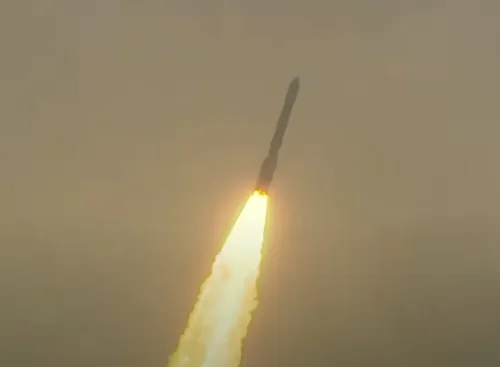
Thiruvananthapuram, Feb 3 (NationPress) The Indian space agency has taken the recent failures of the Polar Satellite Launch Vehicle (PSLV) very seriously, as it has long been esteemed as the most dependable launch vehicle in the nation’s space endeavors.
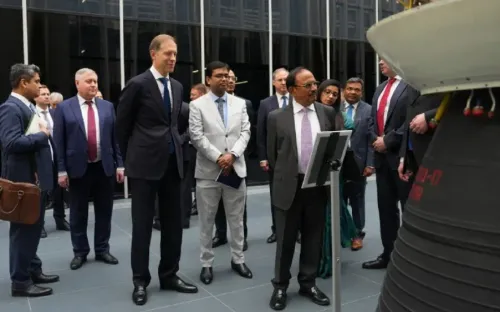
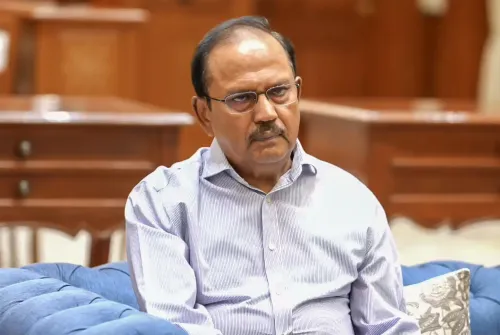
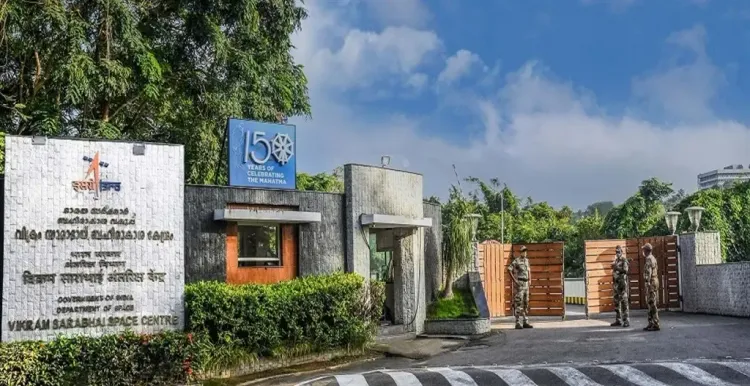
Highlighting the seriousness of the situation, National Security Adviser (NSA) Ajit Doval visited the Vikram Sarabhai Space Centre (VSSC) in Thumba to personally investigate the causes behind these setbacks. This ISRO facility oversees PSLV operations.
The visit occurred a few days ago.
Doval’s trip, conducted on the explicit orders of Prime Minister Narendra Modi, aimed to ascertain if the consecutive mission failures posed any risks to national security, including the potential for sabotage.
During his time at VSSC, the NSA, who is also a member of the Space Commission, engaged in comprehensive discussions with senior ISRO scientists and engineers to obtain first-hand technical insights regarding the failures.
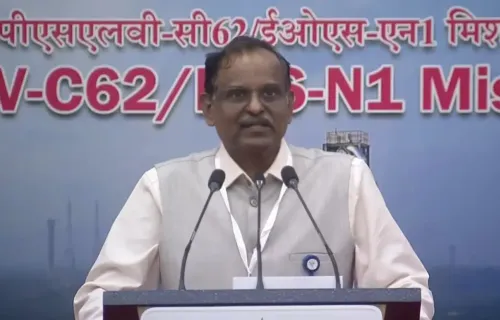
The PSLV missions, including the launch on January 12, encountered issues during the third flight stage—one of the launch sequence's most crucial moments.
The recurrence of failures at this identical stage in consecutive missions has raised alarms within both scientific and security circles, leading to a high-level investigation.
Upon returning to New Delhi, Doval reportedly submitted an extensive report on the PSLV failures, dismissing any indication of foul play.
Union Minister of State for Space Jitendra Singh has publicly confirmed that there is no evidence of misconduct behind the failures.
Nonetheless, the NSA's report has pointed out specific technical and procedural deficiencies that may have played a role in these setbacks.
Doval’s evaluation is believed to include recommendations for corrective measures to avert future occurrences.
Although the PSLV has gained international acclaim as the 'workhorse' of India’s space program, the government is reluctant to categorize two successive failures as mere technical issues.
Implementing corrective actions based on the findings is expected before the vehicle resumes flight, as ISRO endeavors to restore confidence in its most reliable launch platform.
Point of View
It is vital to recognize the significance of NSA Doval's visit to ISRO following the PSLV failures. The government's proactive stance reflects a commitment to both scientific integrity and national security. Maintaining public confidence in India's space program is paramount, especially as we navigate challenges that can affect our global standing.
NationPress
5 Oct 2026
Frequently Asked Questions
What prompted NSA Doval's visit to VSSC?
NSA Doval visited VSSC to assess the implications of the PSLV failures on national security.
What are the main concerns related to the PSLV failures?
The PSLV failures raised concerns about potential sabotage and the need for technical improvements.
Did the government find evidence of foul play?
No, both NSA Doval and Union Minister Jitendra Singh confirmed there is no evidence of foul play.
What measures are expected to be taken post-investigation?
The investigation may lead to corrective measures aimed at preventing similar failures in the future.
What is the significance of the PSLV in India's space program?
The PSLV is considered the workhorse of India's space endeavors, known for its reliability and success.