CM Majhi Signs ₹67,000 Cr Green Energy Deals With IHI, ACME

Synopsis
Odisha CM Mohan Charan Majhi announced cooperation agreements with Japan's IHI Corporation and ACME for ₹67,000 crore in clean energy and green industry investments at Paradip and Gopalpur, targeting over 7,600 jobs and positioning Odisha as a 'Global Green Hub'.
Key Takeaways
Odisha signed cooperation letters with Japan's IHI Corporation and Indian developer ACME for clean energy and green industry projects.
Total committed investment stands at ₹67,000 crore across three large projects .
Projects are located at Paradip (Jagatsinghpur district) and Gopalpur (Ganjam district), both coastal industrial hubs.
The agreements are projected to generate more than 7,600 employment opportunities in coastal Odisha.
The deals align with India's National Green Hydrogen Mission (launched 2023) and the broader India-Japan Strategic Partnership on clean energy.
CM Majhi framed the pacts as a step toward making Odisha a 'Global Green Hub' built on technology, innovation and sustainable development.
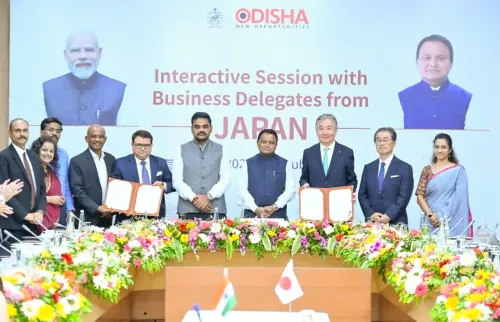
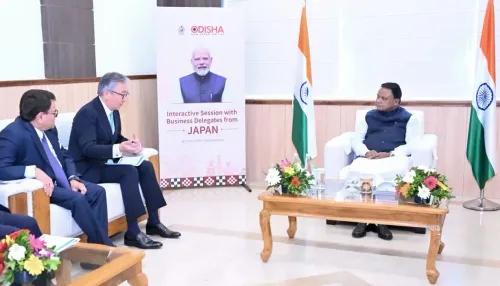
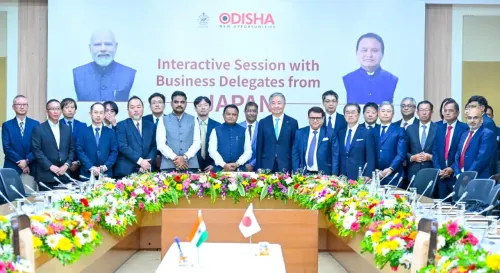
Odisha Chief Minister Mohan Charan Majhi announced on Friday, 3 July 2026 that the state government has signed cooperation agreements with Japan's IHI Corporation and Indian renewable energy developer ACME, committing ₹67,000 crore in investment across three large projects in Paradip and Gopalpur, with a projected creation of more than 7,600 jobs.
Posting in Odia on X, Chief Minister Majhi wrote: 'ଲୋକଙ୍କ ସରକାରରେ ଓଡ଼ିଶା ଗଢ଼ୁଛି ଶିଳ୍ପାୟନର ନୂଆ ଇତିହାସ' — 'Under the people's government, Odisha is writing a new history of industrialisation.' He described the signed letters of cooperation as 'the beginning of a new chapter' in clean energy and green industry, and stated that Odisha is taking 'firm steps' toward becoming a 'Global Green Hub' anchored in technology, innovation and sustainable development.
Context
IHI Corporation is a Japanese heavy-industry and engineering conglomerate with established expertise in hydrogen technology, clean energy systems and industrial machinery. ACME is an Indian developer with a growing portfolio in solar power, green hydrogen and green ammonia. The combination positions the Odisha projects at the intersection of domestic renewable ambition and Japanese technology transfer.
The agreements were signed under the current BJP state government, which took office in June 2024 under Chief Minister Majhi. The administration has consistently framed large-scale industrial investment around a green-growth narrative, continuing and rebranding an investor-attraction drive that predates the current government.
Policy Backdrop
India's National Green Hydrogen Mission, launched in 2023, set out to scale domestic production and position the country as a global exporter of green hydrogen and its derivatives, including ammonia. Coastal states with deep-water port infrastructure are central to that strategy because they offer both industrial land and export logistics.
Paradip, a major deep-water port in Jagatsinghpur district, and Gopalpur, a port town in Ganjam district being developed as an industrial and logistics centre, are the two locations named for the three projects. Their coastal access makes them natural candidates for hydrogen and ammonia clusters intended for export markets, including Japan, which has committed to large-scale clean-fuel imports as part of its own decarbonisation roadmap.
India and Japan have deepened cooperation on clean energy technology and supply chains under the India-Japan Strategic Partnership, making IHI's involvement consistent with a broader bilateral pattern of Japanese industrial firms anchoring projects in Indian coastal states.
Stakeholders and Impact
The 7,600-plus direct employment opportunities cited by the Chief Minister would be concentrated in coastal Odisha, regions where large-scale industrial projects have historically been the primary source of formal employment. Renewable energy and green-hydrogen facilities also typically generate indirect jobs in construction, logistics and ancillary services during the build phase.
For renewable energy companies already operating in Odisha, the entry of IHI and ACME signals intensifying competition for land, grid connectivity and port access. State agencies responsible for industrial clearances and the Odisha Industrial Infrastructure Development Corporation will be key enablers — or bottlenecks — as the projects move from letters of cooperation toward ground-breaking.
What's Next
Letters of cooperation, also called letters of intent or MoUs at the preliminary stage, are non-binding frameworks; the critical milestones ahead include formal investment agreements, land acquisition, environmental clearances and financing closure. Progress on these fronts is expected to be tracked at upcoming high-level India-Japan bilateral meetings and any future edition of the Odisha Investors' Summit.
If the ₹67,000 crore commitment translates into grounded projects, Odisha would rank among India's leading states in green-energy FDI, reinforcing the coastal east's emerging role in the country's net-zero transition strategy.
Point of View
Leveraging its deep-water coastal infrastructure at a moment when Japan is actively seeking offshore supply partners. For CM Majhi, the ₹67,000 crore headline figure serves a dual political purpose: demonstrating early economic governance credentials for a government barely two years old, and differentiating Odisha within a crowded field of states competing for the same pool of clean-energy FDI. The IHI partnership is particularly significant because Japanese industrial capital carries credibility with domestic and international financiers, which can accelerate the often-slow journey from MoU to financial closure. Whether the letters of cooperation harden into grounded projects will be the real test — and the timeline for that will define how durable this green-hub narrative proves to be.
NationPress
2 Oct 2026
Frequently Asked Questions
What is the ₹67,000 crore green energy deal Odisha signed?
Odisha signed cooperation agreements with Japan's IHI Corporation and Indian developer ACME for ₹67,000 crore in clean energy and green industry investments, covering three large projects at Paradip and Gopalpur with over 7,600 projected jobs.
Who are IHI Corporation and ACME in the Odisha deal?
IHI Corporation is a Japanese heavy-industry conglomerate specialising in clean energy and hydrogen technology, while ACME is an Indian renewable energy developer focused on solar, green hydrogen and ammonia projects.
Where in Odisha will the new green energy projects come up?
The three projects will be located at Paradip in Jagatsinghpur district and Gopalpur in Ganjam district, both of which are coastal industrial hubs with port infrastructure suited to green hydrogen and ammonia export.
How does this relate to India's National Green Hydrogen Mission?
India's National Green Hydrogen Mission, launched in 2023, aims to scale domestic production and export of green hydrogen. The Odisha projects with IHI and ACME directly support that mission by targeting coastal export-oriented green hydrogen and ammonia clusters.
What does 'Global Green Hub' mean for Odisha?
CM Majhi used the term 'Global Green Hub' to describe Odisha's ambition to become a leading state in green energy and sustainable industry, attracting foreign technology and investment to build export-ready clean-energy infrastructure.