Onion prices hit ₹40-50/kg in India as hoarding, monsoon gap fuel crisis
Synopsis
Onion prices have nearly doubled to ₹40–50/kg, and the blame game has begun — farmers allege middlemen are hoarding stocks while the monsoon gap delays new crop arrivals. With the NDA calling it temporary and the Opposition invoking ESMA, the humble onion has once again become India's most politically charged vegetable.
Key Takeaways
Retail onion prices have risen to ₹40–50 per kg , up from ₹20–25 per kg a year ago.
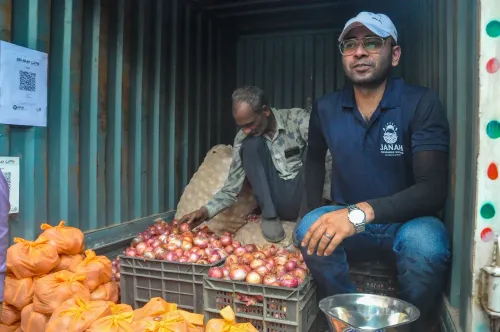
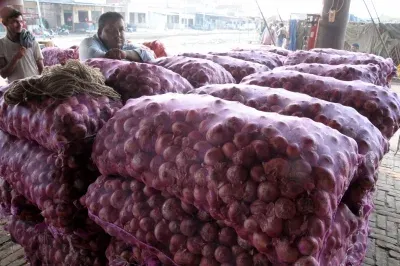
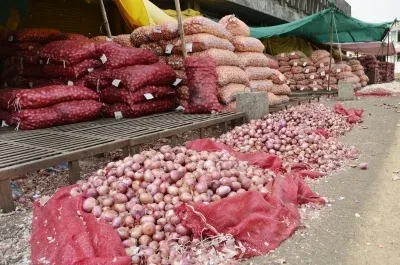
Trader Firoz Tamboli of Pimpri-Chinchwad says less than 40% of stock is reaching markets, alleging hoarding by middlemen.
A monsoon gap this year has delayed the arrival of the new onion crop, further tightening supply.
JD-U spokesperson Rajiv Ranjan called the price hike temporary; Congress MP Akhilesh Prasad Singh demanded use of ESMA to control prices.
Shiv Sena-UBT leader Priyanka Chaturvedi accused the government of indifference to food inflation and stagnant household incomes.
A sharp rise in onion prices across India has triggered a political slugfest between the ruling National Democratic Alliance (NDA) and the Opposition, even as farmers and traders on the ground point to alleged hoarding by middlemen and an uneven monsoon as the primary drivers of the supply crunch. Retail prices in several markets have climbed to ₹40–50 per kg, nearly double the ₹20–25 per kg recorded a year ago.
What Farmers and Traders Are Saying
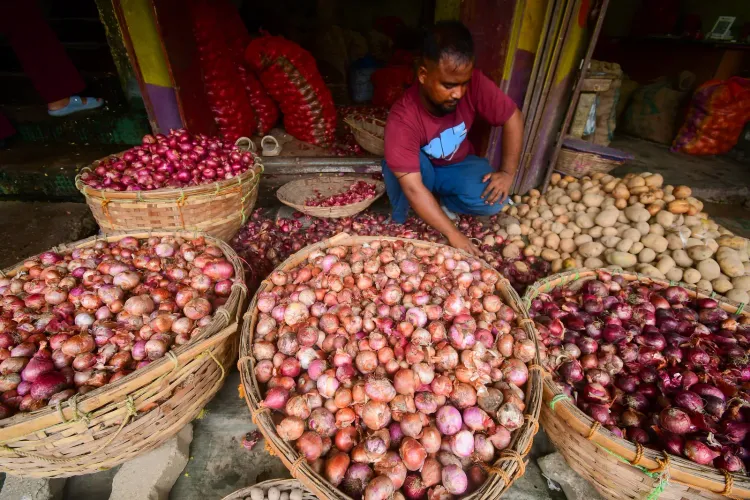
Firoz Tamboli, an onion seller with 15–20 years of experience in Maharashtra's Pimpri-Chinchwad, said less than 40 per cent of available stock is currently reaching markets. He attributed the shortfall to alleged hoarding by middlemen and noted that a significant portion of produce has already rotted. 'Due to an increase in the rate of diesel, the cost of transportation has also increased,' Tamboli said, adding that customers are refusing to purchase at current rates and urging the government to compel traders to release their stocks.
An onion seller in Malegaon district echoed the concern, pointing to a gap in the monsoon season as a key factor. 'The expected quantity isn't reaching the market. One of the reasons is the gap in monsoon this year, resulting in a delay in the arrival of the new crop...this is why there is an increase in market prices,' the seller said. Farmers noted that the consumer reluctance to buy at elevated prices has severely dented their own incomes.
The Political Flashpoint
The price surge has reignited a familiar political battle. Janata Dal (United) national spokesperson Rajiv Ranjan, acknowledging public hardship, said the situation would stabilise soon. 'There are periods when the onion prices sharply go up, but the situation will normalise soon,' he said, characterising the hike as temporary.
The Opposition was sharper in its criticism. Congress MP Akhilesh Prasad Singh called on the government to invoke statutory mechanisms, citing precedent: 'We have also been in government, and whenever such a price rise occurred, the government used laws such as ESMA (Essential Services Maintenance Act) and made efforts to bring the prices down...it is the government's moral responsibility to ensure that the prices of everyday essentials do not rise.'
Shiv Sena-UBT leader Priyanka Chaturvedi went further, invoking a past remark attributed to the Finance Minister. 'The Finance Minister once said that I do not eat onions, so what do I have to do with the prices? The entire government is functioning with the same mindset,' she said, adding that stagnant incomes, limited employment, and persistent inflation were compounding the crisis for ordinary households.
Consumer Distress on the Ground
Beyond the political arena, consumers have voiced frustration over the cascading impact of food inflation. 'How will the common man survive with this surge in prices of food items?' a woman said, reflecting a sentiment widely shared in urban and semi-urban markets. Citizens have called on the government to intervene and bring prices down through direct administrative action.
Background and What Comes Next
Onion price spikes are a recurring political and economic flashpoint in India, particularly in Maharashtra, one of the country's largest producing states. This is not the first time a combination of supply-side disruptions — erratic monsoon, hoarding allegations, and rising input costs — has pushed retail prices to distress levels. The government has in the past imposed stock limits, export bans, and buffer-stock releases to cool prices. Whether similar measures will be deployed in the current cycle remains to be seen, as the political pressure from both sides of the aisle intensifies.
Point of View
Stock-limit enforcement is episodic, and the government's first instinct is to wait and watch rather than act. The Opposition's invocation of ESMA is politically convenient but not wrong on the merits — past governments did use it. What's missing from both sides is any serious conversation about cold-chain infrastructure or direct farmer-to-market linkages that would make these crises less inevitable.
NationPress
9 Oct 2026
Frequently Asked Questions
Why have onion prices risen so sharply in India?
Onion prices have climbed to ₹40–50 per kg due to a combination of alleged hoarding by middlemen, a gap in the monsoon season delaying the new crop, and rising diesel costs pushing up transportation expenses. Traders say less than 40% of available stock is currently reaching retail markets.
What is the government's response to the onion price hike?
The ruling NDA has characterised the price rise as temporary, with JD-U spokesperson Rajiv Ranjan saying the situation will normalise soon. No specific intervention measures such as stock limits or export restrictions have been announced as of the latest reports.
What is ESMA and why is the Opposition calling for its use?
The Essential Services Maintenance Act (ESMA) is a law that can be invoked to regulate the supply and distribution of essential commodities, including food items. Congress MP Akhilesh Prasad Singh cited its past use during price crises and called on the current government to deploy it to bring onion prices under control.
Which regions are most affected by the onion price surge?
Maharashtra — one of India's largest onion-producing states — is at the centre of the crisis, with sellers in Pimpri-Chinchwad and Malegaon district reporting acute supply shortfalls. The price spike, however, is being felt across the country.
Has India faced similar onion price crises before?
Yes. Onion price spikes are a recurring phenomenon in India, typically triggered by erratic monsoon patterns, supply-chain disruptions, or export-related policy changes. Past governments have responded with stock-limit orders, export bans, and buffer-stock releases to stabilise retail prices.