Will the Opposition's Call for a Debate on SIR Lead to a Breakthrough?
Click to start listening
Synopsis
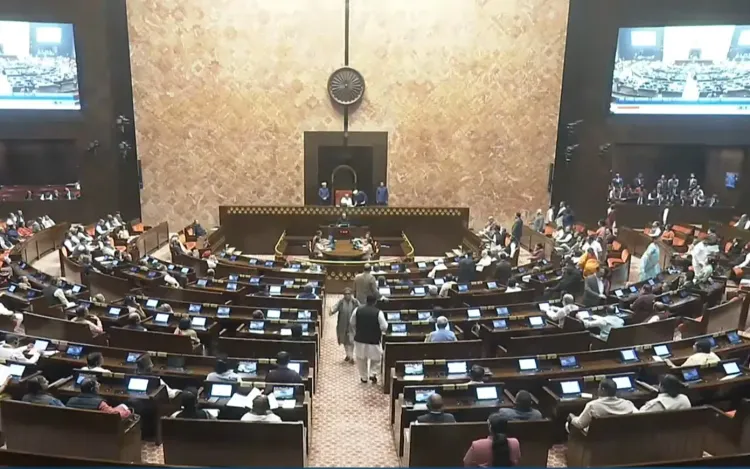
On December 2, the Rajya Sabha witnessed a tumultuous exchange as Leader of Opposition Mallikarjun Kharge called for an urgent debate on the Special Intensive Revision of electoral rolls in 12 states. Accusations of disenfranchisement and procedural violations have intensified the political climate, with potential implications for future electoral processes.
Key Takeaways
- Urgent debate demanded by Opposition on electoral roll revision.
- Allegations of irregularities leading to disenfranchisement.
- 30 fatalities linked to the flawed process.
- Importance of parliamentary procedure emphasized.
- Potential for future discussions amid political tensions.
New Delhi, Dec 2 (NationPress) A heated exchange unfolded in the Rajya Sabha on Tuesday as Leader of Opposition Mallikarjun Kharge demanded an urgent discussion on the Special Intensive Revision (SIR) of electoral rolls taking place in 12 electoral states and union territories, such as Bihar, West Bengal, Tamil Nadu, and Kerala.
Utilizing Rule 267 for an adjournment motion, Kharge pointed out alleged discrepancies that he claimed have resulted in at least 30 fatalities, accusing the government of disenfranchising vulnerable voters and undermining the democratic process.
In an impassioned address, Kharge, accompanied by leaders from the INDIA bloc, presented the Opposition's notices. "Today, we have given notice under Rule 267 for a special discussion on the intensive revision occurring in 12 states and UTs," he announced, detailing the names and subjects of notices from Congress and allied MPs.
He expressed disappointment over the violation of parliamentary norms, emphasizing that, unlike in the Lok Sabha—where notices are typically read—these were abruptly ignored. "Our members have submitted names and subjects, but suddenly, those who gave notices aren't even acknowledged. I don't wish to embarrass you, but you've been observing only one side—you’re missing the complete picture," Kharge remarked pointedly to Chairman C.P. Radhakrishnan, eliciting murmurs from the Treasury benches.
Intensifying the rhetoric, Kharge dismissed the Parliamentary Affairs Ministry's requests for additional time. "These are urgent matters—30 individuals have perished in this flawed process. This is a pressing issue! You’re shielding the government at the expense of citizens' rights," he thundered, urging the Chair to prioritize public interest over procedural delays. "In the interest of citizens and democracy, you must allow us to speak. We promise cooperation once the discussion starts," he added.
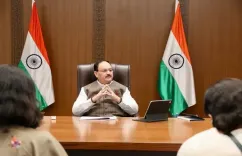
He directly appealed to the Leader of the House, J.P. Nadda, "I will request the Leader of the House to respond."
Nadda, maintaining his composure, referred to ongoing consultations. "Today I have been informed that there is a meeting scheduled, and we will decide based on that," he replied, indicating a possible huddle among the INDIA bloc.
Parliamentary Affairs Minister Kiren Rijiju interjected, urging for flexibility.
"Please avoid setting a timeline—I will be engaging with the Leader of Opposition. It will come to you once we discuss," Rijiju said, recognizing the seriousness but cautioning against a narrow focus. "The issues become problematic when time constraints are introduced. When we engage in discussion, there are numerous issues in the country—you are concentrating solely on one."
“Aap chunav nahi jeet paate ho aur gussa yahan nikalte ho (You can't win elections, so you vent your anger here)," he quipped, provoking protests from the Opposition ranks.
He reiterated his openness to debate but without a specified timeline, hinting at potential breakthroughs following the meeting.
Rijiju's comment, perceived as a jab at the INDIA bloc's electoral challenges, heightened tensions further.
Kharge countered, cautioning against divisive strategies. "Do not attempt to fracture the Opposition—the more you try, the stronger we become," he retorted, as MPs from the Trinamool Congress and others echoed calls for debate.
The Chairman attempted to ease tensions, stating, "Let the Opposition Leader and Parliamentary Affairs Minister converse—they will approach me, and we will determine the discussion."
The verbal clash spiraled back into chaos with chants of “SIR Pe Charcha Ho” and “Vote Chori Band Karo.”
Point of View
The ongoing debate surrounding the Special Intensive Revision of electoral rolls is critical not only for the affected states but also for the integrity of our democratic processes. The allegations raised by the Opposition merit serious consideration and discussion to ensure that every citizen's voice is heard and protected.
NationPress
02/12/2025
Frequently Asked Questions
What is the Special Intensive Revision (SIR)?
The Special Intensive Revision (SIR) refers to the process of updating electoral rolls in preparation for upcoming elections, ensuring that all eligible voters are registered.
Why is the Opposition demanding a debate on SIR?
The Opposition is demanding a debate due to alleged irregularities in the SIR process, which they claim have led to disenfranchisement and even fatalities among voters.
Which states are affected by the SIR?
The SIR is currently underway in 12 states and union territories, including Bihar, West Bengal, Tamil Nadu, and Kerala.
What rules govern the debate requests in Parliament?
Debate requests in Parliament are often made under Rule 267, which allows for adjournment motions to discuss urgent issues.
What has been the government's response to the Opposition's demands?
The government has indicated a willingness to discuss the matter but has sought more time for consultations before proceeding with a debate.