Is Organic Farming Gaining Traction in Poonch?
Click to start listening
Synopsis
Poonch's organic farming initiative is gaining momentum as nearly 100 farmers attend a training program, reflecting a significant shift towards sustainable agriculture. Led by key officials, the session highlighted the benefits of organic practices, encouraging local farmers to embrace this eco-friendly approach for improved yields and soil health.
Key Takeaways
- Growing interest in organic farming among Poonch farmers.
- Training programs are crucial for knowledge dissemination.
- Transitioning to organic practices can enhance soil quality.
- Government support and registration are vital for accessing benefits.
- Organic farming aligns with national sustainability goals.
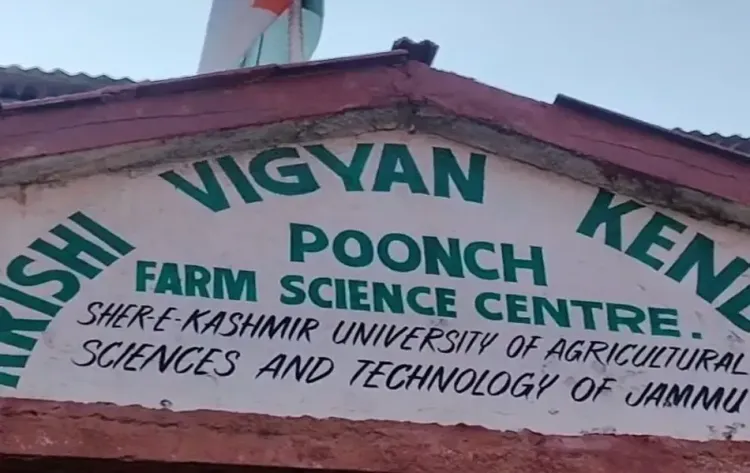
Poonch, Dec 2 (NationPress) The District Agriculture Department, in partnership with the Krishi Vigyan Kendra (KVK), conducted a one-day training and awareness session focused on organic farming this past Tuesday in Poonch, Jammu and Kashmir.
Nearly 100 farmers—including both men and women—engaged with enthusiasm, showcasing a growing passion for natural and sustainable agricultural practices within the region.
The event was led by Agriculture Officer Tejinder Singh Balwal and KVK Head Dr. Ajay Gupta, who facilitated in-depth discussions about the advantages of organic farming. They elaborated on how transitioning away from chemical fertilizers not only improves soil health but also enhances farmers’ income over time.
Throughout the session, officials stressed the necessity of registering on the official portal, particularly for those who have been practicing organic farming for the past three years. Registration would enable farmers to access additional benefits, government support, and updates regarding relevant programs.
In an interview with IANS, Agriculture Officer Tejinder Singh Balwal noted that this initiative aligns with Prime Minister Narendra Modi’s 10-Cluster Scheme, which aims to foster organic farming throughout India.
“Today’s training attracted more than 100 farmers,” he remarked, adding, “This turnout highlights the increasing interest in adopting organic methods in the district.”
Among the attendees was farmer Mohammad Safeer, who proudly declared his complete transition to organic farming. “I no longer use any chemical fertilizers,” he stated.
“Organic farming yields better results and is healthier for everyone. After Prime Minister Modi’s encouragement, the Agriculture Department motivated us to make the switch, and it has proven to be highly beneficial,” he added. Another farmer, Janakinath, pointed out how the program emphasized reducing chemical fertilizer usage and incorporating natural fertilizers like cow dung. “Chemical fertilizers had compacted my soil,” he explained. “However, since using organic manure, the soil quality has improved, and my crop yield has also risen.”
The event wrapped up with farmers feeling rejuvenated and many expressing their commitment to further implement organic practices in their fields.
Point of View
The shift towards organic farming in Poonch reflects a larger movement towards sustainable agriculture in India. This initiative not only aligns with government goals but also empowers farmers, promoting better health, soil quality, and economic viability. As the country navigates agricultural challenges, embracing organic methods could prove crucial for both farmers and consumers.
NationPress
02/12/2025
Frequently Asked Questions
What is organic farming?
Organic farming is an agricultural method that emphasizes the use of natural fertilizers and pesticides, avoiding synthetic chemicals to promote biodiversity and sustainability.
Why is organic farming important?
Organic farming improves soil health, reduces environmental impact, and offers healthier food options, contributing to overall ecosystem sustainability.
How can farmers transition to organic farming?
Farmers can transition by adopting natural fertilizers, reducing chemical inputs, and registering with governmental programs for support and resources.
What are the benefits of organic farming?
Benefits include enhanced soil fertility, increased crop yields, improved farmer income, and healthier food products for consumers.
Is organic farming financially viable?
Yes, while the transition may require initial investment, organic farming often leads to higher long-term profits due to increased demand for organic produce.