Pakistan planning major Kashmir attack to internationalise dispute, officials warn
Synopsis
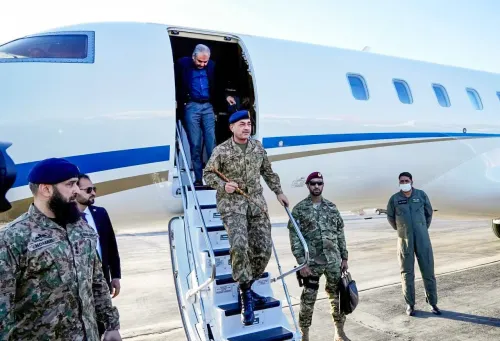
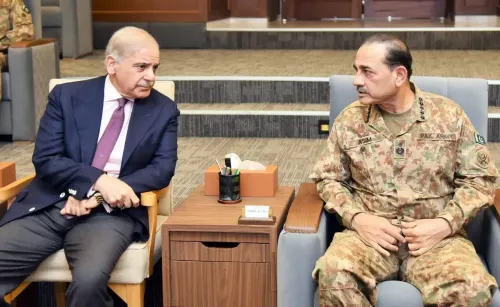
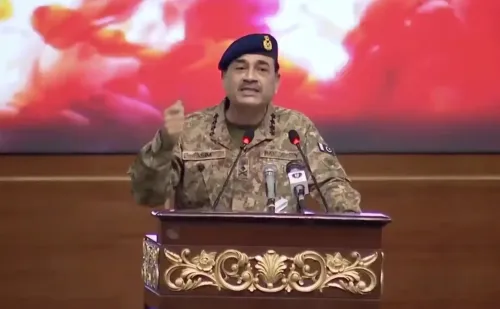
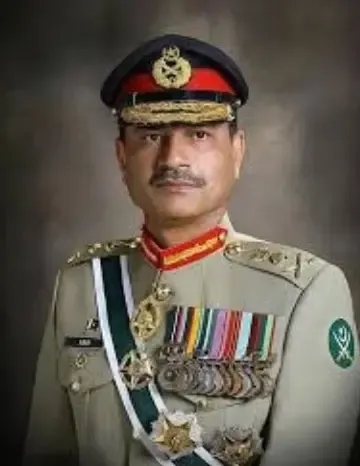
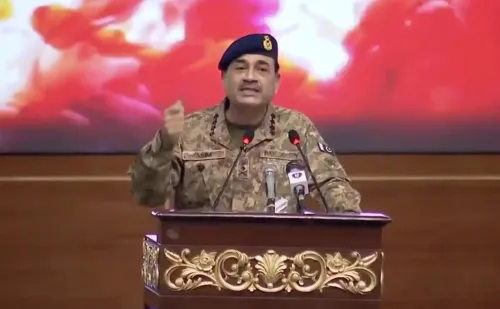
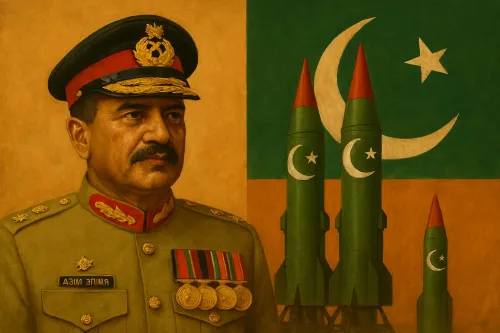
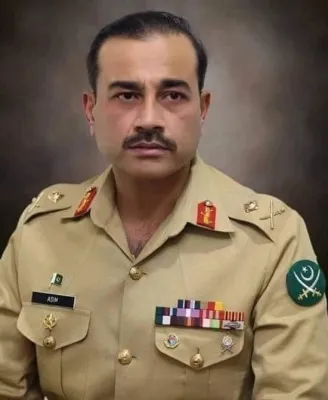
Indian officials allege Pakistan's Army chief Field Marshal Asim Munir is orchestrating a major Kashmir terror strike — not just to inflict damage, but to provoke Indian retaliation and force US intervention, with the long-game goal of internationalising the Kashmir dispute and boosting his own presidential ambitions.
Key Takeaways
Indian officials allege Pakistan is planning a major terror attack in Jammu and Kashmir to provoke Indian retaliation and trigger international intervention.
Field Marshal Asim Munir is reportedly using the Kashmir issue to manage domestic pressure and advance his alleged presidential ambitions.
A two-pronged strategy involves home-grown terror modules to divert Indian security forces, followed by infiltration by Pakistani terrorists from border launch pads.
Pakistan reportedly hopes the US under President Donald Trump will intervene, internationalising the Kashmir dispute.
India maintains Kashmir is an internal matter; the abrogation of Article 370 was aimed at full integration of the region with India.
Munir's earlier attempt to mediate US-Iran negotiations reportedly fell short, redirecting his focus toward India.
Indian security officials have warned that Pakistan is planning a major terror strike in Jammu and Kashmir with the strategic intent of provoking an Indian military response and subsequently drawing in international intervention — particularly from the United States — to internationalise the Kashmir issue. The warning, issued on 1 May from New Delhi, comes amid heightened tensions following Operation Sindoor and a perceived shift in Pakistan Army chief Field Marshal Asim Munir's strategic calculus.
The Alleged Two-Pronged Strategy
According to an Intelligence Bureau official, Pakistan has reportedly devised a two-pronged approach. The first involves cultivating home-grown terror modules within the Valley to carry out low-intensity strikes, which would damage Jammu and Kashmir's tourism industry and divert the attention of Indian security forces currently concentrated on the border.
The second, larger objective is to deploy Pakistani terrorists — reportedly waiting in significant numbers at launch pads across the border — once security forces are sufficiently diverted. Officials allege that Munir is willing to allow Pakistan's own terror infrastructure to be struck again, if it means triggering a broader Indian retaliation that draws global attention to Kashmir.
Munir's Domestic and International Ambitions
Officials and Pakistan watchers cited by NationPress suggest that Field Marshal Munir faces considerable domestic pressure and is reportedly eyeing the presidency of Pakistan. According to one official, Munir views a high-profile confrontation over Kashmir as an opportunity to bolster his public image and project himself as a decisive national leader who has elevated Pakistan's standing on the world stage.
The same official noted that Munir had earlier attempted to position himself as a key mediator in US-Iran negotiations — an effort that reportedly did not yield the results Pakistan had anticipated. Experts suggest this setback has redirected his focus squarely toward India and the Kashmir dispute.
Pakistan's Goal: Internationalising Kashmir
India has consistently maintained that Kashmir is a bilateral and internal matter. Following the abrogation of Article 370 — which had granted Jammu and Kashmir special constitutional status — New Delhi reiterated that the move was aimed at fully integrating the region with the rest of India and was not subject to international arbitration.
Notably, Pakistan had attempted to raise the Article 370 abrogation at international forums, including the United Nations Security Council, with limited success. Officials now allege that Pakistan, under Munir's direction, is attempting a more kinetic route to achieve the same diplomatic objective — hoping that a sufficiently large attack and Indian response would compel countries, including the US under President Donald Trump, to intervene.
India's Security Posture and What Comes Next
Indian security forces remain on high alert along the border, according to officials. The focus on rebuilding terror networks within the Valley, through home-grown modules, is being closely monitored by intelligence agencies. Officials warn that the current threat environment requires sustained vigilance, particularly given Pakistan's alleged intent to use a large-scale attack as a geopolitical lever.
As the situation along the Line of Control remains volatile, India's strategic response — diplomatic, military, or both — will be closely watched by regional and global observers in the weeks ahead.
Point of View
As described by Indian officials, is not new in its ambition — Islamabad has sought to internationalise Kashmir for decades. What is different this time, if the intelligence assessment holds, is the explicit linkage between a military provocation and a domestic political outcome for Munir. That is a dangerous combination: a military chief reportedly willing to absorb retaliatory strikes on his own country's terror infrastructure in exchange for geopolitical visibility. India's challenge is not just tactical — it is to respond in a way that denies Pakistan the international stage it is seeking, while maintaining credible deterrence. The US factor under Trump adds a layer of unpredictability that New Delhi will need to manage with considerable diplomatic precision.
NationPress
15 Sept 2026
Frequently Asked Questions
What is Pakistan allegedly planning in Jammu and Kashmir?
According to Indian security officials, Pakistan is planning a major terror strike in Jammu and Kashmir intended to provoke an Indian military response. The broader goal, officials allege, is to draw international intervention — particularly from the United States — and internationalise the Kashmir dispute.
Who is Field Marshal Asim Munir and what role does he play in this?
Field Marshal Asim Munir is Pakistan's Army chief. Indian officials and Pakistan watchers allege he is the architect of the current strategy, driven by domestic pressure and a reported ambition to become Pakistan's next president, using a Kashmir confrontation to project himself as a decisive national leader.
Why does Pakistan want to internationalise the Kashmir issue?
Pakistan has long sought to frame Kashmir as an international dispute rather than a bilateral one. By provoking a large-scale Indian military response, Islamabad reportedly hopes to compel global powers — especially the US — to intervene diplomatically, giving Pakistan leverage it has been unable to achieve through political or legal channels.
What is India's official position on Kashmir?
India maintains that Jammu and Kashmir is an internal matter. Following the abrogation of Article 370, New Delhi reiterated that the move was aimed at fully integrating the region with the rest of India and is not subject to international mediation or arbitration.
What is the significance of Operation Sindoor in this context?
Operation Sindoor refers to a prior Indian military action that Pakistan reportedly hopes to replicate — by staging a large enough attack to trigger a similar Indian response. Officials allege Pakistan is banking on that retaliation to justify calls for international intervention over Kashmir.