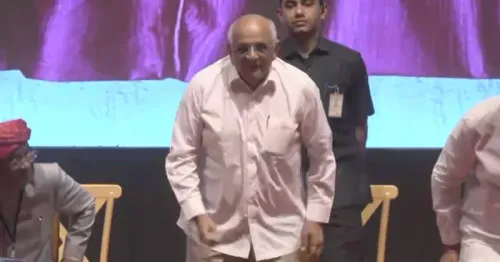
Gujarat CM Bhupendra Patel alleges 'regime change' agenda behind protests
Synopsis
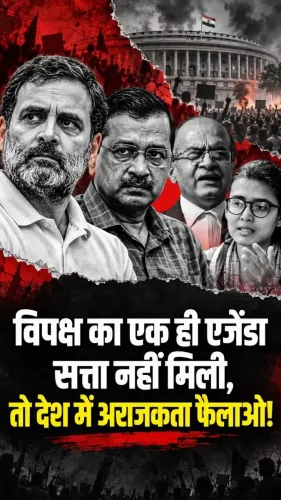
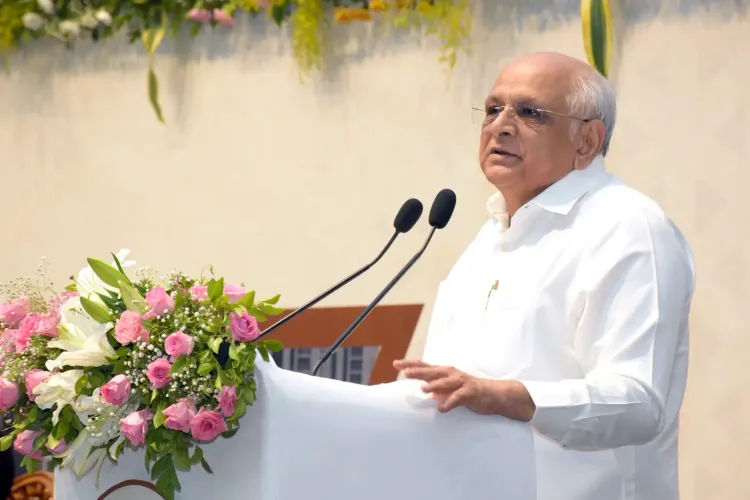
Gujarat Chief Minister Bhupendra Patel has gone on the offensive, accusing protest leaders of using student welfare as a cover for a 'regime change' agenda. His X post — dropping the phrase 'Mask off moment!' — comes as the BJP doubles down on framing the electoral roll protests as politically motivated, citing remarks by lawyer Prashant Bhushan and student activist Neha Bora as evidence.
Key Takeaways
Gujarat CM Bhupendra Patel on 16 October 2026 alleged via X that protests framed around student welfare are actually aimed at 'regime change' .
Patel described protesters as a 'fake group of agitators' seeking to push youth towards anarchy .
The protests centre on alleged irregularities in electoral roll revision and demands for accountability from the Election Commission of India .
Supreme Court lawyer Prashant Bhushan described the agitation as a fight for 'regime change' — a remark the BJP has amplified.
Student activist Neha Bora faced backlash after citing Bangladesh's 2024 student uprising as a reference point for the movement.
Opposition figures and protesters maintain their demands are focused solely on electoral roll accountability.
Gujarat Chief Minister Bhupendra Patel on Friday, 16 October 2026, accused protest leaders — operating under the banner of student welfare — of pursuing a 'regime change' agenda, and of attempting to draw the country's youth into what he described as deliberate chaos. Patel made the remarks in a post on social media platform X, arguing that repeated electoral mandates for the Bharatiya Janata Party (BJP) demonstrated public endorsement of its development-focused governance.
What Patel Said
In his post, Patel opened with the phrase 'Mask off moment!' and alleged that the true objective of the protests had never been student welfare but rather 'regime change' and 'sheer chaos'. 'Those misleading and inciting the youth of the country in the name of protests have had their real faces exposed today. They are neither concerned about the country's development nor the future of its youth,' he wrote.
Patel went on to describe what he termed a 'fake group of agitators' conspiring to divert young people from constructive pursuits and toward anarchy. 'Indian youth is way smarter than this cheap propaganda!' he added, warning that the public would 'never forgive those who obstructed the country's progress.'
Background to the Protests
The remarks come amid a political controversy surrounding protests over alleged irregularities in the revision of electoral rolls and demands for accountability from the Election Commission of India (ECI). Opposition leaders and activists have raised concerns about the implications of the roll revision for voter rights, while the BJP has consistently characterised the agitation as a politically motivated attempt to unseat Prime Minister Narendra Modi's government without an electoral mandate.
Remarks That Escalated the Row
The controversy intensified after senior Supreme Court lawyer Prashant Bhushan publicly described the agitation as a fight for 'regime change' — a remark that BJP leaders cited as vindication of their characterisation of the movement. Separately, student activist Neha Bora faced criticism after invoking Bangladesh's 2024 student-led uprising as a model for the movement. The BJP framed both statements as evidence that the protests extend beyond their stated demands.
Opposition Pushback
Protest organisers and opposition figures have rejected the BJP's framing, maintaining that their criticism is squarely directed at the electoral roll revision process and the conduct of the Election Commission. They have argued that raising accountability concerns within a democracy cannot be equated with seeking unconstitutional regime change.
Broader Political Context
Patel's statement broadly mirrors the BJP's national messaging on the agitation, with the party repeatedly emphasising its democratic mandate and positioning itself as a target of destabilisation efforts. Notably, this is not the first time protest movements in India have become flashpoints over the distinction between democratic dissent and calls for extra-electoral change — a tension that resurfaced sharply after the Bangladesh reference. How the electoral roll controversy and its political fallout evolve will likely shape the opposition's strategy in the run-up to upcoming state elections.
Point of View
The credibility deficit it risks accumulating may ultimately cost it more than the protests themselves.
NationPress
16 Oct 2026
Frequently Asked Questions
What did Gujarat CM Bhupendra Patel say about the protests?
Patel alleged on 16 October 2026 that the protests, while framed as a student welfare movement, are actually aimed at 'regime change' and creating chaos. He made the remarks in a post on X, calling it a 'Mask off moment' and accusing a 'fake group of agitators' of conspiring to mislead the youth.
What are the protests about?
The protests are centred on alleged irregularities in the revision of electoral rolls and demands for accountability from the Election Commission of India. Organisers and opposition leaders insist their concerns are legitimate democratic grievances about voter rights.
Why did Prashant Bhushan's remark become controversial?
Senior Supreme Court lawyer Prashant Bhushan described the agitation as a fight for 'regime change,' a phrase the BJP immediately cited as proof that the movement's goals go beyond electoral roll accountability. Critics of Bhushan's remark argue it gave the ruling party a political opening to delegitimise the protests.
Who is Neha Bora and why did she face backlash?
Neha Bora is a student activist associated with the protests who drew criticism after referring to Bangladesh's 2024 student-led uprising as a model or example for the Indian movement. The BJP framed the reference as evidence of an intent to replicate extra-electoral pressure tactics in India.
How has the opposition responded to the BJP's framing?
Opposition figures and protest organisers have rejected the BJP's characterisation, maintaining that raising concerns about electoral roll irregularities is a legitimate democratic exercise and cannot be equated with seeking unconstitutional regime change.