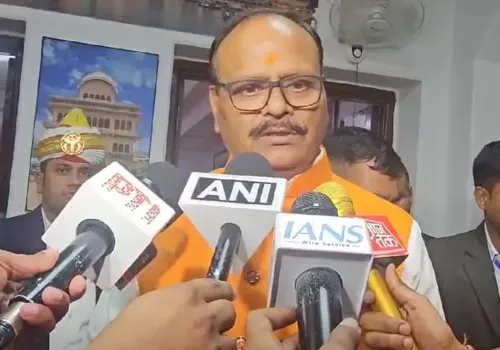
UP Dy CM Brajesh Pathak accuses SP of 'double game' on women's quota
Synopsis
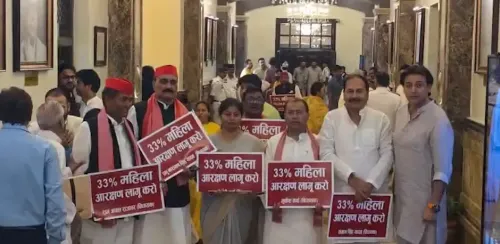
SP legislators waved banners demanding women's reservation outside the UP Assembly — the same day their party was accused of voting against the very Bill in Parliament. UP Deputy CM Brajesh Pathak's 'double game' charge, backed by a unanimous condemnation motion in Lucknow, signals the BJP's intent to weaponise the Bill's failure ahead of future elections.
Key Takeaways
UP Deputy CM Brajesh Pathak on 30 April accused the Samajwadi Party and Congress of playing a "double game" on women's reservation.
The Constitution (131st Amendment) Bill, 2026 (Nari Shakti Vandan Adhiniyam) failed to secure the required two-thirds majority in Parliament.
Pathak alleged SP chief Akhilesh Yadav rejected a written offer from Home Minister Amit Shah guaranteeing a 50% seat increase for states in exchange for supporting the Bill.
The UP Assembly passed a unanimous condemnation motion against the Opposition's alleged attempts to stall the legislation.
CM Yogi Adityanath had convened the special session specifically to debate the Bill's parliamentary failure.
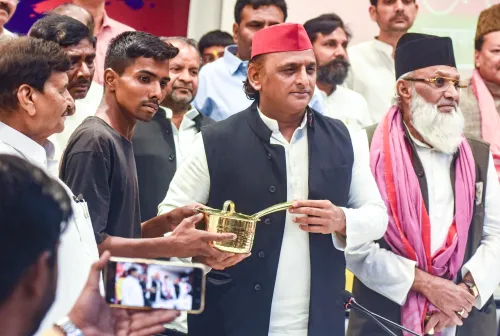
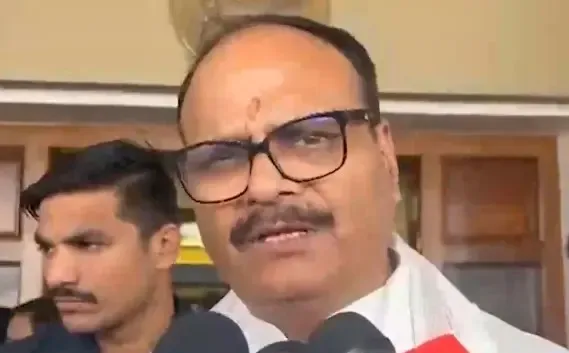
Uttar Pradesh Deputy Chief Minister Brajesh Pathak on Thursday, 30 April accused the Samajwadi Party (SP) of playing a "double game" on women's reservation, hours after SP legislators staged protests outside the state Assembly in Lucknow holding banners demanding implementation of 33 per cent women's reservation. The charge came during a special session of the Uttar Pradesh Assembly convened to discuss the failure of the Constitution (131st Amendment) Bill, 2026 — also known as the Nari Shakti Vandan Adhiniyam — to pass in Parliament.
The 'Double Game' Charge
Pathak alleged that the SP's street-level protests ring hollow given the party's voting record in Parliament. "The Samajwadi Party is playing a double game. When it comes to voting in the Parliament, they voted against the Bill," he said. He extended the accusation to the Indian National Congress (INC), asserting that both parties have "constantly" opposed women's reservation since Independence, thereby blocking its implementation.
Pathak also alleged that SP chief Akhilesh Yadav had "clearly denied" a specific overture from Union Home Minister Amit Shah. According to Pathak, Shah had offered to put in writing an official amendment guaranteeing a 50 per cent increase in seats for states, asking only that the Opposition pause House proceedings for an hour and support the Bill. Yadav, he claimed, refused even that.
Why the Bill Failed
The Constitution (131st Amendment) Bill, 2026 sought to reserve 33 per cent of seats for women in Parliament and included provisions to expand the House's overall strength. Despite extensive debate, the Bill failed to secure the constitutionally required two-thirds majority for passage — a significant setback for the ruling Bharatiya Janata Party (BJP), which had championed the legislation. The failure triggered political recriminations across party lines and prompted the special session in Uttar Pradesh.
The UP Assembly's Response
Chief Minister Yogi Adityanath had convened the special session to discuss and pass a condemnation motion against what the ruling party described as the Opposition's deliberate attempts to stall the Women's Reservation Bill. Pathak confirmed that the motion was passed unanimously. "This would determine that all the women of Uttar Pradesh are standing with Prime Minister Narendra Modi," he said.
Pathak further asserted that under Modi's leadership, the BJP has pursued several schemes aimed at advancing women's rights, contrasting this record with what he characterised as the Opposition's "anti-women policies."
Political Fallout and What Comes Next
The SP's protest outside the Assembly — even as the party faced accusations of having voted against the Bill in Parliament — underscores the intensifying battle over who can credibly claim the mantle of women's empowerment ahead of future electoral contests. "Both the parties will have to face its consequences," Pathak warned, signalling that the BJP intends to make the Bill's failure a sustained campaign issue. The episode also reflects broader tensions within the INDIA bloc, whose constituent parties are now on the defensive over their legislative record on gender representation.
Point of View
The BJP is reframing a multi-party procedural standoff as a moral binary. Whether voters in Uttar Pradesh — where women's turnout has consistently exceeded men's in recent cycles — accept that framing will be the real test.
NationPress
18 Sept 2026
Frequently Asked Questions
What is the Constitution (131st Amendment) Bill, 2026?
The Constitution (131st Amendment) Bill, 2026, also called the Nari Shakti Vandan Adhiniyam, sought to reserve 33 per cent of seats for women in Parliament and included provisions to expand the House's overall strength. It failed to secure the constitutionally required two-thirds majority for passage.
Why did UP hold a special Assembly session on the women's reservation Bill?
Chief Minister Yogi Adityanath convened the special session to discuss the Bill's failure in Parliament and to pass a condemnation motion against the Opposition's alleged attempts to stall it. The motion was passed unanimously by the UP Assembly.
What exactly is the 'double game' UP Deputy CM Brajesh Pathak alleged against SP?
Pathak alleged that while SP legislators publicly protested in favour of 33 per cent women's reservation outside the Assembly, the party had voted against the Bill in Parliament. He also alleged SP chief Akhilesh Yadav rejected a written assurance offered by Home Minister Amit Shah to guarantee a 50 per cent seat increase for states.
Who is affected by the Bill's failure to pass?
The failure directly affects women across India who would have benefited from reserved seats in Parliament and state legislatures. It also has political consequences for all parties, with the BJP seeking to hold the Opposition accountable and the SP and Congress defending their legislative record.
What happens next after the Bill's failure in Parliament?
The BJP, particularly in Uttar Pradesh, appears set to use the Bill's failure as a sustained campaign issue. The UP Assembly has passed a condemnation motion, and political parties are expected to continue debating the issue in the lead-up to future state and national elections.