Sharad Pawar flags Tata Sons governance row, backs trust-led ownership model
Synopsis
Senior NCP (SP) leader Sharad Pawar has stepped into the Tata Sons boardroom dispute, warning that a contested 4-1 vote on 17 September — extending Chandrasekaran's tenure and advancing a stock-market listing — may lack legal validity under the company's own Articles of Association. With Tata Trusts holding 66% of equity and funding hospitals, universities and arts institutions, Pawar says the stakes are far larger than one executive's contract.
Key Takeaways
Sharad Pawar on 22 September 2026 called for protecting the Tata Group's trust-led ownership model amid a boardroom governance dispute.
A 4-1 board vote on 17 September cleared a five-year extension for N.
Chandrasekaran and steps toward listing Tata Sons; Noel Tata voted against both.
The Sir Ratan Tata Trust and Sir Dorabji Tata Trust together hold approximately 66 per cent of equity in Tata Sons, with dividends funding health, education, and rural welfare.
Pawar argues the resolution lacks legal validity as it did not secure affirmative consent from both trust nominee directors, as required by the Articles of Association.
Institutions at risk if trust influence erodes include Tata Memorial Hospital , TIFR , TISS , and NCPA — all based in Maharashtra .
The Supreme Court has previously recognised the special consent rights of Tata Trusts nominee directors.
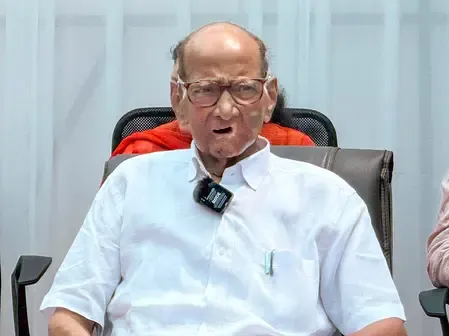
Nationalist Congress Party (SP) chief Sharad Pawar on Tuesday, 22 September 2026, raised sharp concerns over recent governance and leadership developments at Tata Sons, calling for the preservation of the conglomerate's trust-led ownership model and its century-old philanthropic character. Pawar argued that the Tata Group's institutional structure is not merely a corporate arrangement but a pillar of India's social and developmental fabric.
The Philanthropic Foundation at Stake
Pawar traced the group's foundational ethos to Jamsetji Tata, carried forward by Sir Dorabji Tata and Sir Ratan Tata, whose central vision was to redirect business-generated wealth toward social welfare. Under this design, majority ownership of Tata Sons was deliberately vested in philanthropic trusts rather than individual shareholders. At present, the Sir Ratan Tata Trust and the Sir Dorabji Tata Trust collectively hold approximately 66 per cent of equity in Tata Sons. Dividends flowing from this majority stake directly fund public health, education, research, and rural livelihoods.
Pawar noted that Maharashtra is the custodian of this legacy, home to nationally significant institutions established by the trusts — including Tata Memorial Hospital, the Tata Institute of Fundamental Research (TIFR), the Tata Institute of Social Sciences (TISS), and the National Centre for the Performing Arts (NCPA). He warned that any erosion of the trusts' role would directly endanger these institutions.
The September 17 Board Vote and Its Legal Cloud
At the centre of the controversy is a Tata Sons board meeting held on 17 September, where a 4-1 vote reportedly cleared a five-year extension for Executive Chairman N. Chandrasekaran and advanced steps toward listing Tata Sons on stock exchanges. Tata Trusts Chairman Noel Tata voted against both proposals, while nominee director Venu Srinivasan voted in favour.
Pawar pointed out that under the company's Articles of Association, key leadership decisions require the affirmative consent of both nominee directors representing the majority-shareholding trusts. Since that condition was not met, he argued the 4-1 resolution lacks legal validity. He further noted that the Supreme Court has previously recognised the special consent rights of trust nominees in the context of Tata Sons governance.
Pawar's Call for Dialogue Over Conflict
The NCP (SP) chief stressed that leadership disputes within the Tata Group must be resolved through constructive dialogue and lawful corporate processes rather than contentious board manoeuvres. Veto and affirmative rights granted to trust nominees, he said, must be respected in letter and spirit. In a post on X, Pawar wrote: 'Jamshedji Tata and the Tata family gave industry a value-based direction of social service. Therefore, the social commitment and institutional role of the Tata Trusts must be preserved. When decisions are made regarding the leadership of the Tata Group, it is essential to respect the institutional processes and the role of the Trusts. Because it is necessary to preserve the legacy of the Tata Group, which is continuously connected not only to the development of Maharashtra but also to the nation's progress and societal life.'
Why This Matters Beyond the Boardroom
This is not the first time the Tata Sons governance structure has come under scrutiny — the prolonged legal and boardroom battle involving former chairman Cyrus Mistry drew years of litigation and ultimately ended in the Supreme Court. The current dispute, however, strikes at a different nerve: the structural integrity of the trust-led model that defines how one of India's largest conglomerates deploys its profits. A potential stock-market listing of Tata Sons, critics argue, could dilute the trusts' dominance and redirect dividend flows away from social programmes. Pawar's intervention, coming from a senior opposition figure in Maharashtra, adds political weight to what had until now been a corporate governance debate.
Point of View
But it has also operated with limited public accountability for decades; the same opacity that shields it from shareholder pressure has shielded it from external audit of outcomes. The push to list Tata Sons is partly a transparency play, not solely a dilution threat. What mainstream coverage underplays is the tension between two legitimate governance principles: the founders' intent as embedded in the Articles, and modern market accountability. Pawar invokes one without engaging the other — and that gap is where the real debate lies.
NationPress
22 Sept 2026
Frequently Asked Questions
What happened at the Tata Sons board meeting on 17 September?
The Tata Sons board on 17 September passed a 4-1 resolution approving a five-year extension for Executive Chairman N. Chandrasekaran and initiating steps toward a stock exchange listing. Tata Trusts Chairman Noel Tata voted against both proposals, while nominee director Venu Srinivasan voted in favour.
Why does Sharad Pawar say the board resolution is legally invalid?
Pawar argues that under Tata Sons' Articles of Association, key leadership decisions require affirmative consent from both trust nominee directors. Since Noel Tata voted against the resolution, that threshold was not met, making the 4-1 vote legally questionable in his assessment.
How much of Tata Sons do the Tata Trusts own?
The Sir Ratan Tata Trust and the Sir Dorabji Tata Trust together hold approximately 66 per cent of equity in Tata Sons. Dividends from this majority stake fund public health, education, research, and rural livelihoods across India.
Which institutions could be affected if Tata Trusts lose influence over Tata Sons?
Key institutions funded by Tata Trusts dividends include Tata Memorial Hospital, the Tata Institute of Fundamental Research (TIFR), the Tata Institute of Social Sciences (TISS), and the National Centre for the Performing Arts (NCPA), all headquartered in Maharashtra.
Has Tata Sons faced governance disputes before?
Yes. The most prominent precedent was the prolonged legal and boardroom battle involving former chairman Cyrus Mistry, which culminated in Supreme Court proceedings. The court has previously recognised the special consent rights of Tata Trusts nominee directors in governance matters.