Pilot Slams Rajasthan Govt as HC Acts on Crumbling Schools
Synopsis
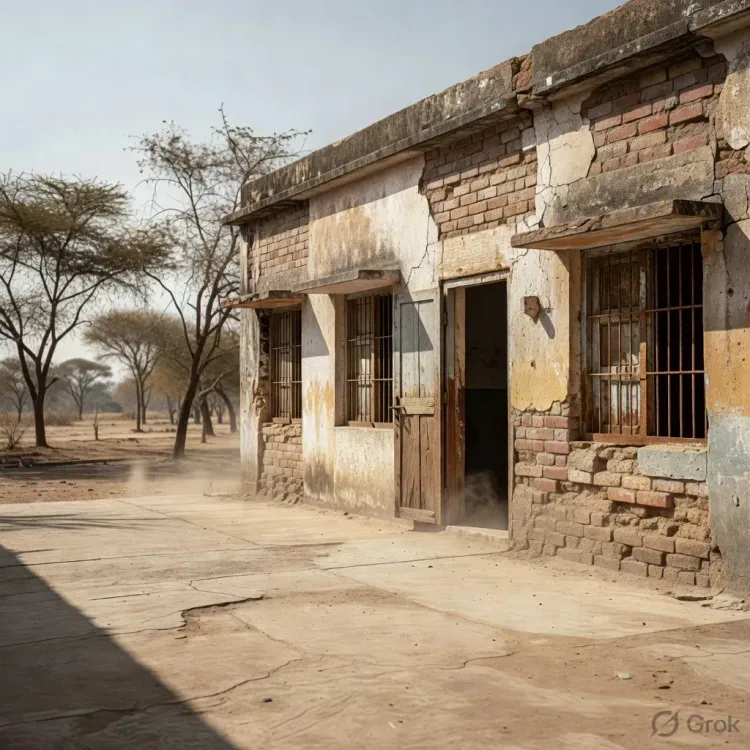
Congress leader Sachin Pilot has condemned the Rajasthan government over the dangerous condition of state school buildings, calling the Rajasthan High Court's intervention a governance failure and accusing the administration of leaving post-Piplodi safety pledges — audits, child protection measures, and fund utilisation — largely unimplemented.
Key Takeaways
Sachin Pilot called the Rajasthan High Court 's intervention on school building safety 'shameful' for the state government.
He cited the Piplodi tragedy from the previous year as a turning point after which the government made multiple safety commitments.
Three specific pledges — immediate safety audits, alternative arrangements for children, and proper use of sanctioned funds — remain largely unimplemented, according to Pilot.
He framed the failure as a systemic indictment of the ruling government's 'governance model', not a one-off lapse.
India's Right to Education Act, 2009 mandates minimum norms for school buildings, a legal standard that remains unevenly enforced across states.
The Rajasthan High Court's next directions on safety audits or interim school arrangements will be a key marker of accountability.
When a High Court has to step in to protect children from the buildings meant to educate them, something has gone badly wrong — and Congress leader Sachin Pilot is making sure the Rajasthan government does not escape that reckoning quietly. On Wednesday, 12 August 2026, the Congress general secretary and Chhattisgarh in-charge took to X to condemn the state of dilapidated government school buildings, calling the judiciary's intervention a moment of deep institutional shame for the ruling dispensation.
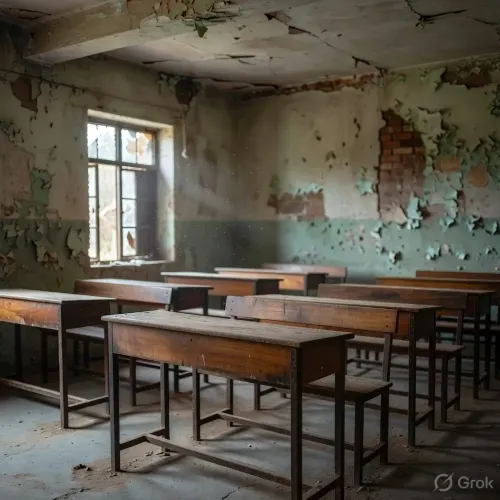
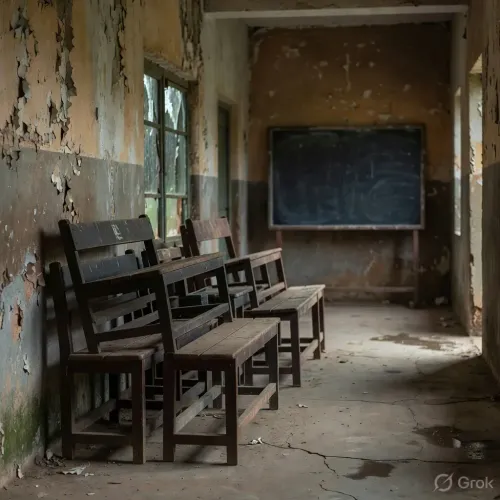
Pilot's post, written in Hindi, cuts straight to the point: 'प्रदेश में जर्जर सरकारी स्कूलों की स्थिति पर हाईकोर्ट को सख्ती दिखानी पड़े, इससे ज्यादा शर्मनाक सरकार के लिए और क्या हो सकता है?' — 'What could be more shameful for the government than having the High Court step in over the condition of crumbling government schools in the state?' Keeping school buildings safe, he argues, is the government's most basic obligation to the children of Rajasthan.
The Shadow of Piplodi — A Tragedy That Still Haunts
Pilot invokes the Piplodi incident — a tragedy from the previous year that, in his words, 'still shakes the heart.' The reference carries weight: school building collapses and structural failures have repeatedly forced High Courts across India to intervene, ordering safety audits and emergency repairs after children have been hurt. The Rajasthan High Court, with a strong record of public-interest intervention on infrastructure safety, now appears to be doing precisely that.
After the Piplodi tragedy, the state government made a series of public commitments: immediate safety audits of dilapidated school buildings, alternative arrangements to protect children until repairs were complete, and proper utilisation of already-sanctioned funds for school repair and construction. Pilot's charge is unsparing — those promises, he says, have lived mostly on paper.
Promises on Paper, Gaps on the Ground
The critique maps onto a well-worn fault line in Indian governance: the distance between announced schemes and actual delivery. India's Right to Education Act, 2009 sets mandatory minimum norms for school buildings and basic facilities — a legal floor that, in too many states, remains aspirational. Opposition leaders across the political spectrum have long used school infrastructure failures as a lens to examine ruling-party governance, and Pilot is deploying that frame with precision here.
He frames the shortfall not as an administrative oversight but as a structural indictment: 'यह सरकार के गवर्नेंस मॉडल की विफलता है' — 'This is a failure of the government's governance model.' The three specific lapses he names — no safety audit, no interim child-safety arrangements, and approved funds not properly used — give the attack concrete teeth rather than generic political colour.
The ball now sits in the state government's court. With the Rajasthan High Court already signalling concern, any directions on mandatory safety audits or interim school arrangements will test whether official commitments finally translate into action on the ground — or whether the gap between the ledger and reality widens further.
Point of View
Which makes it harder to dismiss. By invoking the Piplodi tragedy and naming three specific broken promises, he shifts the debate from rhetoric to a checklist the government must answer. The Rajasthan High Court's active role gives this moment institutional weight beyond normal political sparring. If the court issues concrete directions, the ruling party will face pressure to show measurable action before the next electoral cycle, making school infrastructure a live accountability issue rather than a background grievance.
NationPress
26 Sept 2026
Frequently Asked Questions
Why is Sachin Pilot criticising the Rajasthan government over schools?
Pilot says the Rajasthan High Court had to intervene over the dangerous condition of government school buildings — a sign, he argues, that the state government has failed in its basic duty to keep school infrastructure safe for children.
What was the Piplodi incident Sachin Pilot mentioned?
Pilot refers to a tragedy that occurred in Piplodi in the previous year involving a government school, which he says 'still shakes the heart.' Specific details of the incident are referenced as the moment after which the government made safety pledges it has since not fully kept.
What promises did the Rajasthan government make after the Piplodi tragedy?
According to Pilot, the government pledged immediate safety audits of dilapidated school buildings, alternative arrangements to protect students until repairs were done, and proper utilisation of already-approved funds for school repair and construction.
What does the Right to Education Act say about school buildings?
The Right to Education Act, 2009 mandates minimum norms for school buildings, facilities, and safety across India. State governments are legally required to ensure these standards are met in all government schools.
What is the Rajasthan High Court's role in this issue?
The Rajasthan High Court, which has a history of intervening in public-interest matters involving infrastructure safety, appears to have taken cognisance of the state of government school buildings — prompting Pilot's criticism that judicial pressure was needed to force action the government should have taken on its own.