PILs filed in Calcutta HC over Bengal vote counting centres, hearing due

Synopsis
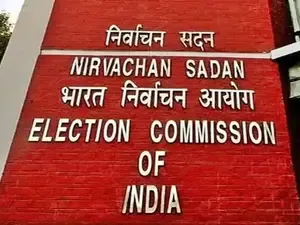
Just days before West Bengal's vote count on 4 May, two PILs in the Calcutta High Court are challenging the ECI's exclusive use of Central government supervisors at counting centres and the sudden relocation of those venues — a legal flashpoint in a state where election disputes routinely outlast the results.
Key Takeaways
TMC MP Kalyan Banerjee and lawyer Biswaroop Bhattacharya filed separate PILs in the Calcutta High Court on 30 April .
The PILs challenge the ECI's appointment of only Central government employees as counting supervisors and the abrupt change of counting centre locations.
Justice Krishna Rao admitted both cases; hearing expected later on 30 April .
Counting centres have been reduced to 87 for 294 seats — down from 108 in 2021 and 90 in 2016.
Overall two-phase voter turnout reached a record 92.85% ; 200 companies of Central forces guard EVM strong rooms.
Vote counting is scheduled for 4 May ; 500 companies of Central forces will remain in the state post-count to prevent violence.
Two Public Interest Litigations (PILs) have been filed in the Calcutta High Court on 30 April challenging arrangements for vote counting in the West Bengal Assembly elections, with the hearing expected later the same day. The petitions raise concerns over both the appointment of supervisors at counting centres and the sudden relocation of those centres ahead of the 4 May counting date.
What the PILs Allege
Kalyan Banerjee, an advocate and Member of Parliament from the All India Trinamool Congress (TMC), filed one of the PILs, arguing that the Election Commission of India (ECI) was exclusively appointing Central government employees as supervisors at counting centres. "They cannot make that decision. Let the court intervene in this matter," Banerjee said. Lawyer Biswaroop Bhattacharya filed a separate PIL questioning why the counting centres had been abruptly changed without adequate explanation.
Court's Initial Response
Justice Krishna Rao of the Calcutta High Court allowed the filing of cases in both matters. The hearing was expected to be held later on 30 April. Notably, this is not the first legal challenge over counting arrangements — a pair of earlier cases regarding counting centres had also been filed in the High Court before these PILs were admitted.
Counting Centres Reduced This Year
The ECI has reduced the number of counting centres in West Bengal to 87 for 294 Assembly seats this cycle — down from 108 centres in the 2021 elections and 90 centres in the 2016 elections. The full district-wise list of counting venues has been released by the Commission. Critics argue the reduction, combined with the change in locations, has raised logistical and transparency concerns.
Security and Polling Overview
The ECI has deployed 200 companies of Central security forces to guard the strong rooms where Electronic Voting Machines (EVMs) are stored. An additional 500 companies of Central forces will remain in West Bengal after 4 May, till further orders, to prevent post-poll violence. The two-phase election was largely peaceful: the first phase concluded on 23 April and the second phase on 29 April. The polling percentage in the second phase across 142 Assembly constituencies stood at 92.47% till midnight, pushing the overall two-phase average to a record 92.85%.
What Happens Next
With the Calcutta High Court set to hear both PILs, any order could potentially alter counting arrangements at short notice ahead of the 4 May count. The ECI is yet to formally respond to the court on either petition. The outcome of these hearings is likely to set the tone for how post-poll disputes are handled in what has historically been one of India's most politically contested states.
Point of View
Combined with last-minute venue changes, hands the opposition a procedural grievance that courts find difficult to dismiss outright. What is often missed in the coverage is that the exclusive deployment of Central government supervisors, while legally within the ECI's remit, is precisely the kind of optics that inflames political temperatures in a state where the Centre-state relationship is already adversarial. Whether the court intervenes or not, the litigation itself signals that the post-poll dispute season in Bengal has already begun — before a single vote is counted.
NationPress
19 Sept 2026
Frequently Asked Questions
Why have PILs been filed in the Calcutta High Court over West Bengal vote counting?
Two PILs were filed on 30 April challenging the ECI's decision to appoint only Central government employees as supervisors at counting centres and the sudden relocation of those centres. The petitioners argue these decisions require court scrutiny before counting begins on 4 May.
Who filed the PILs in the Calcutta High Court?
TMC MP and advocate Kalyan Banerjee filed one PIL over the appointment of Central government supervisors, while lawyer Biswaroop Bhattacharya filed a separate PIL questioning the abrupt change of counting centre locations.
How many counting centres are there for the 2025 West Bengal Assembly elections?
The ECI has designated 87 counting centres for 294 Assembly seats — a reduction from 108 centres used in 2021 and 90 centres used in 2016.
When is vote counting scheduled for the West Bengal Assembly elections?
Vote counting is scheduled for 4 May. The two phases of voting concluded on 23 April and 29 April respectively, with an overall record turnout of 92.85%.
What security arrangements has the ECI made for the West Bengal count?
The ECI has deployed 200 companies of Central security forces to guard EVM strong rooms. An additional 500 companies will remain in West Bengal after 4 May, until further orders, to prevent post-poll violence.