PM-KISAN crosses ₹4.64 lakh crore in payouts across 24 instalments
Synopsis
PM-KISAN has now transferred over ₹4.64 lakh crore directly to Indian farmers through 24 instalments — one of the largest DBT programmes in the world. With the Cabinet approving a ₹3.15 lakh crore extension through 2030-31 and ₹60,000 crore set aside in the 2026-27 Budget, the scheme is set to deepen its footprint in India's rural economy.
Key Takeaways
PM-KISAN has disbursed over ₹4.64 lakh crore across 24 instalments to eligible farmer families.
Eligible families receive ₹6,000 annually in three equal instalments of ₹2,000 each , credited directly to bank accounts.
The Union Cabinet approved the scheme's continuation from 2026-27 to 2030-31 with a total outlay of ₹3.15 lakh crore .
Union Budget 2026-27 has allocated ₹60,000 crore for PM-KISAN.
Payments flow through PFMS and NPCI , with mandatory Aadhaar linking and e-KYC verification for beneficiaries.
PM-KISAN, launched on 24 February 2019 , is counted among the largest Direct Benefit Transfer programmes globally.
The PM-KISAN scheme has disbursed more than ₹4.64 lakh crore directly to farmer families across India through 24 instalments, according to a government factsheet released on Friday, 30 October 2026. The scheme provides eligible landholding farmer families ₹6,000 annually, paid in three equal instalments of ₹2,000 each, directly into their bank accounts.
Scale and Budget Commitment
The Union Budget 2026-27 has allocated ₹60,000 crore for PM-KISAN, reflecting the Centre's stated priority of rural income security. Earlier, in July 2026, the Union Cabinet approved the scheme's continuation from 2026-27 to 2030-31, with a total financial outlay of ₹3.15 lakh crore earmarked for this five-year window. The government's factsheet described the approval as a reiteration that 'the prosperity of farmers forms the foundation of the nation's prosperity.'
How the Transfers Reach Farmers
Farmers must register through the PM-KISAN portal, mobile application, or Common Service Centres (CSCs). State governments verify eligibility and upload beneficiary data to the portal. The system then cross-validates Aadhaar and bank account details, screening out ineligible applicants before final approval. Once cleared, records are routed through the Public Financial Management System (PFMS) for account verification, and payment orders are generated. The Department of Agriculture and Farmers Welfare issues the sanction orders, after which funds are processed through sponsor banks and the National Payments Corporation of India (NPCI) before being credited to farmers' accounts.
Impact on Rural Households
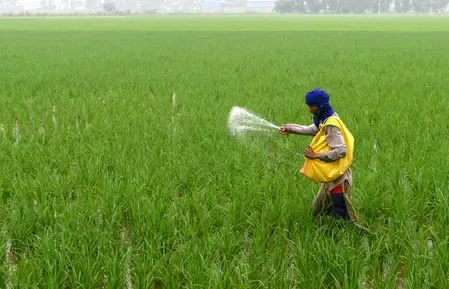
Launched on 24 February 2019, PM-KISAN is a centrally sponsored scheme targeting landholding farmer families with cultivable land. According to the factsheet, the assured income support has enabled farmers to invest in seeds, fertilisers, irrigation, and agricultural machinery in a timely manner. The direct transfers have also reportedly reduced dependence on informal credit — a persistent vulnerability for rural households — and strengthened overall financial stability. Notably, PM-KISAN is cited as one of the largest Direct Benefit Transfer (DBT) programmes globally, underscoring the institutional scale of its delivery mechanism.
Significance for Agricultural Policy
The cumulative ₹4.64 lakh crore disbursed over 24 instalments marks a significant milestone in India's income-support architecture for agriculture. This comes amid broader policy debates about whether direct transfers adequately substitute for structural farm-sector reforms, including market access, price stability, and input cost rationalisation. The scheme's extension through 2030-31 suggests the Centre views income transfers as a long-term pillar of agrarian policy rather than a transitional measure. Upcoming disbursements under the 2026-27 Budget allocation will be closely watched as a barometer of the scheme's execution continuity.
Point of View
But the scheme's long-term impact on agricultural incomes remains contested. At ₹6,000 a year, the per-family transfer covers barely a fraction of average input costs, raising legitimate questions about whether it meaningfully reduces agrarian distress or simply softens it at the margins. The five-year extension through 2030-31 signals political entrenchment of the scheme, but the absence of productivity-linked conditionalities means it functions as a welfare transfer rather than an investment-catalysing instrument. India's farm sector needs both — and the policy architecture is still weighted heavily toward the former.
NationPress
30 Oct 2026
Frequently Asked Questions
What is the PM-KISAN scheme and how much has it paid out?
PM-KISAN is a centrally sponsored scheme launched on 24 February 2019 that provides eligible landholding farmer families ₹6,000 annually in three equal instalments. As of 30 October 2026, it has disbursed over ₹4.64 lakh crore across 24 instalments.
Has the PM-KISAN scheme been extended beyond 2026?
Yes. The Union Cabinet in July 2026 approved the continuation of PM-KISAN from 2026-27 to 2030-31, with a total financial outlay of ₹3.15 lakh crore for the period.
How much has the government budgeted for PM-KISAN in 2026-27?
The Union Budget 2026-27 has allocated ₹60,000 crore for the PM-KISAN scheme, consistent with the Centre's commitment to farmer income support.
How are PM-KISAN payments delivered to farmers?
Farmers register via the PM-KISAN portal, app, or Common Service Centres. After Aadhaar and bank account verification and state-level eligibility checks, payments are routed through PFMS and NPCI and credited directly to beneficiaries' bank accounts.
Who is eligible for PM-KISAN benefits?
Eligible beneficiaries are landholding farmer families with cultivable land across India. Farmers must seed land records on the PM-KISAN portal, link bank accounts to Aadhaar, and complete e-KYC verification to receive transfers.