PM Modi Backs Cabinet Move to Boost MSME Sector Growth
Synopsis
Prime Minister Narendra Modi backed a Cabinet decision on 6 October 2026 designed to help Indian MSMEs scale up, adopt advanced technologies, expand manufacturing, and integrate with global value chains — framing it as a launchpad for the next generation of Indian business leaders.
Key Takeaways
PM Modi called the Cabinet decision a 'major step towards creating the next generation of Indian business leaders' on 6 October 2026 .
The policy targets five outcomes for MSMEs: scaling up, adopting advanced technologies, expanding manufacturing, entering global markets, and integrating with global value chains.
The announcement is a formal government communiqué confirmed through the Press Information Bureau .
India has over 63 million registered MSME units , making the sector one of the largest employment generators in the economy.
The explicit focus on global value chain integration marks a strategic shift beyond earlier schemes centred on credit and formalisation.
Full details on financial outlay, eligibility, and implementing agencies are available in the linked PIB press release .
A Cabinet decision targeting India's Micro, Small and Medium Enterprises (MSME) sector has drawn a strong endorsement from Prime Minister Narendra Modi, who called it a 'major step towards creating the next generation of Indian business leaders' on Tuesday, 6 October 2026. The decision promises to unlock pathways for small businesses to scale, modernise, and compete on the world stage — a signal that the government is doubling down on one of the economy's most job-dense engines.
What the Cabinet greenlit for India's small businesses
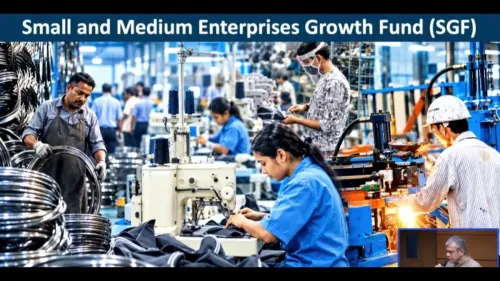
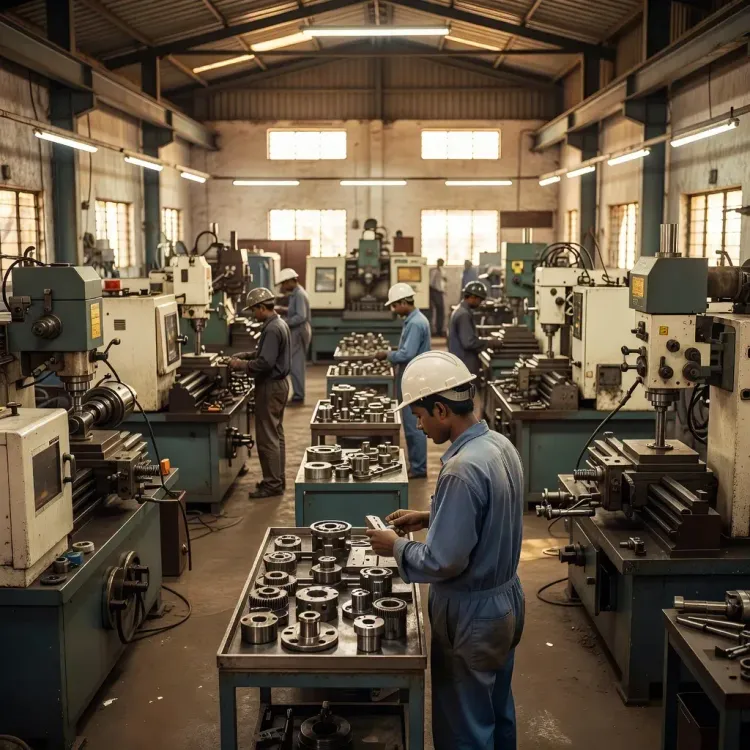
The Prime Minister framed the decision across five clear ambitions: helping SMEs 'scale up, adopt advanced technologies, expand manufacturing, enter global markets, and integrate with global value chains.' That language is deliberate — it moves the policy conversation on MSMEs away from mere survival support and toward competitive transformation. For a sector that accounts for roughly 30 per cent of India's GDP and employs hundreds of millions of workers, the framing matters as much as the mechanics.
The official press release, linked by PM Modi, was published through the Press Information Bureau — confirming the announcement is a formal government communiqué, not a proposal. The decision is therefore live, not aspirational.
Why the 'global value chains' push signals a strategic shift
The explicit mention of global value chains (GVCs) is arguably the sharpest edge of the announcement. Indian MSMEs have historically struggled to move beyond domestic or regional supply chains — hamstrung by capital constraints, quality certification gaps, and limited digital infrastructure. A Cabinet-backed framework that directly targets GVC integration would mark a meaningful escalation from earlier schemes, which focused primarily on credit access and formalisation.
The simultaneous emphasis on advanced technologies and manufacturing expansion suggests a two-track approach: upgrade what exists at home, then connect it to demand abroad. If the policy architecture delivers on both tracks, it could help India capture a larger share of the supply-chain diversification underway globally — a window that geopolitical shifts have cracked open but that Indian MSMEs have so far only partially entered.
The 'next generation of business leaders' — ambition as policy signal
The Prime Minister's choice of phrase — 'next generation of Indian business leaders' — is not boilerplate. It positions this Cabinet decision within a longer arc of economic nationalism that the BJP government has consistently articulated: the idea that India's future prosperity will be built by homegrown entrepreneurs, not imported capital alone. For MSME owners, first-generation founders, and aspirational small manufacturers across India's Tier-2 and Tier-3 cities, that framing is designed to resonate personally.
The full details of the Cabinet decision — including specific financial outlay, eligibility criteria, and implementing agencies — are available via the Press Information Bureau release. Those specifics will determine whether the ambition translates into measurable outcomes for the 63 million-plus MSME units registered across India.
India's small businesses now have a Cabinet decision in their corner. Whether the policy machinery delivers the transformation the Prime Minister has sketched is the question every entrepreneur from Surat to Siliguri will be watching.
Point of View
India is positioning its MSME base as the absorption layer for that shift. The political calculus is equally clear — MSMEs are densely distributed across constituencies that matter electorally, and a policy win here doubles as a grassroots economic message. The real test will be implementation: past MSME schemes have often been strong on intent and uneven on delivery.
NationPress
6 Oct 2026
Frequently Asked Questions
What did the Cabinet decide for MSMEs on 6 October 2026?
The Cabinet approved a decision aimed at helping Indian MSMEs scale up, adopt advanced technologies, expand manufacturing capacity, enter global markets, and integrate with global value chains. PM Modi endorsed the move publicly, calling it a platform for the next generation of Indian business leaders.
What is the significance of global value chain integration for Indian MSMEs?
Integrating with global value chains (GVCs) means Indian small businesses can become suppliers to large international companies, boosting exports and revenues. Most Indian MSMEs have historically been confined to domestic or regional supply chains, so a Cabinet-backed GVC framework marks a meaningful policy upgrade.
How many MSMEs are there in India?
India has over 63 million registered MSME units, making the sector one of the country's largest sources of employment and a contributor of roughly 30 per cent of GDP.
Where can I read the full Cabinet decision on MSMEs?
The full details of the Cabinet decision, including financial outlay and eligibility criteria, are available in the official Press Information Bureau press release linked by PM Modi in his post.
How does this MSME Cabinet decision differ from earlier government schemes?
Earlier MSME schemes focused primarily on credit access and formalisation. This decision explicitly targets technology adoption and global value chain integration, signalling a shift from supporting business survival to enabling global competitiveness.